Hybrids are supposed to be the “easy clubs” in the bag. Yet for many golfers, they are some of the most frustrating clubs to hit consistently. Thin shots, hooks, low bullets, heavy contact — I see it every day on the lesson tee.
Most of the time, the problems aren’t with the swing, but rather with how the player sets up to the ball.
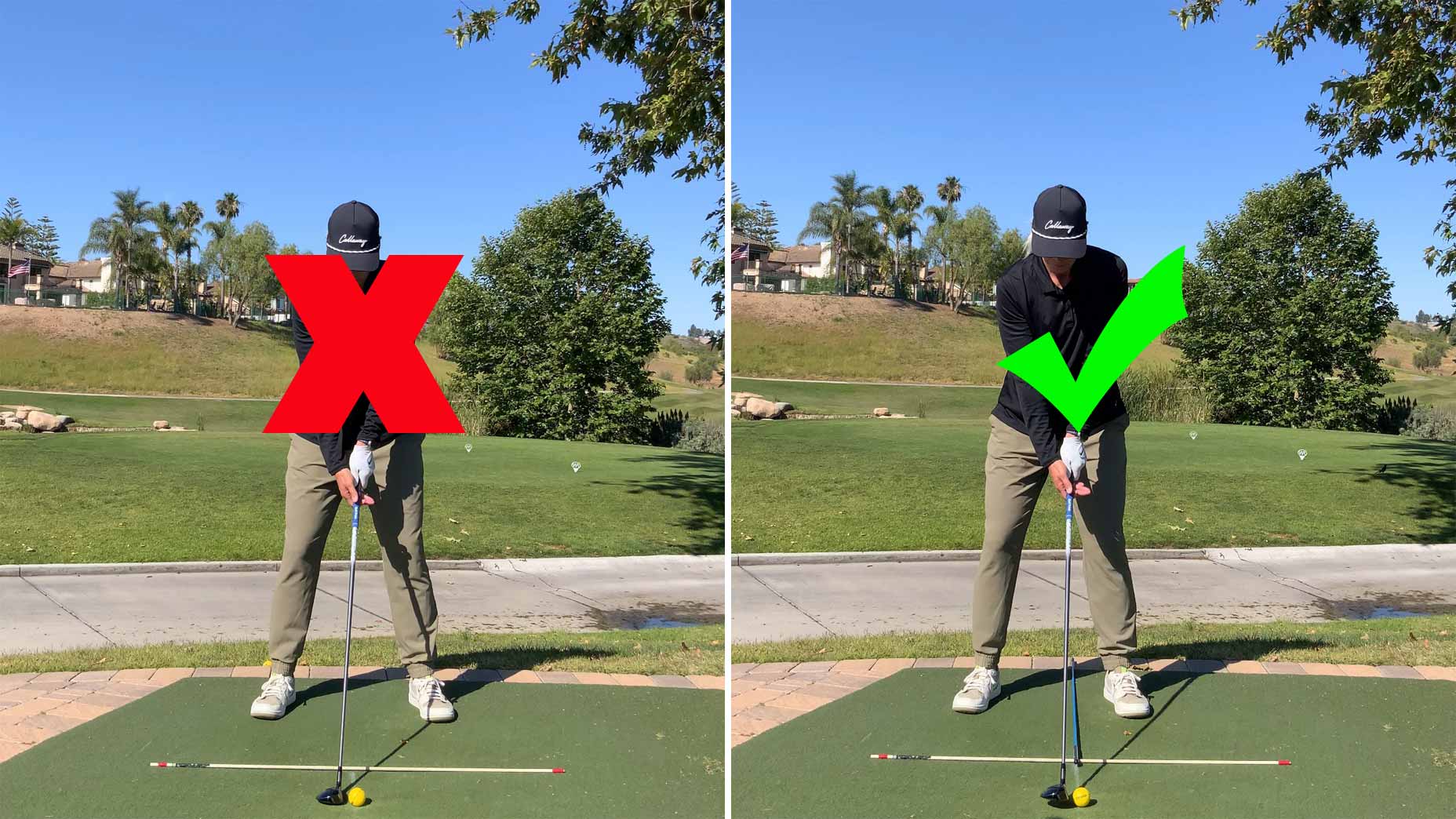
Golfers have long been told to “hit hybrids like irons,” which often leads them to place the ball too far back in the stance. While that may sound harmless, it creates a chain reaction that makes solid contact much harder to achieve.
When the ball sits too far back, the club approaches on a steeper angle of attack. That downward strike can drive the leading edge into the turf too aggressively, causing inconsistent low-point control. In simple terms, your margin for error becomes incredibly small. Catch it slightly behind the ball and you hit it fat. Catch it slightly ahead and you hit a low, spinny bullet that never reaches its intended height.
<figure class="youtube-facade" data-content="
“>
The bigger issue is what happens to the clubface.
Because the ball is back in the stance, the golfer has less time to naturally square the face through rotation. The body often stalls while the hands take over in an attempt to “save” the shot. That’s where face manipulation begins. Some players excessively roll the forearms to square the face, leading to hooks. Others leave the face open and block it right. The timing becomes inconsistent because the club is being manipulated instead of released naturally.
A hybrid is not an iron. It’s designed to glide through the turf and launch the ball higher with more forgiveness. To allow the club to do its job, the ball position needs to move more forward than most golfers realize.
A great checkpoint is this: The 5-hybrid should generally be played just forward of center. The 4-hybrid should move slightly farther forward, roughly one to two balls inside the lead heel. And the 3-hybrid can be played even farther forward, very similar to a fairway wood setup.
As the shaft gets longer and loft decreases, the ball position should gradually move forward to help shallow the angle of attack and improve face delivery.
When the ball is positioned correctly, something powerful happens: the club can skim the ground instead of digging into it. The bottom of the swing arc becomes more predictable, the face has more time to square naturally, and the ball launches higher with less effort.
That’s the shot hybrids were designed to produce.
If you’ve been fighting your hybrids, don’t immediately change your swing. Start with the setup. In less than 60 seconds, moving the ball slightly forward could completely change your contact, trajectory and confidence with one of the most important clubs in your bag.
Disclaimer : This story is auto aggregated by a computer programme and has not been created or edited by DOWNTHENEWS. Publisher: golf.com