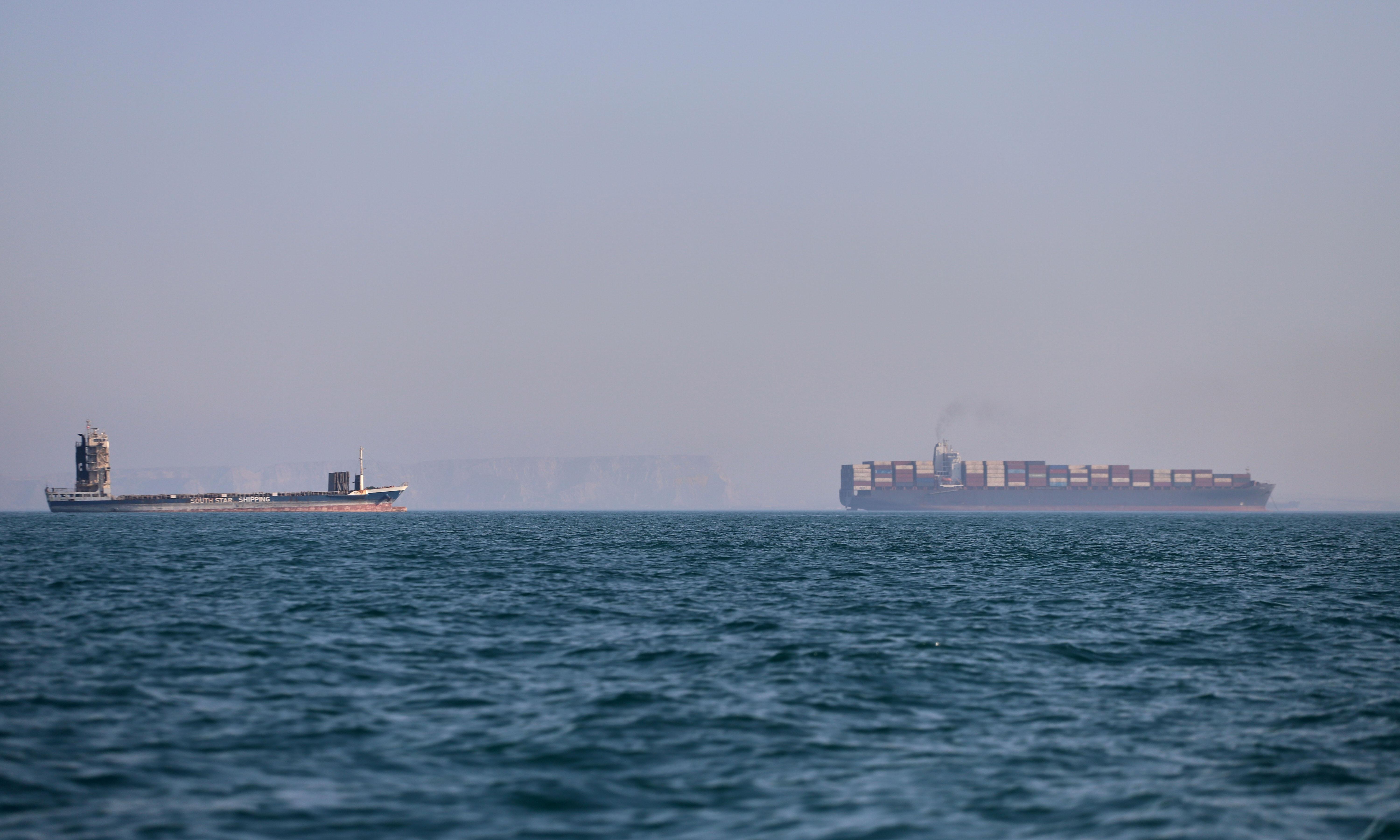
Dubai: The reopening of the Strait of Hormuz marks the end of nearly four months of disruption that sent crude oil prices soaring and heightened concerns over global energy supplies.
The Strait opened after a Memorandum of Understanding, signed by US President Donald Trump and his Iranian counterpart Masoud Pezeshkian to end the war, came into effect.
The Strait of Hormuz, a narrow waterway connecting the Persian Gulf with the Gulf of Oman, handles roughly 20 per cent of global energy supplies in normal times. Shipping through the waterway was severely disrupted since February 28, when the US and Israel launched joint attacks on Iran.
Before the conflict, around 138 ships used to pass through the strait every day, according to the Joint Maritime Information Centre.
At the height of the disruption, the number fell to a single digit.
Tehran moved to shut the waterway soon after the US-Israeli bombing began, and Washington responded weeks later with a naval blockade of Iranian ports.
The reopening of the Strait is expected to bring relief well beyond the region.
Commodity data firm Kpler estimates that a reopened strait could release roughly 93 million barrels of stranded non-Iranian crude from the Gulf, with a further 72 million barrels of Iranian crude – currently stuck on tankers west of Chabahar – freed up if Washington eases sanctions further.
The impact of the reopening is being felt well beyond West Asia.
A reopened route would allow exports to Europe and Asia to flow again without the costly detours that have pushed up freight and transport costs in recent months.
For India, one of the world’s largest energy importers, the development offers significant relief, but experts caution that the underlying vulnerabilities exposed by the crisis are far from resolved.
Why does the Strait of Hormuz matter?
The Strait of Hormuz is the principal export route for Saudi Arabia, Iraq, Kuwait, the UAE and Qatar. With this Gulf chokepoint blocked, large volumes of crude queued up on tankers waiting for the waterway to clear.
Energy-hungry economies from China and India to those across Europe and Africa rely on a steady flow of Gulf crude and liquified natural gas (LNG).
A full reopening is expected to bring relief on both counts – easing the bottleneck for Gulf producers while letting stranded barrels flow back to buyers worldwide.
For India, the Gulf countries are among its most important energy suppliers.
India imports nearly 85-90 per cent of its crude oil requirements, with around half of those supplies transiting the Strait of Hormuz.
When it comes to liquified petroleum gas (LPG), the most widely used cooking gas in the country, India imports around 60 per cent of its total demand, with roughly 90 per cent of those supplies passing through the Strait.
India also imports roughly half of its natural gas requirements, with nearly two-thirds of that arriving from Qatar and the UAE.
Fazzur Rahman Siddiqui, Senior Research Fellow at the Indian Council of World Affairs, said the Strait’s significance for India rests on several layers.
“It is a natural waterway, so we are not supposed to pay anything (transit fees), unlike the Panama Canal or the Suez Canal,” he said, adding that “around 60-80 per cent of our (India’s) oil and gas energy is passing through this and we are largely dependent on the Gulf countries, particularly Saudi Arabia, Qatar and UAE.”
During the conflict, Iran effectively blocked the Strait of Hormuz, and it was widely reported that Tehran also imposed transit fees on commercial ships navigating the waterway.
Siddiqui pointed out that the stakes extend well beyond energy.
“We have around 10 million diaspora in the Gulf… we largely depend upon imports from the region — not only oil and gas but fertilisers, potassium, and other petroleum products,” he said.
He linked the prolonged disruption directly to inflation and economic strain.
“We have seen the price of commercial gas going up, we have seen how flight tickets have gone up… any kind of disruption in the oil and gas supply would really lead to a halt in industrial production.”
Sebastian N, professor at the Centre for West Asian Studies in Delhi’s Jamia Millia Islamia, framed the dependence in more structural terms.
“This (Hormuz) is the cheapest, fastest and most convenient route for import from the Gulf region. Over the period, India has developed an efficient system of transportation through this route. Therefore, it is extremely difficult to find an alternative route,” he said.
Notably, both experts agreed that India weathered this particular crisis better than past Gulf disruptions.
“Unlike the situation during the two Gulf wars (1990 and 2003) earlier, this time India largely managed to avoid a complete disruption of its energy transportation from the region,” Sebastian said, crediting alternative supplies from Russia and Venezuela for cushioning the impact.
What does the MoU say?
According to the text of the MoU, Iran has agreed to make “best efforts” to ensure the free passage of commercial vessels through the Strait of Hormuz for 60 days.
The document says full normalisation is expected within 30 days once mines and other technical obstacles are cleared.
Tehran has also committed to opening talks with Oman and relevant regional players on the Strait’s longer-term administration.
How fragile is this peace?
Analysts and observers tracking the negotiations remain cautious about the durability of the agreement.
“The main external threat is the Israeli government and Benjamin Netanyahu’s obsession with sabotaging any opportunity for Iran and the United States to bury the hatchet,” Trita Parsi, executive vice president of the Washington-based Quincy Institute for Responsible Statecraft, wrote in his latest blog.
“Iran does not trust the US at all,” Siddiqui said. “The real conflict is not between the US and Iran. The real conflict is between Israel and Iran… Israel has repeatedly said it will not allow Iran to become a nuclear power… Israel is the one who began the war.”
Steve Yates, Senior Research Fellow at The Heritage Foundation, remained supportive of the MoU and Trump’s handling of the crisis.
“Trump’s operation in Iran significantly depleted its military capabilities. It will require force to hold Iran to the terms of any peace deal, but it’s unreasonable to say that the US is back to where it started three months ago when the operation began,” he told Fox News.
Disclaimer : This story is auto aggregated by a computer programme and has not been created or edited by DOWNTHENEWS. Publisher: deccanchronicle.com