
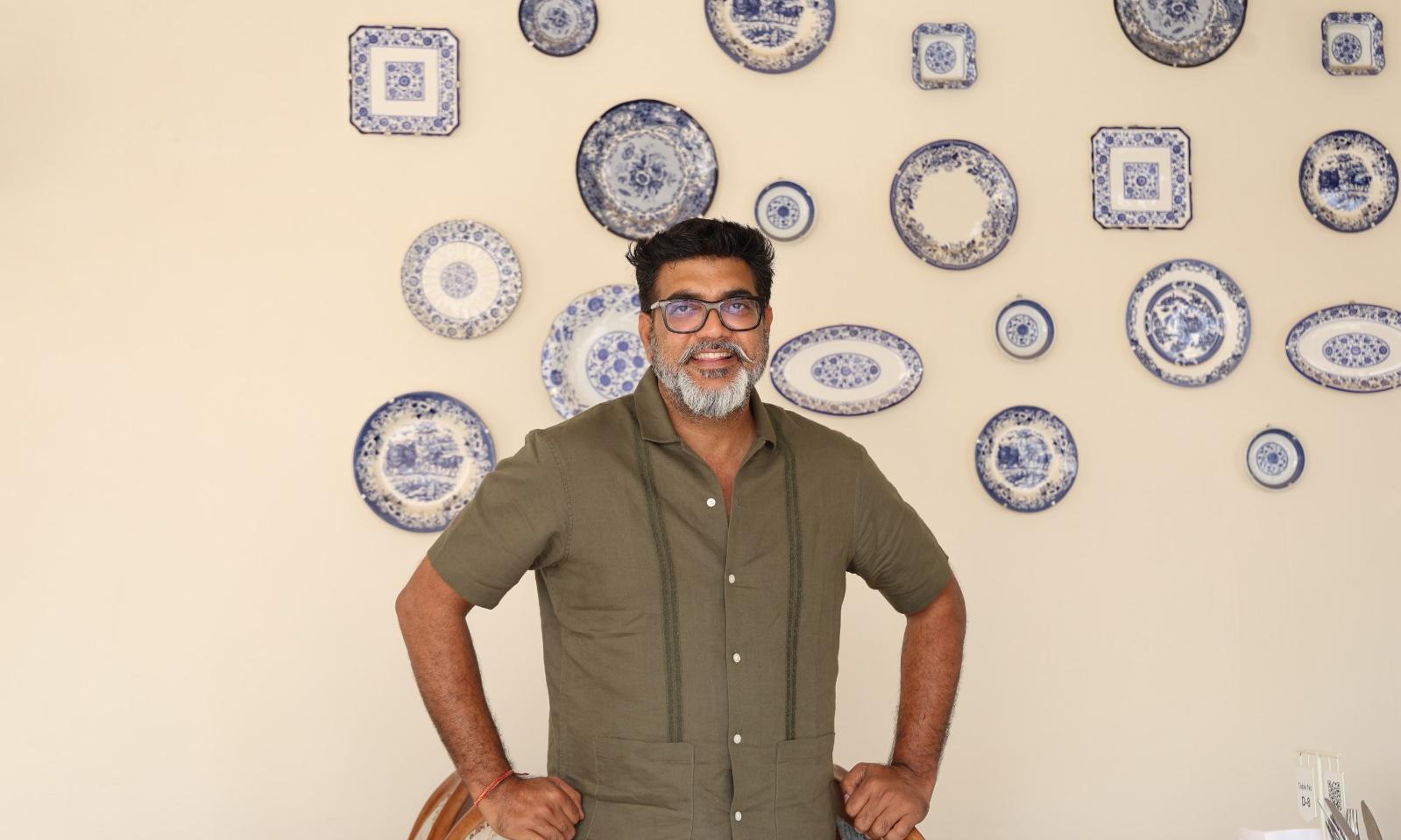
There is a point in every restaurant where technology stops mattering. It is the moment a guest walks through the door and someone looks up, remembers their name, knows what they like and makes them feel that they are welcome. For restaurateur Pravesh Pandey, that is where the future of hospitality lies.
Pandey has spent years watching the restaurant business change, from the way people eat and travel to what they expect when they walk into a dining space. Technology has made operations smoother and restaurants more scalable, but he believes something important has been lost along the way.
“The art of running a hospitality restaurant was cracking the code of how you make a guest feel,” he says. “But today, it is a smoother tenure of a restaurant because of the scale of how it has expanded. The art of making the guest feel has gone out of the window.”
He is not against technology. Quite the opposite. The hospitality visionary is clear that artificial intelligence has its place in the business. He sees it as useful for analysis, business intelligence, standard operating processes and research and development.
“I am a pro AI guy when it comes to making analysis, business intelligence reports or scaling SOPs and processes. I can take a lot of help from AI on research and development,” he says.
But hospitality, he believes, is different. “This is the only industry which is going to be least affected by AI,” he says. “The future of hospitality is the pendulum coming back to its own place.”
For him, that means returning to some of the basics that once defined a good restaurant. Remembering guests. Paying attention. Knowing what someone likes. Having a waiter who recognises a returning customer instead of treating every table like a number.
“Giving a better service where a guest can feel warm, remembering the guest names, their choices, I think that is what is coming on.”
He has already begun to notice the change. “Back in the day, you used to go to a restaurant and the waiter will remember you and bring your favourite drink even before you ordering. That is coming back.”
It is an interesting observation at a time when so much of dining has become faster and more convenient. Menus arrive through QR codes, orders can be placed without speaking to anyone and technology can track everything from table turnover to customer preferences. Yet the thing people seem to be looking for again is conversation.
That makes the training of people one of Pandey’s biggest concerns. “The hardest challenge is how to train people to become more empathetic,” the restaurateur says.
For Pandey, empathy cannot be taught simply through a manual. It has to come from understanding the work itself and respecting the people who do it.
He believes this is where experience becomes invaluable. Someone who has spent years learning the restaurant business from the ground up understands what happens before a plate reaches the table. They know what it means to wipe a glass, work a shift, handle a difficult guest and keep going.
“The experience is the best teacher who gives you the results first and then the lessons,” he says.
That philosophy also informs his thoughts on the next generation of restaurant professionals. He worries that too many people entering the business have not experienced the grind that comes with hospitality.
“95% restaurants are owned by people who are not from the hospitality background, who haven’t understood the grind of real hospitality,” he says. For him, that background matters because restaurants are not software companies. There is no clean formula that can account for every person who walks through the door.
“You are dealing with people. So, it’s all about EQ here,” he adds. And that emotional intelligence has to exist not only between the restaurant and its guests, but within the team itself.
That connection, he believes, is what will eventually separate restaurants that survive from those that merely open. The irony is that while technology has made it easier than ever to operate a restaurant, it may also have made the human side of the business more important.
Pandey’s own understanding of restaurants has been shaped by travelling, observing different cultures and seeing how people interact with food. That has led him to believe that restaurants are increasingly about creating a setting where people want to spend time, rather than simply providing somewhere to eat.
The food still matters. He is emphatic about that. “If you are an F&B business, it goes without saying that we need a creative food menu or menu which is of the highest food quality. It has to be the foundation of a good restaurant,” he says.
But good food alone is no longer enough. “Above and beyond the food is the ability of you capturing the mood of the audience and then seeing the wow when they walk into the restaurant,” he says.
That idea has shaped the way Pandey approaches destination-led restaurants. As the Managing Director of Roxie, Roxie & Barry, Helen’s Place, Helen & Lorena’s Place in Bengaluru Pravesh leads the creation of destination-led restaurants designed as living, breathing spaces — places where food, beverage, music, architecture, and people come together with intent.His inspiration came partly from the years he spent travelling and seeing how strongly people associate places with food, culture and atmosphere.
He wondered whether that experience could be recreated without asking people to board a flight.
“Every Indian has the aspiration of travelling,” he says. “So we thought, how about creating a restaurant which can teleport you without you going to a central area?” The idea is not simply to recreate a foreign cuisine. It is to build an environment where the food, music, design and atmosphere work together.
“It’s not just a background thing,” he says of music and ambience. “It is actually becoming a foreground product which complements the ceremonial mood sitting here somewhere.”
That shift says something about the restaurant customer today. People are travelling more, discovering cuisines through social media and becoming more adventurous about what they eat. At the same time, they are increasingly looking for good restaurants closer to home. Pandey sees this as one of the biggest changes in the industry.
“People want good food around them,” he says, pointing to the growing importance of hyper-local dining. Instead of travelling across a city simply to find something interesting to eat, customers are looking for experiences within their own neighbourhoods.
At the same time, he believes Bengaluru has become particularly receptive to experimentation. “Bangalore is very welcoming when it comes to trying new cuisines and new dishes,” he says.
The openness is visible in the growing variety of restaurant formats, from tiny restaurants to large breweries and destination dining spaces. European cuisines are finding audiences beyond the familiar Italian staples, while chefs and restaurateurs are experimenting with flavours that would have seemed unfamiliar to many diners a decade ago.
Yet experimentation comes with its own challenge. You cannot innovate with a cuisine you do not understand. “All innovations are based on discovery. So if you are innovating a new dish, you have to discover what is there and then try to tweak it or recreate something.”
That is why he believes exposure matters so much for chefs. A cook cannot simply be expected to recreate an unfamiliar cuisine without having experienced it, studied it or understood where it comes from.
“If you don’t know what a Peruvian food is, you can’t create a Peruvian innovative dish,” he says. The restaurant industry therefore faces a curious contradiction. Customers are becoming more adventurous, but the industry needs more people with the knowledge and experience to meet that demand.
For Pandey, the answer lies in investing in people, not simply processes. He talks about the importance of chefs who have worked in different kitchens, restaurant teams that understand service and managers who have actually experienced the pressure of running a dining room.
There is also something personal in the way he describes hospitality. It is not simply a business transaction for him. The satisfaction comes from watching people enjoy themselves. That may explain why he keeps returning to the idea of human connection.
When the food is competitive, when restaurants can look similar and when technology can make operations increasingly efficient, the thing that cannot easily be replicated is how a guest feels. It is a surprisingly simple proposition for an industry becoming increasingly complicated.
The future may bring smarter systems, better data and more automation. But for Pandey, the restaurant still comes down to the person standing across the table. And perhaps that is the part that cannot be automated. The reason someone remembers a place may have very little to do with how efficiently their order was processed and everything to do with whether someone made them feel seen.
Pandey’s answer to the future of restaurants is therefore not a rejection of technology. It is a reminder of what technology cannot replace. “We just need to go back and be focussing on the art of the human, develop more compassion, spend more, invest more time rather on the people,” he says.
For an industry built around bringing people together, it is an old lesson that may be worth learning again.
Disclaimer : This story is auto aggregated by a computer programme and has not been created or edited by DOWNTHENEWS. Publisher: deccanchronicle.com




