
The unusual May heat gripping the UK is forecast to intensify over the bank holiday weekend, reaching heatwave criteria in a number of locations.
Daytime highs are forecast to reach the upper 20s Celsius in many areas, with the low 30s Celsius likely in the week ahead.
Friday saw temperatures reach the official heatwave threshold in London where it exceeded 28C (82.4F), marking the warmest day of the year so far.
It’s possible bank holiday Monday could become the hottest May day on record as temperatures are forecast to approach 33C in south-east England.
Amber heat health alerts have been issued by the UK Health Security agency for the Midlands, eastern and south-east England.
Amber alerts mean there is a risk of a significant impact across health and social care services, with children and those aged over 65 at risk of negative health implications.
The remainder of England is under yellow heat health alerts, meaning adverse weather is “likely to affect vulnerable groups”.
Temperatures to continue climbing on Saturday
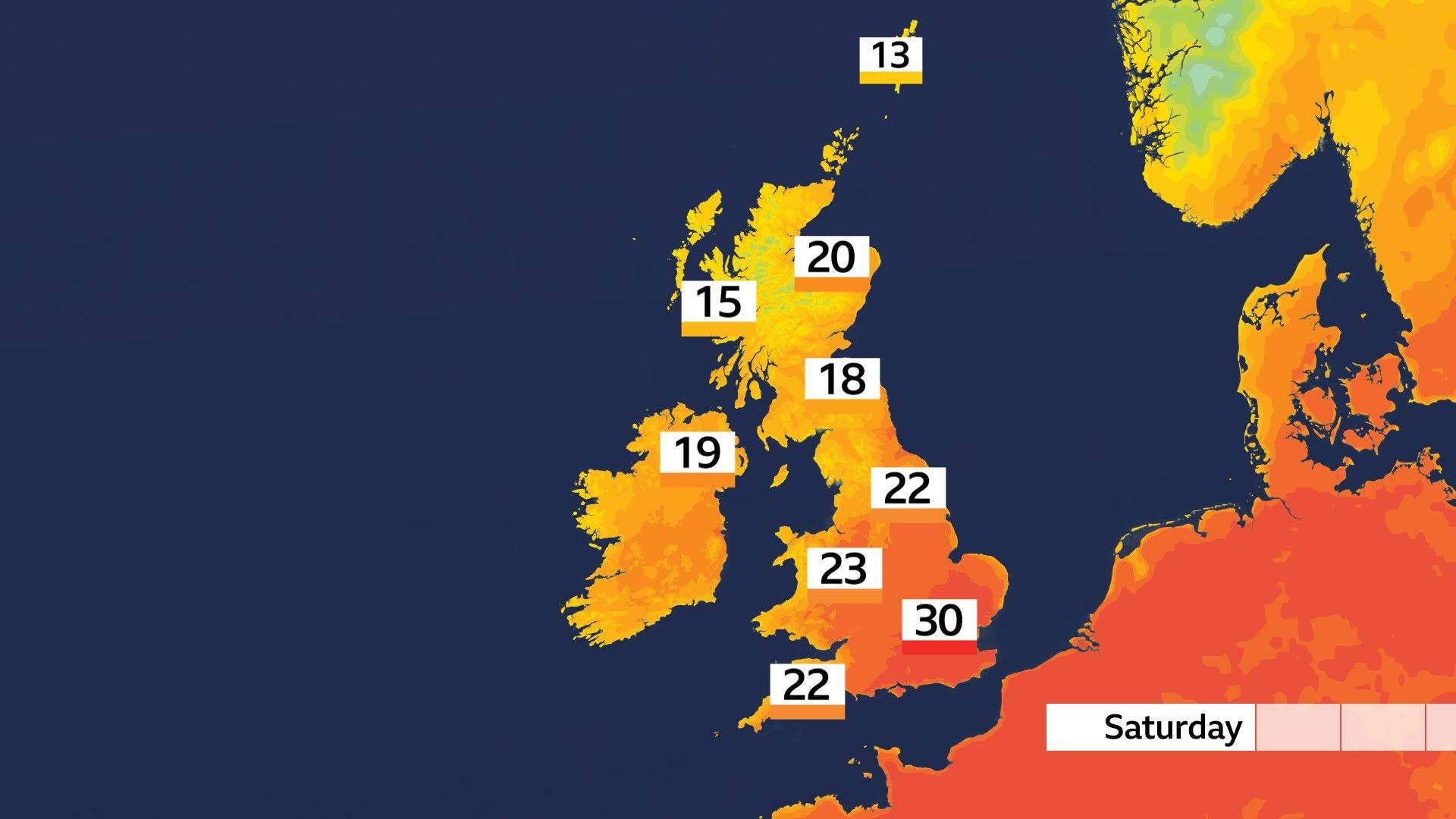
This weekend, the highest temperatures are expected across central and southern England and in parts of Wales. Average highs at this time of year are typically in the upper teens, but some spots may see values 10 degrees higher than normal.
It’s likely Saturday we’ll see another warmest day of the year as temperatures continue to tick upward.
With mist and low cloud still hanging around in the far west of south-west England, west Wales and northern Scotland, temperatures will be lower.
Spare a thought for those in the Northern Isles, Scotland, where it’s only going to reach 13C.
First heatwaves of 2026 likely to be declared on Sunday
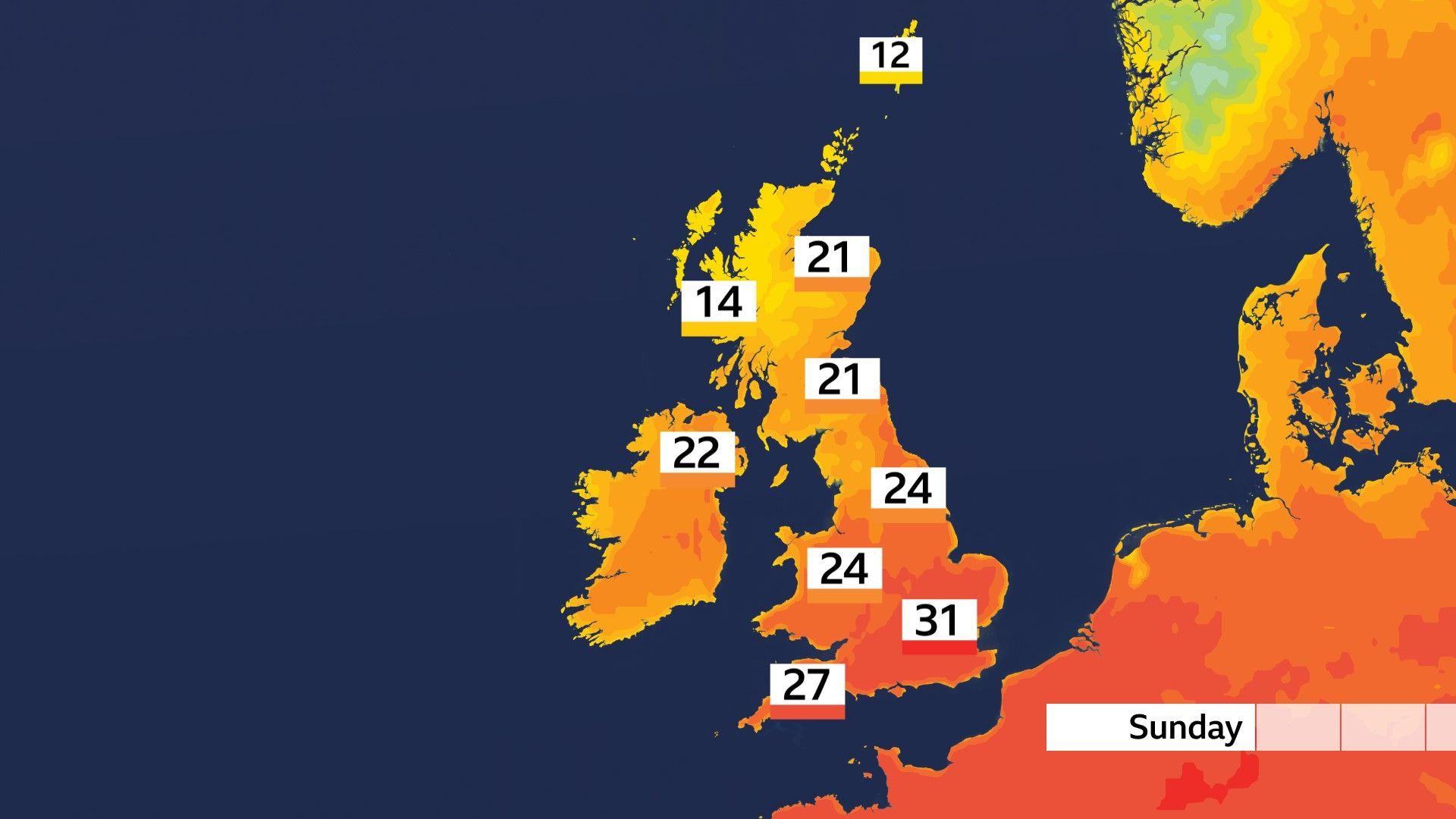
It’s likely that the first heatwaves of 2026 will be declared on Sunday as a number of areas are expected to reach their third day above the heatwave threshold, including in London and the south-east, as well as Cardiff.
Locally in the south Midlands and south-east England, it could hit 30C on Sunday, which would be relatively rare for May.
Days exceeding 30C – known as “very hot” days by the Met Office – used to be much rarer.
During the last decade, the number of these “very hot” days more than trebled compared with the 1961-1990 average, according to the Met Office.
The last time it reached 30C in May was in 2012.
Meanwhile, the cloud that has been lurking across southern Scotland and Northern Ireland should clear and whilst not as hot it will at least be sunny.
Bank holiday Monday could mark UK’s hottest May day on record
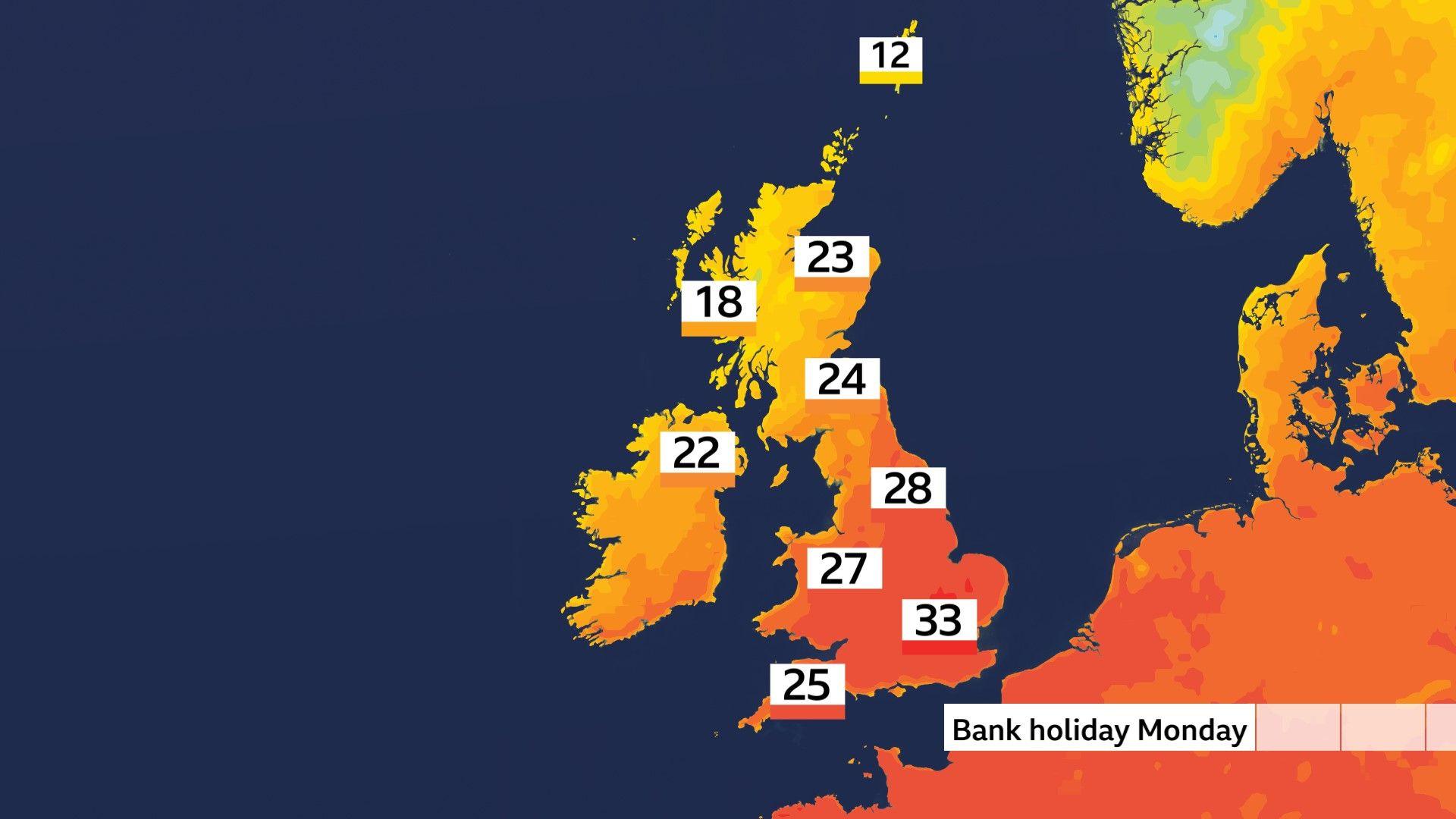
Monday could become the hottest May day on record with temperatures forecast to reach 33C in south-east England.
By surpassing 32.8C, they will break the May temperature record set on the Late May Bank Holiday in 1944.
But take note if you are planning to visit the east coast of England – you may come across some mist.
By Tuesday then across Wednesday and Thursday, temperatures which have been fairly muted for Scotland and Northern Ireland begin to rise. Glasgow could reach the low to mid 20s. Western Northern Ireland could also see the warmth approaching the mid 20s.
The UK’s weather varies a lot naturally, but this early season heat is consistent with the long-term trend of rising temperatures because of human-caused climate change.
What’s extraordinary about this heatwave is not only the level of heat but its duration. Temperatures may not return to the seasonal norm for close to a week.
-
-
2 days ago

-
-
-
2 days ago

-
Disclaimer : This story is auto aggregated by a computer programme and has not been created or edited by DOWNTHENEWS. Publisher: BBC