
Household energy bills forecast to see biggest rise in four years
-
Published
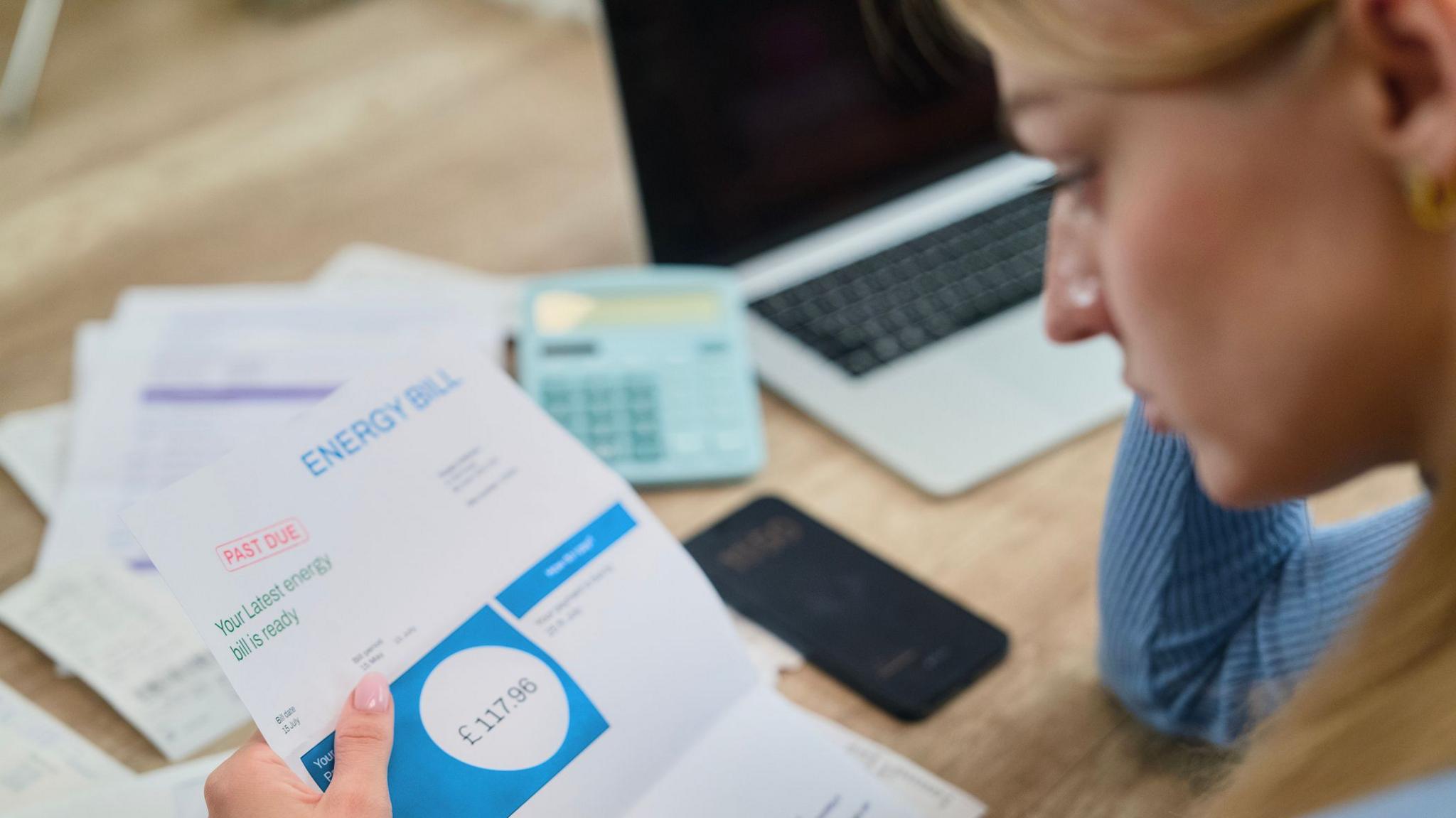
Household energy prices are set to soar in January, with a typical annual bill forecast to jump by £276, figures shared with the BBC reveal.
The 16% predicted increase would hit millions of households at the coldest time of year, and would mark the biggest rise in bills for four years.
The forecast from consultancy Cornwall Insight comes a day before prices go up under regulator Ofgem’s October price cap and puts increased pressure on the government to support those who will struggle to pay.
Meanwhile, the boss of supplier EDF Simone Rossi has warned the UK is “walking into a second energy crisis” and called for an extension to the VAT cut on electricity which kicks in on Thursday.
Energy prices bite in winter
About 20 million households in England, Scotland and Wales are on variable energy tariffs set by Ofgem’s price cap, which puts a maximum price on each unit of gas and electricity.
Those homes will see a 4% increase in prices on Thursday, the equivalent of about £60 per year – or £5 per month – taking an annual bill to £1,723 for the typical household using both electricity and gas and paying by direct debit if this level was sustained for a year.
That rise would have been higher without the government’s VAT cut, which knocks the equivalent of about £45 a year off a typical bill.
But forecasts show a far greater increase is possible for bills in January. Cornwall Insight said its latest forecast suggests the typical annual bill would rise to £1,999.

The forecast 16% rise will come at the worst time of year, according to Craig Lowrey, principal consultant at Cornwall Insight.
“These prices are going to hit households hard. January is already a difficult month for many, with cold weather and bank balances still recovering from Christmas,” he said.
The predicted rise is the result of disruption of gas supplies owing to the conflict in the Middle East, and the resulting low gas storage levels in Europe. Rebuilding those stocks could mean high bills “well beyond the winter”, the forecaster said.
Cornwall Insight has a strong track record on forecasts and is widely respected across the industry and politics. Similar forecasts have been made by energy suppliers.
-
What will the energy cap changes mean for my bills?
-
Published1 day ago
-
-
Four ways to keep your energy bills down
-
Published1 day ago
-
This remains only a prediction at this stage. Ofgem will not announce the actual January price change until late November.
While an easing of tensions in the Middle East could lessen the pain for billpayers, the price setting period for the January cap is already halfway through.
With little sign of a truce or lower international energy costs, a big increase in prices for those not on a fixed tariff looks highly likely. Lowrey said a January rise was “all but certain”.
‘Everything’s going up’

That will be tough for people like Aaron Richards from Maidenhead.
“I try to eat less takeaways, work more overtime, and try to budget a bit better, but at the same time, we shouldn’t have to,” he said.
Aaron drives a diesel car, and so is paying record high prices to travel to and from work.
“I just feel like everything’s going up. How far is it going to go? Someone’s got to step in,” he said.
“I know people who can’t afford to heat their house and they’re struggling at the moment. Housing and eating are two of life’s essentials that everyone should have. It shouldn’t be a challenge to have any of those things.”
Years of relatively high domestic energy bills have left some people facing big sums in unpaid bills.
Recent data from Ofgem showed that customers collectively owe more than £5bn in unpaid bills and charges to suppliers.
The regulator has a proposed debt relief scheme on the table, and campaigners keep telling them to get on with it, urging the government to provide funding for it to be implemented.
“This is unsustainable, not just for households but also for the market as a whole,” said Adam Scorer, chief executive of fuel poverty charity National Energy Action.
“The Budget must deliver additional targeted support for households most at risk this winter, alongside action to tackle energy debt and improve the least energy-efficient homes.”
To play this video you need to enable JavaScript in your browser.
This video can not be played
Among others calling for government help for struggling billpayers is Simone Rossi, chief executive of supplier EDF Energy.
Speaking exclusively to the BBC’s Big Boss Interview podcast, Mr Rossi said: “We are actually walking into a second significant energy crisis after the one we experienced just four years ago.”
He said that the government should extend the cut in VAT on electricity bills from 5% to 0% beyond April, when it is due to expire.
He also urged ministers to give the go-ahead to the new Jackdaw gas field off the coast of Aberdeen, and the Rosebank oil field off Shetland.
The government has consistently said that it will consider ways to offer breathing space to billpayers on the cost of living.
Additional reporting by Oliver Smith and Paul Seddon. Graphics by Miguel Roca-Terry.
-
-
Published10 August

-
Disclaimer : This story is auto aggregated by a computer programme and has not been created or edited by DOWNTHENEWS. Publisher: BBC




