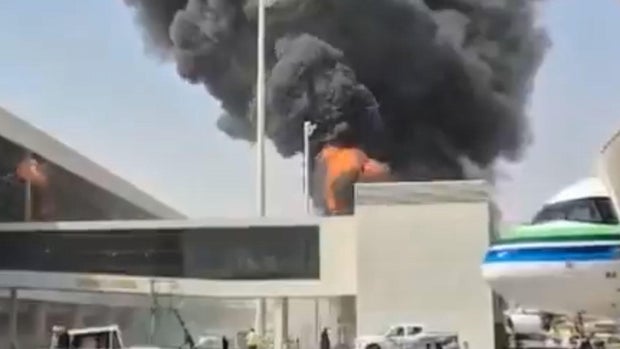
London — Yemen’s Iran-backed Houthi rebels have dramatically upped the stakes in the complex Middle East war, killing at least 20 people — including an American — and wounding hundreds more with strikes on Saudi Arabia’s airports over the last week.
The question is whether President Trump will order U.S. military action in support of Saudi Arabia, which has been at war with the rebels in Yemen for more than a decade.
Mr. Trump campaigned on ending wars, and he is likely aware, less than a month before the U.S. midterm elections, that opening a new U.S. front in the wider conflict sparked by the Feb. 28 joint U.S.-Israeli attack on Iran could be politically perilous.
If he did, he could argue that it is both to protect the Saudis, as a key U.S. ally, and to stop the Iranian proxy group from threatening global shipping in the vital trade routes of the Red Sea.
Mr. Trump rejected a request last month by Saudi Crown Prince Mohammed bin Salman to join in the kingdom’s strikes on the Houthis, two sources familiar with the matter told CBS News. He came close to ordering airstrikes against the group a week later, but again declined.
Asked Sunday if the U.S. would join Saudi strikes, however, the president replied: “We may. We’re gonna look at it … We’ll make a decision. We move very quickly.”
So, what has changed, and will it be enough to force Mr. Trump’s hand?
An American death
Little information has come out about the U.S. citizen killed in the Saturday attack on Riyadh’s King Khalid International Airport, but the killing of an American may increase pressure on Mr. Trump to retaliate.
According to Nadwa al-Dawsari, associate fellow at the Middle East Institute, it may not be enough in itself, however, to spur the president to further entrench the U.S. in the wider regional conflict.
“I don’t think that the killing of an American will trigger a military response,” she told CBS News on Monday. “The Houthis have killed American civilians before, including detainees who died after being tortured by the Houthis in Sanaa, and that did not provoke a response from the U.S., militarily or otherwise. Trump’s decision will likely depend on his broader assessment of the risks of further escalation.”
Oil prices
Oil prices may be one of the biggest factors in the president’s calculus. He has vowed repeatedly to bring down prices at the pump, which have soared as a result of the war with Iran impeding exports from major Persian Gulf energy producers.
The Trump administration insists Iran has no control over the Strait of Hormuz, and more oil has been getting out of the Middle East from the Persian Gulf in recent weeks.
But the Houthis hold significant territory along Yemen’s Red Sea coast, which has enabled them to threaten vessels there and in the Bab el-Mandeb Strait, the southern gateway to the Red Sea and another key chokepoint for global energy supplies.
Getty/iStockphoto 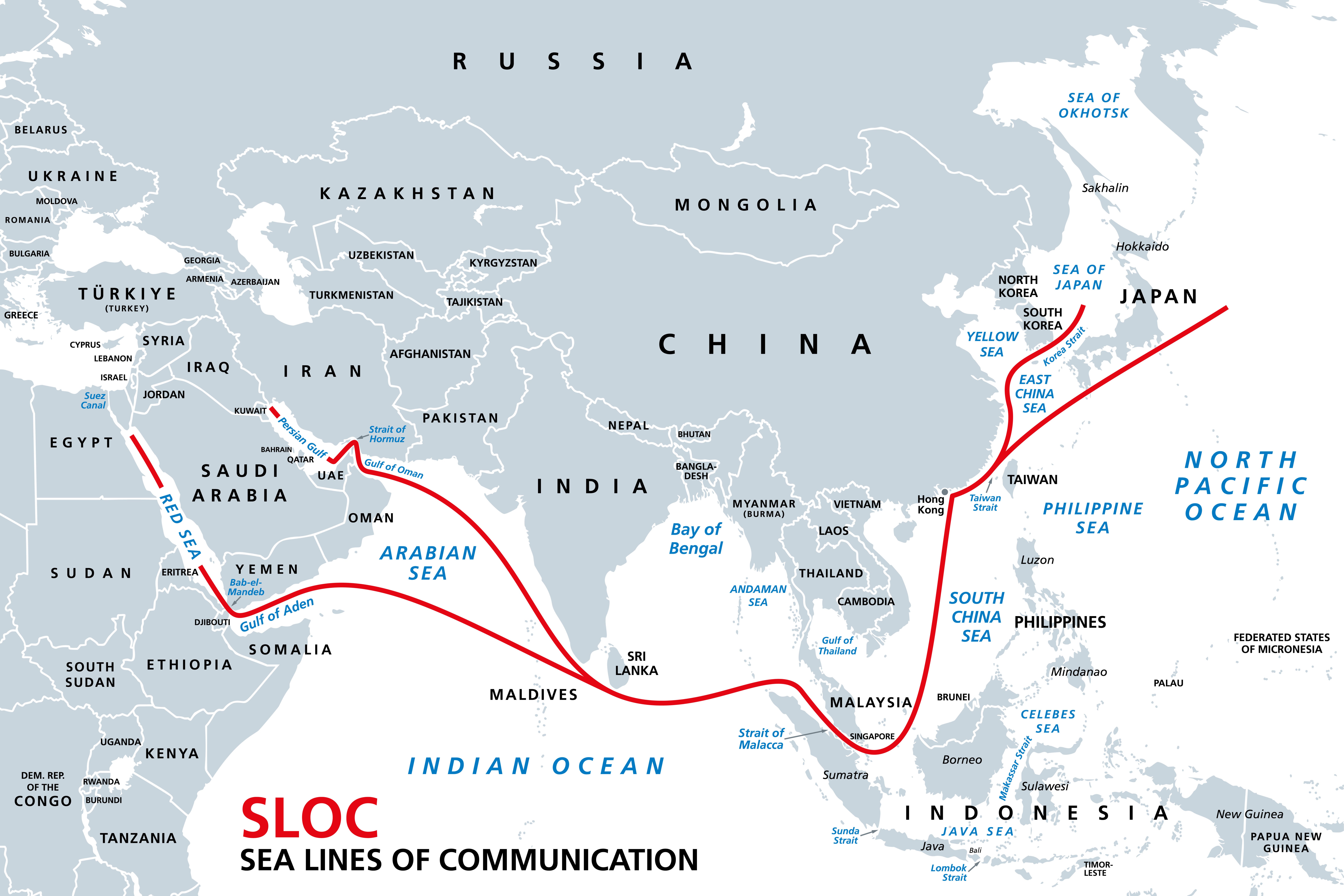
If the Houthis are able to control Yemen’s coastline, or enough of it to maintain their threat to shipping via the Bab el-Mandeb, it would put more pressure on energy flows, increasing the leverage Iran and its proxy groups have over global fuel prices.
Thomas Juneau, associate fellow at the Chatham House think tank’s Middle East and North Africa Program, told CBS News that this creates “a difficult dilemma for President Trump.”
“Direct U.S. involvement would likely lead to greater tension in the Red Sea, and therefore create more upward pressure on oil prices,” he said. “Should the U.S. refuse to become directly engaged, however, it will cause growing resentment and anger in Saudi Arabia, where feelings of abandonment caused by a widespread perception that the U.S. is failing to support its partner at a time of need are already acute.”
Helping an ally
Despite long-running U.S. accusations that some members of the Saudi leadership supported the al Qaeda Sept. 11 hijackers, and the fallout from the brutal murder of journalist Jamal Khashoggi in 2018, Saudi Arabia has managed to maneuver itself into a position of relative international respectability over the last few years, pursuing a raft of economic reforms to attract foreign investment and building on its status as the world’s top oil exporter.
The foreign money and visitors could dry up, however, if the Saudis prove incapable of defending themselves from Houthi attacks.
Saudi authorities regularly report intercepting Houthi weapons. But the death toll over the last week has exposed gaping holes in Saudi defenses. The Reuters news agency reported Tuesday that the Saudi system to warn civilians of a military attack went silent days before the latest series of deadly Houthi strikes.
The Trump administration has fostered close business and defense ties with the Saudis, and failing to come to the aid of an ally in need — especially one that hosts five U.S. military bases — could make Washington appear to be an unreliable ally.
What do the Saudis want, and would it be effective?
Of all the military options at Mr. Trump’s disposal, airstrikes on Houthi targets “would make the greatest difference,” al-Dawsari told CBS News. The U.S. has, so far, only acknowledged offering intelligence and targeting support to Saudi Arabia.
“The United States can also strengthen air and missile defense cooperation and help identify Houthi launch sites, weapons facilities, and command-and-control infrastructure,” al-Dawsari said.
While the aim of U.S. strikes would likely be “to degrade the Houthis’ ability to launch missiles and drones against Saudi Arabia and threaten shipping in the Red Sea,” al-Dawsari said “airstrikes alone will not eliminate the Houthi threat.”
“The real question is whether American military action would be part of a broader effort to weaken the Houthis, or simply another round of limited strikes that they can absorb and recover from,” she said.
“The risk is that the United States becomes drawn into a prolonged military campaign against the Houthis while already fighting Iran. But there is also a risk in allowing the Houthis to continue operating as an Iranian military asset and a threat in their own right at Bab el-Mandeb and in the Red Sea,” she added.
Houthi Media Center via Getty 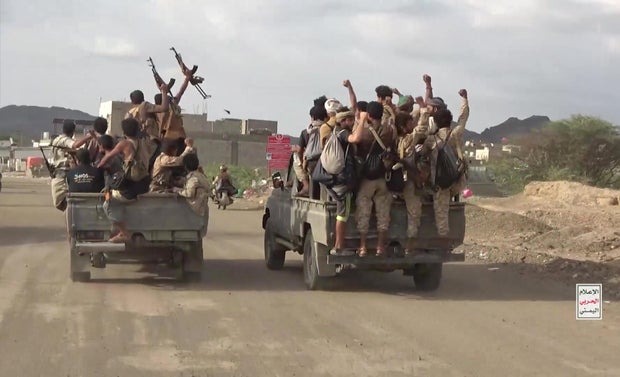
“The United States has a significant interest in keeping the Bab el-Mandeb open, and in protecting the Saudi economy — in particular, the kingdom’s ability to export energy products,” said CBS News national security analyst Aaron MacLean. “A world in which the Houthis are regularly scoring spectacular hits in Saudi Arabia … is not a world in which America’s interests are secure.”
MacLean cautioned, however, that in addition to the risk of making energy markets even more nervous and driving prices up further, “President Trump has to consider that American military action targeting the Houthis will almost certainly be indecisive.”
While U.S. strikes could help push the Houthis back and reduce their attack capabilities for a time, “the most Washington can reasonably hope for from a major military operation — adding American airpower to existing capabilities on the ground — is a ‘mowing of the lawn,'” said MacLean, and “participating in a protracted conflict with no clear theory of how to end it is a tough sell when you are a president who campaigned on ending so-called ‘endless wars.'”
The U.S. has targeted the Houthis before, with strikes between March and May 2025 to prevent the group from attacking commercial ships in the Red Sea. The group claimed those attacks were in support of Palestinians, amid Israel’s blockade of the Gaza Strip.
The U.S. strikes did “cause significant pain to the Houthis … much more than what Saudi Arabia has been able to do,” said Juneau, at Chatham House in London.
But even those American strikes “were not sufficient to fully deter the Houthis from continuing their attacks in the Red Sea, let alone to defeat them,” he said.
“The bar for President Trump to authorize strikes now is seemingly pretty high,” according to Mona Yacoubian, director of the Middle East Program at the Center for Strategic and International Studies. “The U.S. is only likely to intercede now in the event of a Houthi attack that results in several U.S. casualties.”
Asked about the Houthis, President Trump said Monday that the rebels were “misbehaving very badly.” He repeated that in a Truth Social post Tuesday, adding that he thought the group “learned their lesson a year ago when we bombed the HELL out of them.”
Annabelle Gordon/REUTERS 
“Now they’ve emerged again, probably at the behest of Iran,” Mr. Trump said in the post, adding that the rebels were “in a very nasty way, hitting Saudi Arabia, and purposefully trying to drive up Oil Prices, probably prior to the U.S. Elections — NOT NICE. Somebody should explain to them that I’m not running in the Elections, I’ve already won, IN A MASSIVE LANDSLIDE, but I’ll be there after the Elections, and I will never forget!”
In an interview with the French news agency AFP, meanwhile, Houthi political bureau member Mohammed al-Bukhaiti warned Tuesday that if the U.S. chooses to get “involved in the aggression against Yemen, we will not deliberate over the decision to respond, rather, there will be a swift and painful response targeting the U.S. and all its interests in the region.”
Given the Pentagon’s recent acknowledgment of U.S. munitions shortages caused by the war with Iran, Mr. Trump will have to consider carefully the American military’s ability to defend against and respond to potential Houthi retaliatory attacks if he does wade into Yemen’s civil war.
Disclaimer : This story is auto aggregated by a computer programme and has not been created or edited by DOWNTHENEWS. Publisher: cbsnews.com