In a global fashion landscape dominated by luxury labels, a quiet shift is emerging from the villages of Odisha — one that is redefining what luxury can look like.
At its centre is a coat. Not just a garment, but a canvas of stories. Trees, birds, and deities come alive through intricate weaves, carrying with them the cultural memory of Odisha’s tribal communities.
For years, these textiles remained largely unseen beyond their regions of origin, even as global brands thrived on scale and visibility. That contrast became impossible to ignore for Richa Maheshwari.
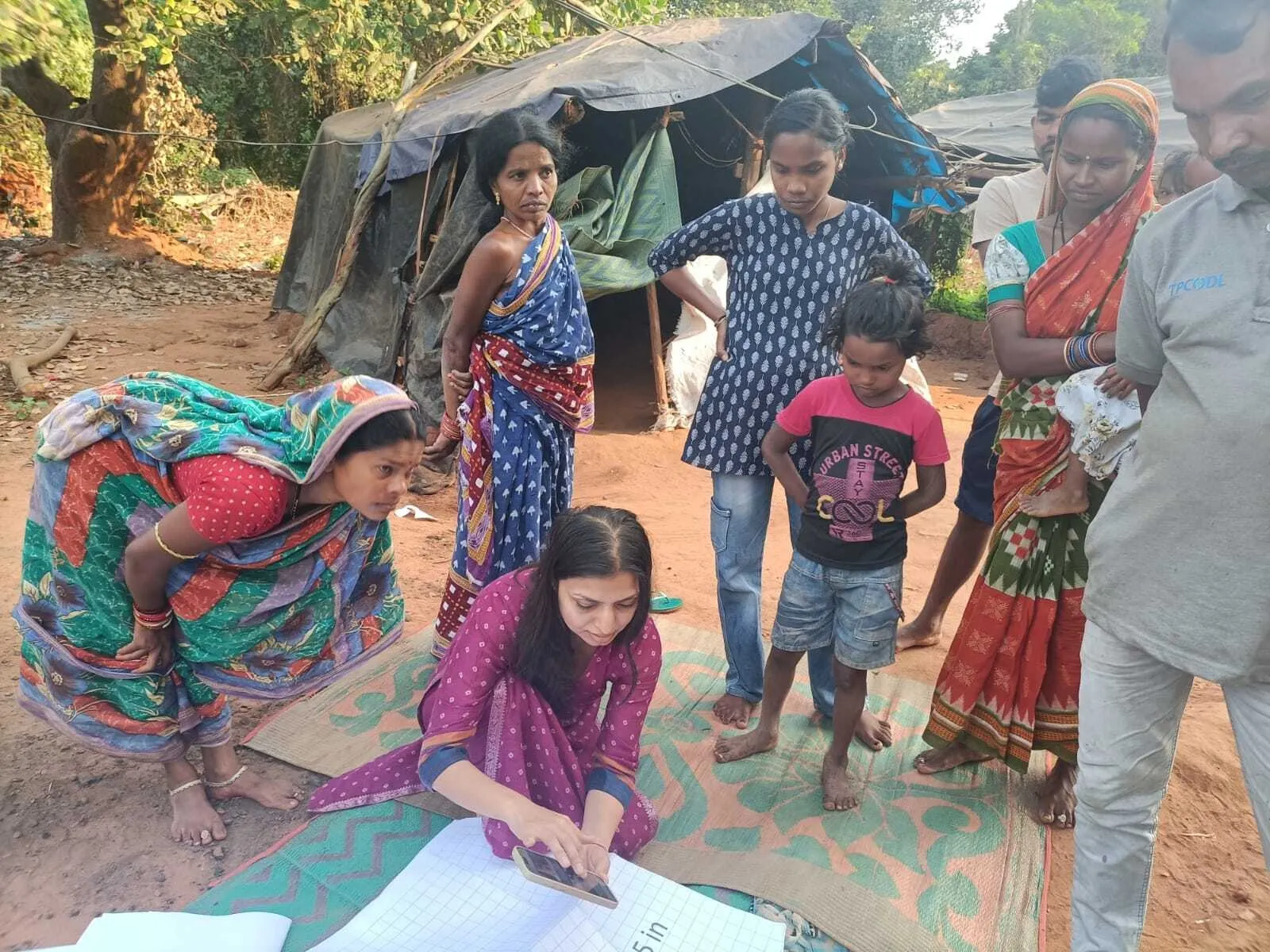
After 17 years in the corporate world, a visit to Odisha changed her perspective. What she encountered were master artisans with exceptional skill, working with techniques refined over generations — yet struggling to sustain themselves in a fast-fashion economy.
The challenge was clear: the craft did not need reinvention. It needed recognition.
Building that bridge, however, was not immediate. Reaching remote tribal communities and earning their trust required time, patience, and consistency. Richa travelled across villages, spent time with artisans, and immersed herself in their processes — learning, not directing.
She worked with a range of traditional textiles: the intricate Khandua silk of Nuapatna, the distinctive Kapagandha weaves of the Dongria Kondh tribe, and the Ringa textiles worn by the Bonda community.
Instead of altering the craft, she reimagined its context.
Natural dyes, handlooms, and indigenous techniques remained central
Through her platform, Boito, these textiles began to take on new forms — jackets, trench coats, and contemporary silhouettes that could move beyond regional boundaries. Natural dyes, handlooms, and indigenous techniques remained central, but the presentation shifted.
The result was a body of work that spoke both to heritage and modern design sensibilities.
Over time, what was once overlooked began to find new audiences. From exhibitions in Goa to showcases at India Art Fair and platforms across Europe and Asia, Odisha’s tribal weaves started gaining visibility on a global stage.
They were no longer seen solely as traditional textiles, but as objects of design and luxury.
For the artisans, this shift has had tangible impact. Communities that once faced declining demand are now finding renewed livelihood and recognition.
Boito’s work does not position itself as preservation alone. It operates on a different premise — that craft survives when it is desired, worn, and valued in the present.
In doing so, it is not just challenging global luxury narratives, but expanding them — to include stories woven far closer to home.
Sources:
‘‘It took me one trip to appreciate what Odisha’s crafts have to offer’, By Jishnu Bandyopadhyay, Published in CN Traveller on 26 November 2023.
‘How one Indian label is empowering and preserving the weaver communities of Odisha’, by Namrata Kedar, Published in Vogue on 4 December 2023.
‘A textile-forward brand that’s the opposite of fast fashion’, by Chloe Chou, Published in The Nod Mag on 14 December 2024.
‘Folklore inspires slow-fashion label Boito’s designs, handwoven by communities in Odisha’, by Sohini Dey, Published on 6 September 2025.
‘BTB Speaks to Richa Maheshwari’, by Manica Pathak
Disclaimer : This story is auto aggregated by a computer programme and has not been created or edited by DOWNTHENEWS. Publisher: thebetterindia.com