
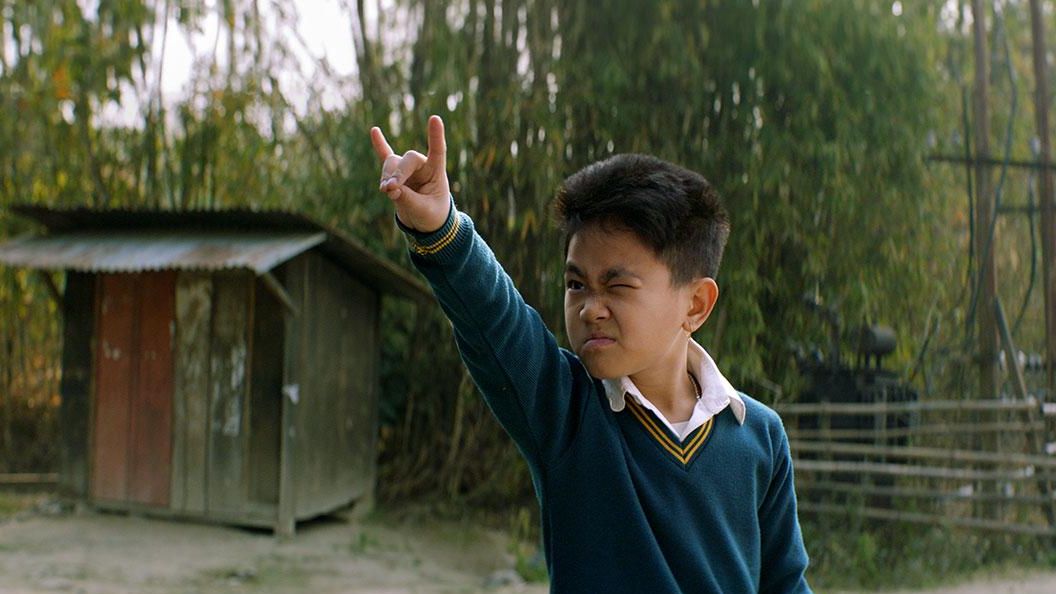
Arun: Authenticity and attention to detail were key here. It could be something as small as the colour of Boong’s shorts that he sleeps in, to JJ’s performance outfits, for which the brief was “oriental, but set in a border place like Moreh.” If you pay attention, you’ll notice that Mandikini wears tone-on-tone looks, which we maintained throughout—meaning similar colour for phi, her blouse, and her phanek, almost every time. For Boong’s English school, St. Anthony, we created the uniforms and the real principal of the school loved the design so much that he decided to retain it. We also sourced the Indian army uniforms from the local army shops in Manipur (with proper permission, of course), and the Myanmar army uniforms were designed.
Vogue India: As the narrative moves across different spaces, does the wardrobe respond more to geography or emotional arcs?
Arun: It was actually both, and there were moments where emotion shaped the costume very directly. For example, during the shradh ceremony held for Mandakini’s husband, who is presumed dead, she is supposed to wear white or off-white, and Boong is meant to have his head shaved. But because she doesn’t believe her husband is dead, she arrives fully dressed in her bright pink phi, rejecting the idea of his death in front of everyone.
Pankhuri: We approached that sequence very deliberately. The outfit needed to leave a lasting impression, and keeping in mind that a bright pink phi is traditionally worn during wedding processions in Manipuri culture, we set out to find the most striking piece. Incidentally, our search led us to LP’s friend’s wardrobe, where we found exactly what we needed, and it allowed the scene to hold both meaning and impact, reinforcing Mandakini’s position without needing anything overt.
Vogue India: The film feels deeply lived-in. How did you ensure the wardrobe remained organic rather than stylised?
Arun: We did extensive groundwork for every scene, and I would often double-check with local crew members to ensure everything felt accurate. Certain costumes also required ageing, which we handled during prep using different techniques so that the clothes didn’t feel new or constructed.
Pankhuri: Every garment was treated in relation to the narrative, so it felt worn-in and natural. The intention was always for the clothing to feel like an extension of the characters’ daily lives, and not merely something created for the camera.
Disclaimer : This story is auto aggregated by a computer programme and has not been created or edited by DOWNTHENEWS. Publisher: vogue.in



