
The doctor says a name you have never heard before, then explains, gently, that it is what your child has. The room goes quiet. Somewhere in the sentence that follows, how rare it is, what it might mean for your child’s life, most of it stops making sense.
You nod, and might even ask a question you already know the answer to, just to feel like you are still part of the conversation.
Over 4,001 rare diseases were on record with the Indian Council of Medical Research as of 31 October 2021, and roughly 80% are genetic, which means they disproportionately affect children.
Reaching that moment alone, the one where a name finally exists for what your child has been going through, can take years of tests and second opinions, a journey several Indian families fighting for treatment access have described as an ordeal in itself.
What gets spoken about even less is what comes after: how you sit with the news, find the words for your child, prepare their siblings, and explain it to a joint family that will have questions, opinions and sometimes, unhelpful theories of its own. Child psychologists say there is a workable order to get through all of it.
Absorb the shock before you explain it
“The instinct after a diagnosis is to start solving immediately. Researching treatment, calling relatives, booking the next appointment. But we generally advise parents to resist this for the first few days,” explains Kalyani Raman, a Chennai-based child psychologist specialising in family counselling.
She recommends bringing another adult to follow-up appointments to take notes, since it is common to mishear or forget details while absorbing distressing news. Kalyani’s wider point, that most families eventually find a new equilibrium, is worth holding onto early, because the first days rarely feel like equilibrium at all.
In India, that adjustment is often complicated by how long it took to get an answer, since general physicians are usually the first point of contact and rare conditions sit outside their usual training.
“By the time a family has a name for what their child has, they may already be running on empty, which makes the urge to problem-solve immediately even stronger, and even more worth pausing,” she explains.
Match the words to your child’s age
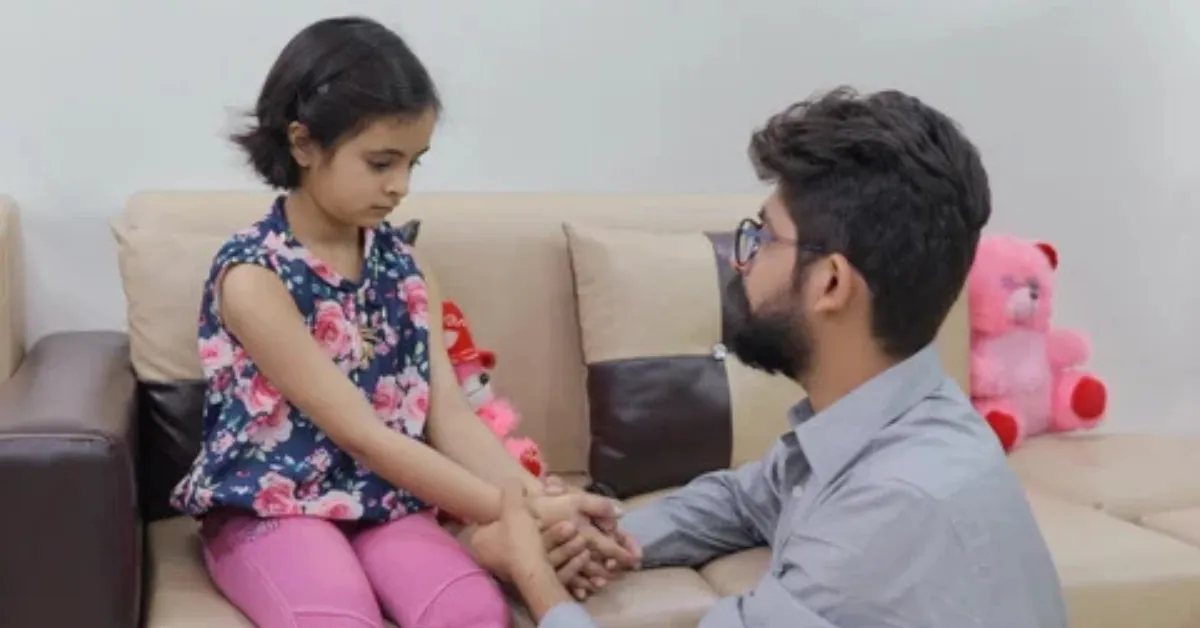
Ritu Burman, a former family counsellor in Mumbai, advises starting any conversation with a child by asking what they already understand, since children often absorb more than adults assume from overheard conversations and hospital visits.
Her guidance, developed for talking to children about a loved one’s illness, applies directly to a child’s own diagnosis too: keep language concrete, avoid euphemisms that can confuse or frighten, and let the child’s questions set the pace instead of delivering everything at once.
“Parents should show their own coping rather than hiding it, since visible composure paired with honest emotion teaches a child that difficult feelings are survivable. For younger children, this can mean describing the condition through changes in daily life, medicines, appointments, what they can still do, rather than through a label they cannot yet process,” she says.
Her guidance for families managing a chronic diagnosis adds one more point: “reassure a child that nothing they did caused the condition, since children commonly and wrongly blame themselves.”
Prepare siblings too
A diagnosis rarely affects one child alone. Kalyani cautions parents against loosening routines or expectations for the child’s siblings once a diagnosis arrives, since maintaining the same structure and boundaries across the household protects everyone’s sense of stability.
“Siblings often carry a quieter version of the same fear and guilt their parents feel, wondering whether they somehow caused the condition or why their brother or sister was affected and they were not. Giving siblings small, age-appropriate ways to help, learning a caregiving task, or simply being told what is happening before they overhear it, tends to ease that guilt more than shielding them from it does,” she tells The Better India.
Occasional one-on-one time with each sibling, away from hospital routines, does more for a child’s sense of security than repeated reassurances.
Decide the family script before anyone else does
Extended family in India is rarely a background presence, and a rare diagnosis is often filtered through outdated ideas about consanguinity, blame or fate.
Psychologist Shanmathi Shankaran suggests that, “Parents would benefit from agreeing on one simple explanation before the news spreads informally, so grandparents, in-laws and neighbours hear the same version rather than a rumour that grows more alarming with each retelling.”
This script needs no medical detail. It needs to state what the condition is, what it is not, and what the family needs from people around them, whether that is patience, practical help or fewer questions.
“Families who have gone public with a child’s rare diagnosis in India have also had to push back against mental health stigma and unsolicited home remedies, adding exhaustion on top of the medical demands,” she explains. Naming that in advance, and deciding in advance who in the family fields which questions, takes some of that weight off the parents alone.
Build the support system around the diagnosis
None of this is meant to happen unaided. Genetic counselling, still scarce outside major Indian cities, gives parents a structured space to process both the medical facts and the emotional fallout, including guilt that has no basis in anything they did.
/filters:format(webp)/english-betterindia/media/media_files/2026/10/01/4-2026-10-01-16-47-56.jpg)
“Support groups, whether run by disease-specific patient associations or broader parent networks for children with special needs, offer something a clinic cannot, which is other families who have already lived through this exact day,” says Kalyani.
Psychologists also recommend looping in the child’s medical team early, since many hospitals have social workers or child life specialists trained to help families navigate this period, not just the child’s treatment.
What psychologists consistently report is that the crisis phase passes. Most parents, given time, information and a support system that includes their own extended family, find a working rhythm again, even when the diagnosis itself does not change.
Disclaimer : This story is auto aggregated by a computer programme and has not been created or edited by DOWNTHENEWS. Publisher: thebetterindia.com






