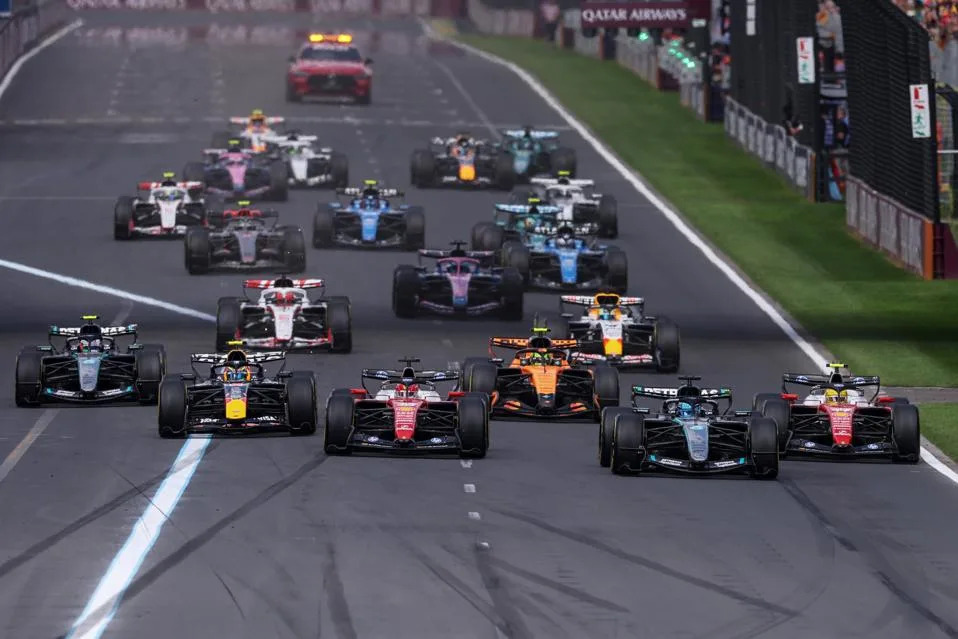
Formula 1 or F1 as it is often called gives fans plenty to talk about before a car reaches the starting grid.
And F1’s fans are engaged.
Driver personalities, team rivalries, engineering and the spectacle of a Grand Prix create entry points for people whose curiosity may begin far before a racetrack visit.
Advertisement
Nielsen estimates a 12% year over year increase with 831 million fans. One of the fastest growing sports in this country and expanding quickly outside the US. That is part of what makes the sport interesting through a broader consumer lens.
A passion can shape where people travel, how they spend their free time and whom they want to spend it with.
For businesses serving those fans, the opportunity is to help an interest become a meaningful part of their lives.
Private motorsports clubs offer an example.
At Apex Motor Club, President Bill Barba describes a business whose appeal extends beyond driving. The circuit provides a place to pursue their passion. The relationships give members reasons to return.
Advertisement
“Cars bring them in, but it’s that shared community and fundamental interests that they can experience together that makes it exciting for them,” Barba told me in a recent zoom call.
Formula 1 Creates More Ways In
Formula 1 sits at the intersection of sport, entertainment, fashion and hospitality.
Someone may first become interested through a driver’s story, a conversation with friends or the experience of attending a race. Technical knowledge need not come first.
Barba believes Drive to Survive has helped widen that audience by introducing viewers to the personalities, teamwork and decisions behind a race. A Grand Prix can deepen the connection through the sound, energy and hospitality of a live event.
Advertisement
A private club offers a further step: an opportunity to experience driving on a circuit. Barba describes that progression as moving “from spectator to participant.” Club driving is its own experience, with instruction and skill development giving an interested fan something personal to pursue.
The broader question for clubs is how to make that first experience rewarding enough to develop into a lasting interest. Enthusiasm may prompt a visit. Feeling comfortable, learning something and finding people to share it with can help sustain participation.
Passion Shapes The Social Circle
The desire to connect through a shared interest also comes up in conversations about affluent consumers. Elisabeth Brown, U.S. membership director at Knightsbridge Circle, a firm of ultra-high-net-worth experience advisors, describes members who are purposeful about their social lives.
Advertisement
“Our members are deliberate about where and how they socialize. They want to be in rooms where they can connect with those who share their interests at the highest level,” Brown said.
That perspective helps explain why access alone is only part of a clubs’ appeal. A member may want time on a circuit, but also people who understand the excitement of a new car, the challenge of improving a lap or the satisfaction of developing a collection.
Finding the right setting can take guidance. As Brown put it, “Our members turn to us for guidance on the best avenues to pursue these interests, often through access to the top clubs, experts, and collectors.”
For experience businesses, that suggests a useful question: What can a customer do with an interest once the initial excitement takes hold? Instruction, introductions and opportunities to return can give a passion room to grow.
Advertisement
Apex Gives Members Reasons To Return
After a change in Apex’s ownership and leadership, Barba said the team took a fresh look at what members valued. The tracks, Arizona weather and local car culture were established strengths. Member conversations highlighted the importance of the relationships around them.
“Cars were the reason people came. The relationships and community is what kept bringing them back,” he said.
That understanding informs programming that extends beyond driving and competition to collection tours, social gatherings and events away from the property. In Barba’s view, members benefit from having more reasons to spend time together.
Advertisement
The driving itself gives those relationships a starting point. After a session, members can compare a particular turn, discuss a car or exchange advice. A shared interest becomes a conversation grounded in something they have experienced together.
A Passion Families Can Develop Together
Barba also described parents who join because they love cars and begin bringing spouses, children and friends. Younger participants can learn fundamentals through structured instruction and build their skills over time.
That creates possibilities for a family beyond a single outing. Parents and children can discuss driving technique, vehicle engineering and each other’s progress. As confidence grows, the club can become a place where different generations develop friendships of their own.
Advertisement
This is where the broader lens becomes useful.
Formula 1 can start a cultural conversation, while a club such as Apex gives some enthusiasts a place to act on it. The lasting value depends on what develops through participation: skills, relationships and time spent on something people care about.
Mike Seligson, a performance driving enthusiast summed it up, “Private clubs are the ultimate opportunity to test your skills and explore a performance cars’ capability safely.”
For brands seeking a deeper relationship with consumers, the question is how to help a passion become part of a life. At Apex, Barba’s answer begins with cars and grows through the people who share them.
This article was originally published on Forbes.com
Disclaimer : This story is auto aggregated by a computer programme and has not been created or edited by DOWNTHENEWS. Publisher: Sports.yahoo.com