The past 12 months had a little of everything — a career Grand Slam, Ryder Cup chaos and so much more. With 2026 on the horizon, our writers look back at the most memorable moments from 2025 and explain why they mattered.
No. 15 — The zero-torque putter movement
Stories of 2025 No. 14: A blockbuster sequel
The budget was eye-popping, the star power blinding, and the entertainment value… debatable.
But enough about Capital One’s The Match.
The real golf-themed pop-culture extravaganza of the year — one that actually drew a substantial audience — was a cinematic sequel that proudly leaned into its own inanity while pulling every lever in the modern era’s multi-platform marketing machine.
Admit it. You watched “Happy Gilmore 2.”
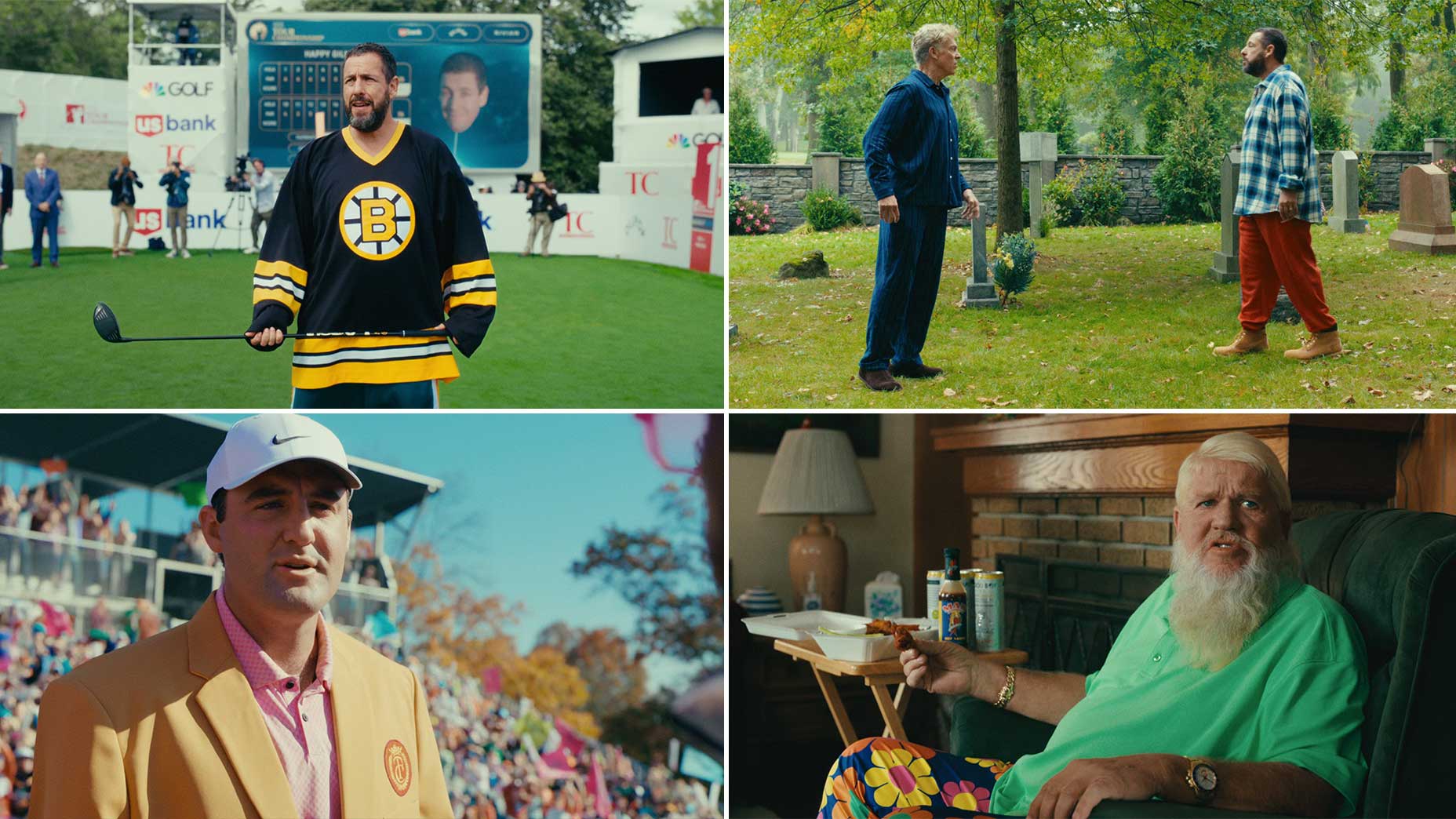
Even if you didn’t, you surely caught wind of the film, a belated follow-up to the 1996 original starring Adam Sandler as an improbable golf phenom with a gutter mouth, a heart of gold, a hair-trigger temper and a slap-shot swing. Nearly 30 years later, the plaid-clad man-child returned, burdened with additional emotional baggage and ringed by a vast supporting cast, including Bad Bunny instead of Bob Barker, and almost every Tour pro you can name — all supported by a reported $152 million production budget.
‘Happy Gilmore 2’ review: The good, weird, pros who stole the show and more
By:
Josh Berhow
To help ensure a return on its investment, Netflix shifted the hype into hyperdrive. This was not so much a movie release as it was a multi-pronged assault on consumer culture. Subway rolled out a special Happy Gilmore meal deal. Callaway re-released its hockey-stick Odyssey putter. Topgolf hosted screenings at venues nationwide. In Times Square, the New Year’s Eve ball got swapped out for an outsized golf ball. That was in July, timed to the film’s premiere. By then, if you hadn’t seen “Happy Gilmore 2,” you probably felt as if you had.
Which put you in good company. During its opening weekend, the film generated a reported 2.9 billion viewing minutes, a Netflix record.
And what, precisely, did those viewers see? Since it’s hard to spoil anything at this point, what counts as a plot is set in motion by tragedy. Barely have we pressed play on our streaming service when Happy kills his wife with an errant golf shot. Flash forward a few decades and our traumatized hero has fallen on hard times. Out of money, out of form and alcoholic, he takes up golf again to pay for his daughter’s ballet-school dreams. Madcap adventures follow, along with more cameos than you could count in a thousand AT&T Pebble Beach Pro-Ams, spanning from Paige Spiranac as a Dick’s Sporting Goods saleswoman to Post Malone as a gonzo TV commentator. And almost anyone with a pulse and a Q-rating in between.
Then there’s this: even as he struggles to salvage his swing, Happy is called upon to save golf itself, now under existential threat from an upstart rival circuit called Maxi Golf, funded by a bad guy named Frank Manatee. Golf fans will recognize Maxi Golf instantly as a thinly veiled stand-in for LIV, while erudite film scholars may detect a subtler layer of allegory, involving marine animals — a manatee here, a Shark there.
The second coming of Happy Gilmore wasn’t meant to provoke high-brow discussion. But that doesn’t mean it can’t be read as a metaphor for our current moment. With its celebrity saturation and pacing calibrated for TikTok-length attention spans, it plays like a mirror of contemporary life. And, of course, contemporary golf — a game hellbent on breaking free of is traditional roles. Never has the boundary between golf culture and pop culture been more porous. “Happy Gilmore 2” happily embraces that truth.
As a sequel to an old film, it has built-in nostalgia, enhanced by cameos by the octogenarian likes of Jack Nicklaus and Lee Trevino. But it’s less rooted in the past than it is in the present, which might provide a clue of what’s to come. Like golf and all other forms of entertainment, movie franchises are always seeking the next audience.
Mark your calendar for the 2055 release of “Happy Gilmore 3”, wherein the man returns as a robot in a simulated world to help Team USA win the virtual Ryder Cup.
Doesn’t really seem all that far-fetched.
Disclaimer : This story is auto aggregated by a computer programme and has not been created or edited by DOWNTHENEWS. Publisher: golf.com