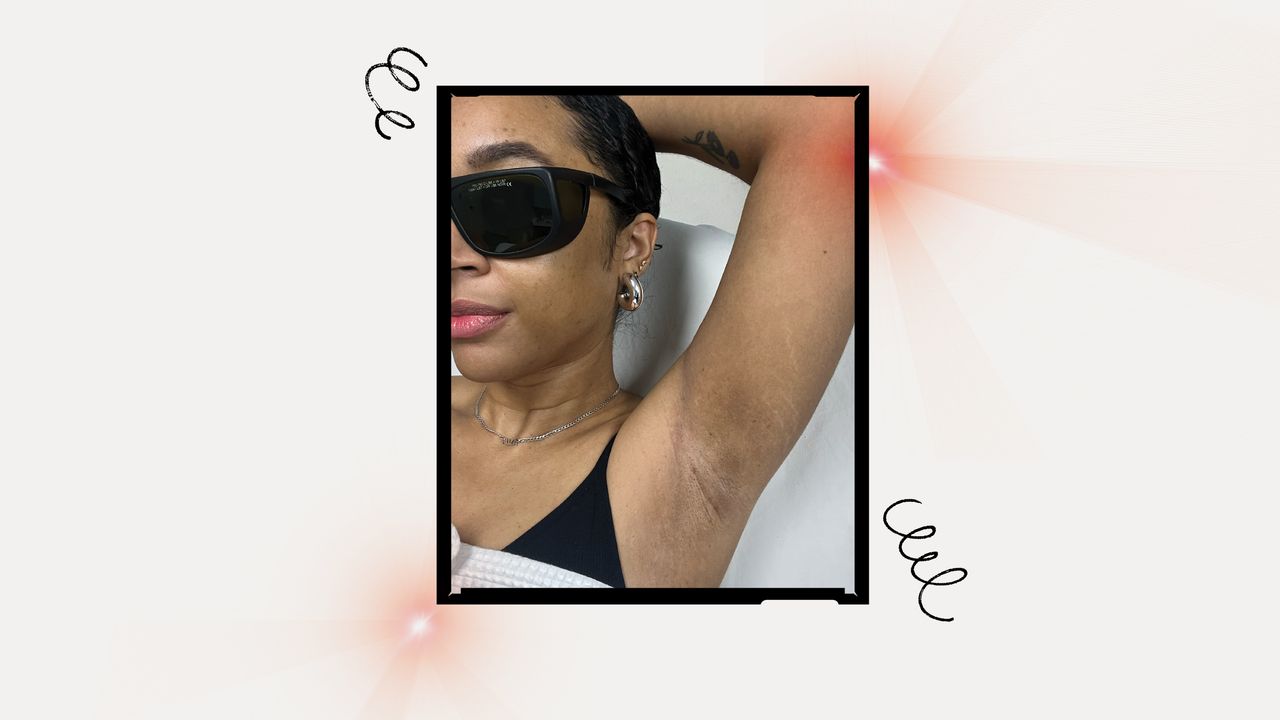
This year, I finally decided to do something I’d spent more than a decade writing about as a beauty editor: laser hair removal. For nearly 12 years, I’ve waxed almost every part of my body, with regular appointments for my bikini, Brazilian, and underarm areas. But that didn’t mean I enjoyed the treatment. Each time, I’d brace myself as hot, melted wax was smeared across my skin.
The catalyst for my decision to get laser treatment was my first wax after giving birth. I’d gone through the most physically intense experience of my life, so I assumed going back to waxing would be a breeze. It wasn’t. The anticipation of ripping off hard wax didn’t magically disappear, and for my first few waxes post-birth, my skin felt more sensitive than usual. In other words: It still hurt like hell.
Hyperpigmentation was also a huge concern for me following all the hormonal changes I was experiencing. Lasers have long had a reputation for being a risky treatment for melanin-rich skin due to the heightened risk of burns or discoloration. That’s because laser hair removal literally targets melanin. “It works through a process called selective photothermolysis,” says Naana Boakye, MD, a board-certified dermatologist in Hackensack, New Jersey. That’s just a fancy way of saying that melanin in the hair follicle absorbs the laser energy. “That energy converts to heat and damages the follicle so it can no longer grow.”
For decades, lasers were designed for lighter skin tones, and there are still technicians who are inexperienced in treating melanin-rich skin. As a Black woman who has dealt with post-inflammatory hyperpigmentation from acne on my face and body, the idea of triggering more discoloration by way of laser treatments has always made me nervous. Despite that, I’ve understood laser hair removal to be a gold-standard treatment for anyone who wants to remove body hair more permanently. So I decided to take the leap, but not without advice from board-certified dermatologists as I go through the multi-week process. The first areas I’m zapping are my underarms and Brazilian area.
What are the risks of laser hair removal for melanin-rich skin?
Laser hair removal on all skin types poses risks—especially if you undergo the treatment without the supervision of a board-certified dermatologist. You are aiming beams of heat energy at your skin, after all. Dr. Boakye says common side effects include temporary redness and swelling around the hair follicles and mild discomfort during treatment. “Less common complications include blistering, crusting, erosions, and, very rarely, scarring,” Dr. Boakye says.
For people with melanin-rich skin, hyperpigmentation and burns are among the most common concerns and typically occur when an inexperienced provider uses a device incorrectly. “When the laser wavelength, settings, or technique are not appropriate for the patient’s skin tone, the energy can be absorbed by the skin instead of the follicle, increasing the risk of injury,” Dr. Boakye explains. “In melanin-rich skin, there is more pigment in the epidermis, which means the laser energy can be absorbed earlier than intended.”
Jeanine Downie, MD, a board-certified dermatologist in Montclair, New Jersey, says melanin-rich skin has “melanocytes that are larger and generally have higher baseline activity levels.” She adds that these pigment-producing cells “release more inflammatory ‘mediators’ faster than in those [in lighter skin tones] in response to heat or other trauma.”
Signs of a poor reaction to laser hair removal would be “pretty immediate” during treatment. “All lasers elicit a skin response,” Dr. Downie says, pointing to mild inflammation. “Pigmentary changes, like dramatic darkening rather than transient redness, are immediate signs that something isn’t right.”
Disclaimer : This story is auto aggregated by a computer programme and has not been created or edited by DOWNTHENEWS. Publisher: www.allure.com