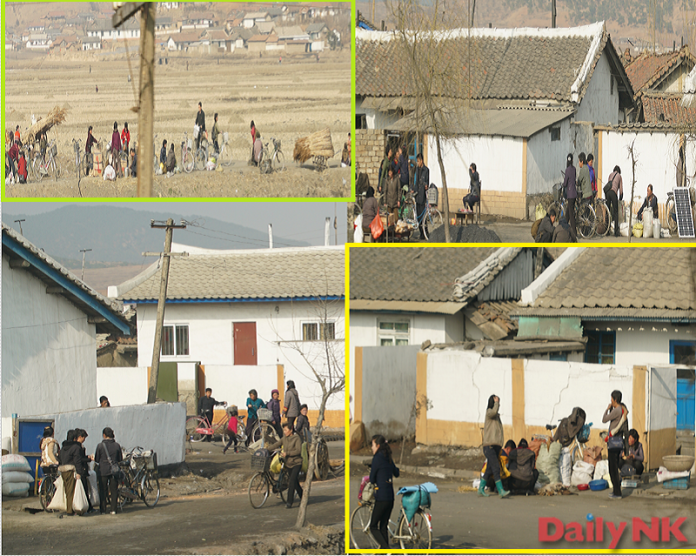
Where do North Koreans buy their food and daily necessities in 2026? Most still go to the general markets that have anchored the country’s private economy for two decades. A growing share of trade, however, now happens outside their gates: in state-run grain stores, private shops, wholesale warehouses and even over the phone.
North Korea’s Socialist Commerce Law, revised in 2021, treats markets in Article 88 as an “auxiliary space for socialist economic management.” Article 7 requires goods produced or imported in the country to pass through state registration and certification before reaching consumers through the state commercial network. Daily NK’s reporting shows, however, that general markets, private shops and private wholesale networks remain central to how North Korean people buy and move goods.
Looking at general markets alone no longer shows how North Koreans shop and how goods move around the country. In Sinuiju, North Pyongan province, local sources said roughly 70% of daily necessities are bought at general markets and about 30% at private shops. For food, Sinuiju shoppers buy about 60% at general markets and about 40% at state-run grain stores, according to a source in the city.
A similar pattern has emerged in Pyongsong, South Pyongan province. “We still use the general market the most, but compared with three years ago, there are more days when I go to a store to buy things,” a source in Pyongsong said. “I also often use nearby stores and sales outlets.”
These findings may not hold nationwide, but they suggest people have more choices even as general markets keep the largest share.
Informal markets known as jangmadang spread rapidly during the economic crisis of the 1990s, when the state ration system broke down. Through the 2000s they grew larger and became institutionalized as state-sanctioned general markets. By around 2012, early in Kim Jong Un’s rule, general markets had become the main hub for both buying necessities and distributing goods.
Wholesalers, donju and seobicha drivers all converged on these markets, and both Chinese imports and domestically made goods reached consumers through them. Donju, or “masters of money,” are newly wealthy entrepreneurs who finance much of North Korea’s private commerce. Seobicha, literally “service cars,” are privately operated trucks and other vehicles that carry goods and passengers for a fee.
If the spread of general markets once symbolized North Korea’s marketization, the latest shift is toward a wider range of trading spaces and methods. In June 2025, Daily NK reported that soaring market taxes in Sariwon, North Hwanghae province, had pushed some merchants to abandon their general market stalls. They turned instead to selling from their homes, taking phone orders and delivering goods by bicycle.
Daily market taxes for some fixed stalls there had reached 60,000 North Korean won, prompting merchants to seek customers elsewhere. Rather than signaling a weaker general market, the trend reflects trade spreading beyond the market into the neighborhoods around it.
Grain stores and private shops give North Koreans more places to shop
The most striking change in how North Koreans buy food involves state-run grain stores. Kim Jong Un’s government has expanded these outlets to pull the grain trade away from private markets and bring rice and corn prices under state control.
Daily NK reporting in Pyongyang and Hyesan in May and June 2026 found that the stores now operate more steadily than in their early years. Complaints about prices and quality persist, but the stores are settling in as one regular channel for buying food.
Sources for this report also said use of the grain stores has grown compared with three to five years ago. Because grain there sells for about 5% to 10% less than at the market, the stores draw relatively more customers from struggling households.
Grain stores and general markets do not operate as entirely separate distribution networks, however. Some wholesalers reportedly supply grain to the stores, while some retail merchants buy grain there and resell it at the market.

For daily necessities, private shops have emerged as another option. In Sinuiju, more people are putting up their own buildings to run shops or renting state-owned buildings for business, according to sources.
Shopkeepers using state buildings need approval from the local people’s committee and pay roughly $50 to $100 a month, depending on size. People’s committees serve as the administrative arm of local government, handling economic affairs under the direction of the Workers’ Party of Korea.
In Pyongsong, individuals use their own money to run kiosks registered under the names of commercial management offices, military units, or state agencies and enterprises. Typical examples include kiosks at libraries, public service centers and military bases.
“On the surface, the kiosk belongs to an agency or enterprise, but in practice an individual runs the business,” a source in Pyongsong said. “People often think of it as so-and-so’s shop rather than a state-run store.” The source added that prices at markets and shops are generally similar and that haggling is possible in shops as well.
The sales outlets differ, but the routes that goods travel overlap considerably. Large wholesalers rarely sell directly from market stalls, instead storing goods in warehouses and passing them on to general market vendors and local retailers. Traders from other regions also come to these warehouses to pick up the goods they need.
To shoppers, general markets and private shops look like separate places to buy things. Behind them, though, lies a shared distribution network linked by wholesalers and transport operators.
The state controls imports while private traders move the goods
The division of labor between foreign trade and domestic distribution also deserves attention. On Sept. 9, Daily NK reported that North Korean authorities were reorganizing import channels around state trading companies. Private traders, however, still play a key role in distributing Chinese clothing, shoes and other goods inside the country once they clear customs.
In the past, private traders often dealt directly with business partners in China to bring in goods. State trading companies have since gained influence at the official import stage, while existing private networks still carry imported goods to regional wholesalers and retailers.
Chinese goods typically pass through foreign currency-earning enterprises to large wholesalers, then on to mid-level wholesalers and market vendors. Foreign currency-earning enterprises are state-affiliated trading units tasked with bringing hard currency into a regime squeezed by international sanctions.
Transport methods have changed as well. Early in Kim Jong Un’s rule, seobicha filled gaps in the rail network and linked general markets across different regions. Trucks, long-distance buses and railways still matter, but mobile phones have made trading much simpler.

In Sinuiju, wholesalers and retailers who trust each other reportedly settle prices and quantities by phone without meeting, then send the goods through transport operators. Some transport operators even carry payment back on the merchants’ behalf, according to sources.
Ordinary Sinuiju residents also sometimes call market vendors to order grain or meals for delivery to their homes. Trade no longer has to begin and end inside the physical marketplace.
As trading methods multiply, authorities are moving to pull them inside the state system. In July 2026, Daily NK reported that market management offices across Sinuiju had ordered vendors to display “item inspection tags” listing each product’s origin, permit status and price. Vendors caught selling without a tag could have their entire stock confiscated under the new rule.
Sinuiju general market vendors now pay 5,000 to 10,000 won a day in management fees, according to sources. Private shop operators pay separate levies and fees of their own.
In Pyongsong, merchants pay registration fees, business license fees and contributions to sponsoring agencies. They also pay charges for buildings, land, electricity and heating, along with levies based on their income.
Direct state intervention in prices and supply is a separate matter, however. “When goods are scarce or prices rise, merchants don’t put them out right away but watch how things go,” a source in Pyongsong said. Merchants, in other words, still decide for themselves when to bring goods to market.
Pyongyang extends its reach beyond the general markets
Taken together, these trends show that the 2026 changes in North Korea’s market economy cannot simply be described as the decline of general markets. General markets remain the largest pillar of consumer spending and trade in the country, and what has changed is everything around them.
Grain stores, private shops, home-based sales and wholesale warehouses have each taken on distinct roles, and mobile phones and delivery services now link them together. Goods, people and money once converged on the general market as a single physical hub. Now, with the general market still at the center, more transactions begin and end outside it.
The response from North Korean authorities is even more notable. Rather than blocking these changes outright, they are widening oversight through state-run imports, permits, inspection tags and assorted fees.
Seen this way, the process looks less like markets and the state pushing each other aside. Instead, the state holds the entry points for goods and the institutional framework, while private capital and distribution networks handle the actual movement of goods.
With the state unable to supply every product directly, private wholesalers, retailers and transporters keep distribution running. Authorities, meanwhile, appear to be folding these players into systems of registration, permits and payments to secure both revenue and control.
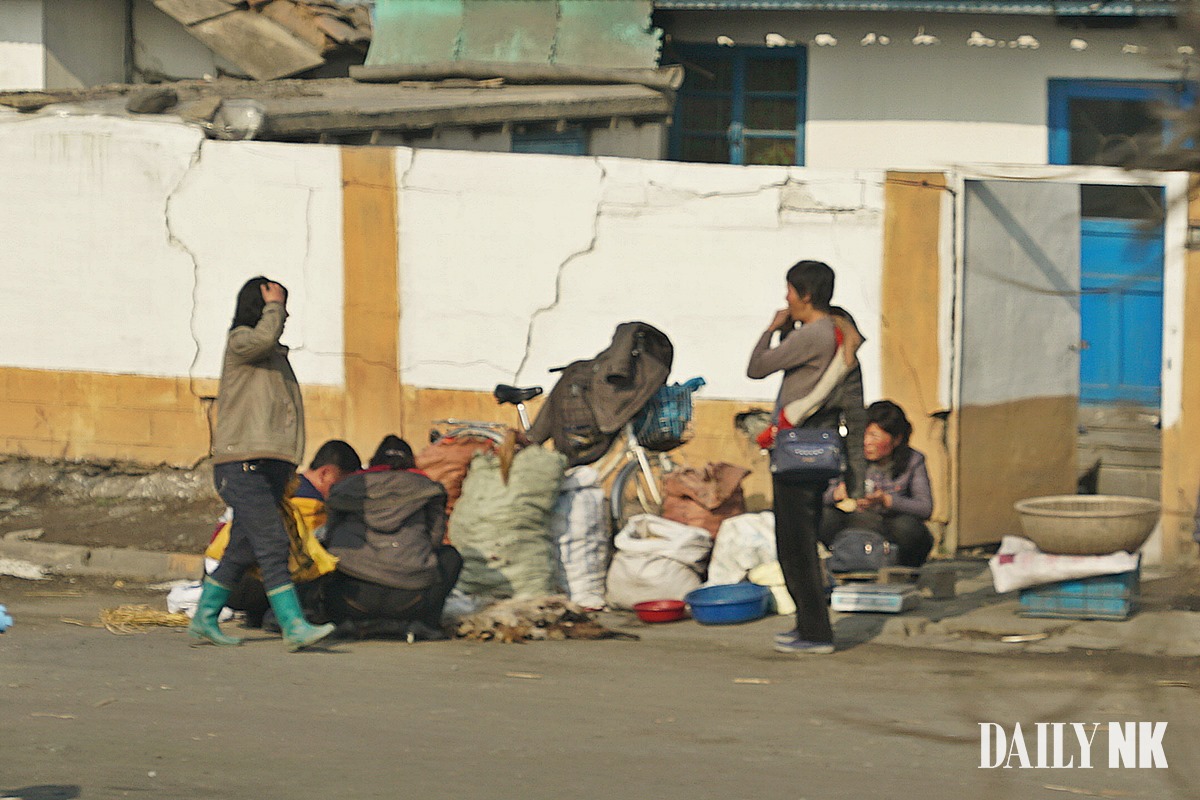
It has also become hard to tell who is actually behind an economic activity from a shop’s sign or legal affiliation alone. Private businesses borrowing state agency names, matching prices at markets and shops, and trust-based credit deals all show state ownership and private commerce intertwined. Meanwhile, the many levies imposed under different names turn this activity into income for the state.
Baek Myung-sook, a research fellow at the Soongsil Institute for Peace and Unification, said North Koreans have bought most of their food and necessities at general markets since marketization took hold. The institute is a research center at Soongsil University in Seoul that studies North Korea and inter-Korean unification.
“The recent diversification of distribution channels can be seen as reflecting the state’s intention to control and manage markets more professionally,” Baek said.
“Since Kim Jong Un took power, North Korean authorities have sought to institutionalize market management and control rather than abolish markets entirely or simply suppress or tolerate them,” Baek added. “This can be read as an intention to use markets to sustain the regime.”
“North Korean authorities are using markets to fill the gaps left by central rationing and are tapping the surplus resources generated there to make their system of rule more robust,” Baek said. “To do that, taming the free-wheeling dynamism of the market is unavoidable.”
The yardstick for reading North Korea’s markets in the Kim Jong Un era needs to change as well. Counting general markets or gauging how busy trading is can no longer explain marketization on its own. Analysts also need to ask who imports goods, who finances them, and which wholesale and transport networks carry them to consumers. They must also track how far the state intervenes along the way to secure revenue and control.
How far will trading spaces expand, and how will the state try to bring that expanded territory back under its rules? Those questions are why the story of North Korea’s “market 2.0” under Kim Jong Un needs to be rewritten.
About This Translation
This article was originally written in Korean and translated with the help of generative AI tools. It was then edited by a native English-speaking editor. All AI-assisted translations are reviewed and refined by our newsroom.
Reporting from Inside North Korea
Daily NK operates networks of sources inside North Korea who document events in real-time and transmit information through secure channels. Unlike reporting based on state media, satellite imagery, or defector accounts from years past, our journalism comes directly from people currently living under the regime. We verify reports through multiple independent sources and cross-reference details before publication.
Our sources remain anonymous because contact with foreign media is treated as a capital offense in North Korea — discovery means imprisonment or execution. This network-based approach allows Daily NK to report on developments other outlets cannot access: market trends, policy implementation, public sentiment, and daily realities that never appear in official narratives.
Maintaining these secure communication channels and protecting source identities requires specialized protocols and constant vigilance. Daily NK serves as a bridge between North Koreans and the outside world, documenting what’s happening inside one of the world’s most closed societies.
Disclaimer : This story is auto aggregated by a computer programme and has not been created or edited by DOWNTHENEWS. Publisher: dailynk.com