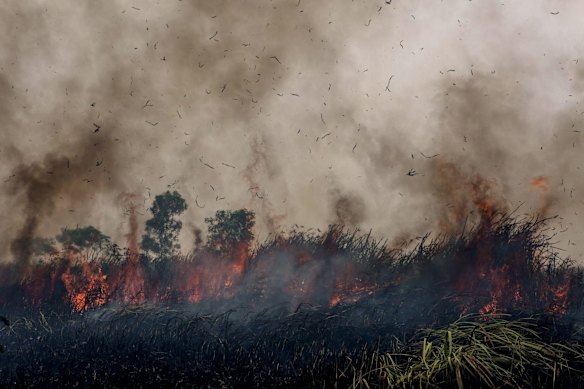
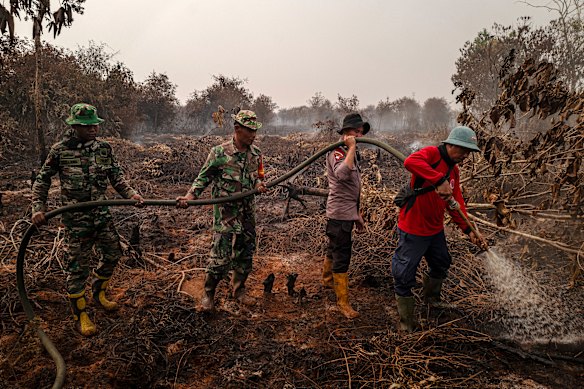
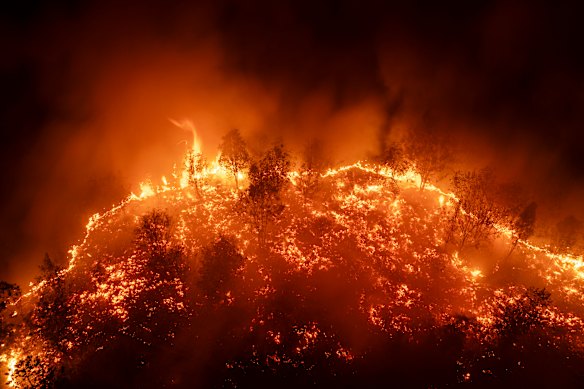
Indonesia is on fire, its ancient peatlands burning, spewing out greenhouse emissions and shrouding the entire region in toxic haze. The Peruvian anchoveta fishery has collapsed, the Panama Canal is drying up, and sugar crops are failing in India and Thailand, all signs of a climatic disaster unfurling across the world.
There are dry-season blazes in the Indonesian archipelago every year, exacerbated by land clearing, but the scale of these fires is unprecedented. They come after months of drought fuelled by what is shaping up to be the strongest El Nino on record, as well as underlying climate change.
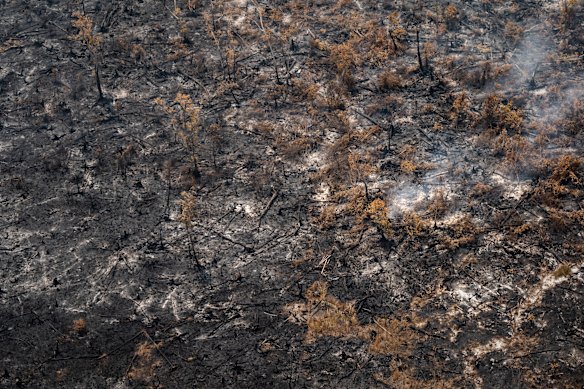
“Indonesia is one of the places where El Nino events are linked to droughts and bushfires,” says Associate Professor Andrea Taschetto, a climate scientist at the University of NSW. “This time, this strong El Nino event has caused massive disruptions over Indonesia, and with the fires that they are having there, it’s just unbelievable.”
From January to September this year, 1.9 million hectares of land burned across Indonesia, according to satellite imagery analysed by Nusantara Atlas using peer-reviewed methodology. That is 38 per cent higher than the comparable period in 2019, the previous worst year on record for fires in Indonesia. It’s likely to be a conservative estimate, since satellite imagery cannot confirm some areas as burnt until the smoke clears.
Cumulative satellite hotspot detections – a near real-time snapshot of fires rather than the damage they cause – were 67 per cent higher than the same period in 2019, as of October 18.
Whether you call this year’s event a super El Nino, as many climate scientists do, or a “Godzilla, monster El Nino”, as Monash University has done, or just a “very strong El Nino” as the Bureau of Meteorology (BoM) prefers, the 2026 El Nino is already at near-record levels and expected to intensify as summer approaches. All models expect the El Nino to peak around November or December, and persist into autumn 2027, the BoM says.
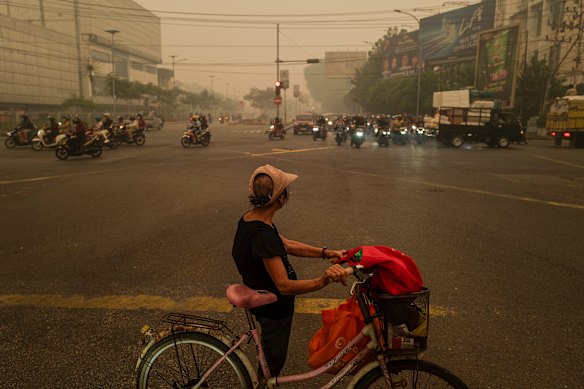
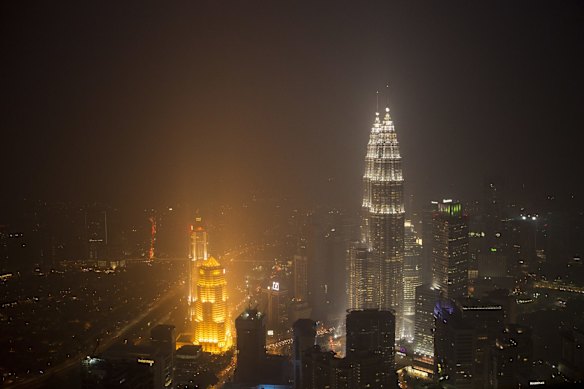
That means the Indonesian crisis could last for months. The resulting air pollution is choking millions of people not only in Indonesia but across South-East Asia. Singapore, fed up with the smog, is fighting back. This month the Singaporean National Environment Agency has issued 10 notices under the Transboundary Haze Pollution Act ordering Indonesian companies to deal with fires on their land in Kalimantan and Sumatra.
The implications are also global because between 17 and 23 per cent of the land that has burned is peatland, a type of wetland with thick, spongy layers of partially rotted vegetation that, given millions of years and the right conditions, can turn into coal. For millennia, humans have used dried peat as fuel, but the peatland itself is meant to be too wet to burn. If it does dry out and catch alight, it converts a massive carbon sink into greenhouse emissions and the subterranean fires can burn or smoulder for months undisturbed by surface rain.
But the impacts of El Nino go far beyond climate. The global economic hit could be nearly $US1 trillion ($1.4 trillion) in direct initial losses and at least $US7.2 trillion over five years unless international institutions act swiftly, according to an analysis by the Peterson Institute for International Economics, one of the world’s leading independent economic research outfits.
“That gap represents thousands of deferred investment decisions – factories not built, crops not planted, clinics not stocked,” the Peterson report says.
Though global GDP is likely to lose 0.8 per cent, the institute says the impacts will not be felt equally, and multilateral organisations need to prepare at once to provide financial and food aid to the worst hit.
The United Nations estimates more than 347 million children in nearly 100 countries and territories will experience unusually wet or dry conditions between October and December 2026 due to El Nino increasing the risk of extreme floods and droughts.
The El Nino Southern Oscillation (ENSO) refers to warming of sea-surface temperatures in the central tropical Pacific and how that affects global rainfall patterns. Absolute temperatures have been rising anyway due to climate change, so most models have now switched to a relative index, looking at how much hotter the water in the relevant region is than the rest of the ocean. The BoM’s model includes atmospheric temperatures, which is why the weather agency is usually slower to declare an El Nino or La Nina than its international counterparts.
In the El Nino phase, it typically causes hotter, drier conditions often associated with drought and bushfires in Australia and Indonesia and can result in flooding rains on the Pacific coast of South America. A strong El Nino event can cause “globally catastrophic” impacts on the weather.
El Nino is the root cause of disrupted shipping across the Panama Canal, an 80-kilometre artificial waterway that connects the Pacific and Atlantic Oceans but relies on fresh water to operate a series of locks. The Panama Canal Authority had to cap daily transits in September, but was able to ease restrictions slightly last week.
El Nino has also been blamed for the collapse of the Peruvian anchovy fishery. Peru normally supplies 20 to 25 per cent of the global output of fish meal and fish oil, almost all of it from anchoveta, a closely related species to the small salty fish that Australians either love or hate on their pizza.
The Peruvian government suspended the first anchoveta season in the north-central zone to protect the stock, because of warm El Nino conditions depleting fish numbers or pushing them deeper underwater. The season closed in August after reaching only a quarter of the annual quota, and last week it was announced there would be no second season. Peru’s National Fisheries Society warned industrial fishing could remain halted for more than a year, a huge blow to the national economy.
Global sugar prices have soared because of strengthening El Nino conditions reducing rainfall and threatening crops in Thailand and India, the UN’s Food and Agriculture Organisation says. Analysts fear that the rice crop will be hit particularly hard, threatening the food security of poorer nations. When the 2007 El Nino forced up rice prices, riots broke out across the world.
In Australia, the outlook for November to January is hot. Daytime and overnight temperatures are very likely to be above average, the BoM says. Rainfall is likely to be above average across much of the continent, but forecast to be below average in parts of the far north and crucially, in the south-east, the region of Australia with the largest population and the greatest risk of bushfires.
Emergency Leaders for Climate Action warned on Thursday that Australia faces greater risk of bushfires this year and next because of the El Nino and its lingering effects, but is unprepared. Australia’s economy could also suffer a hit of about $13.4 billion over the next two years, denting gross domestic product by about 0.45 percentage points, Commonwealth Bank analysis says.
Even without El Nino, 2026 was already a year of climate disasters, from the heatwave and fires in Europe to the landslide and floods in Nepal and Tibet triggered by the partial collapse of a glacier in the Himalayas. Not everything is caused by El Nino specifically; some of it is underlying climate change.
Take the near-record low sea ice in Antarctica, which has dire consequences for the ecosystem, especially for Emperor penguins that breed on the frozen platforms. This year’s sea ice peaked in mid-September at the third-lowest level on record, and is now tracking along in line with the record-low year of 2023.
Dr Ariaan Purich, a climate scientist at Monash University, said El Nino’s impact on Antarctic weather normally changed the distribution rather than volume of sea ice. The rapid melt this spring was largely because the sea temperatures in Antarctica both at the surface and in the layer below were so warm.
“They’re not specifically linked to the El Nino, they’re just warm because of climate change,” Purich said.
Get to the heart of what’s happening with climate change and the environment. Sign up for our fortnightly Environment newsletter.
Disclaimer : This story is auto aggregated by a computer programme and has not been created or edited by DOWNTHENEWS. Publisher: www.smh.com.au