
OOTY: Come Sunday, the world will celebrate ‘World Tourism Day. While the Nilgiris, especially Ooty, the Queen of Hill Stations, a celebrated tourist destination in the country as well as the world over, its Nature, weather, mists, blooms, woods, wildlife, rivers, lakes, tea, tribes, indigenous communities and friendly hill culture, have made the Nilgiris a much sought-after hill resort by tourists, the Nilgiri Documentation Centre (NDC) pointed out that the Nilgiris came under tourism promotion 200 years ago.
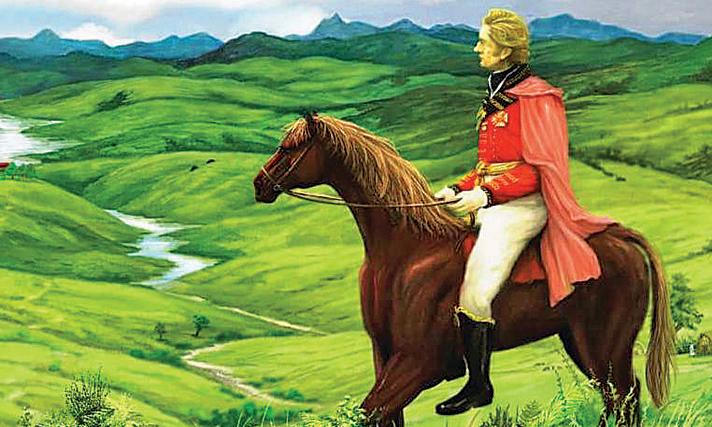
This September marks the bicentenary of Sir Thomas Munro’s (the Governor of Madras then), visit to Ooty in early 1800s, which led to the founding of Ooty as India’s first hill station and paved the way for tourism development in the Nilgiris.
NDC director D. Venugopal said the Nilgiris came under ‘tourist gaze’ when it was discovered in 1819 by the then Coimbatore Collector John Sullivan, who described the mountains as ‘the finest country I ever saw’.
Two centuries later to this day, on September 27, 1826, Sullivan’s mentor and Madras Governor Sir Thomas Munro travelled from Kotagiri to Ooty and observed, ‘It differs from everything I have seen’.
The visit sealed Ooty as the first hill station of the British Empire in the country.
The natural contrast provided by the hills together with the successful ‘staged authenticity’ of back-home feeling constructed by the colonists resulted in the growth and popularity of the Nilgiris.
Dr. Baikie’s book, ‘The Neilgherries’, published in 1834 and republished in 1857, proclaimed the healthfulness of the Nilgiri weather to the world.
Governors General, governors, explorers and high officials flocked to the hills for what is now called ‘medical tourism’.
From 1870, Ooty became the full time ‘Summer Secretariat’ of the Madras Presidency. The annual stay, intended for three months, was routinely extended for eight months of the year. Ooty’s glory spread, attracting Indian princes and wealthy global visitors.
Post-Independence, the Nilgiris emerged as a prime convention centre, hosting several international, national and political conferences and meetings annually. The United Nations Ecafe meet was hosted in Ooty in June 1948.
Tourist inflow, which was seasonal, became year-round as domestic tourism surged after the 1970s as transport and communication developed and the visibility of the Nilgiri hills as part of ‘a romantic tourist gaze’ increased through cinema and media.
The surge became a boom after the liberalisation of the Indian economy in the 1990s and the birth of the new, wealthier middle-class. The annual flux of visitors to the Nilgiris rose from around 10 lakh at the end of 1980s to around 25 lakh in recent years.
The Nilgiris tourist boom was not an unmixed blessing. The demand for food, fuel, water and building material that accompanied the growth of the hill station, placed huge pressure on the surrounding countryside, pressure that led inexorably to the degradation of the environment.
The urban infrastructure was over-strained to serve both the locals and the surging visitors. After the year 2000, tourist resorts added a new dimension to the tourism challenges. These resorts defy definition, description, guidelines and regulation in their location or operation. In recent years, resort tourism came into direct conflict with wildlife protection, slope stability and town planning.
Wildlife resorts, which were few and far between prior to the 1970s, mushroomed after the 1990s, leading to multiple impacts caused by untreated sewage, solid waste, and excessive water use.
Leisure resorts in wildlife corridors led to increasing human-animal conflicts. Tourism and tourist resorts are integral to the Nilgiris economy. However, as a rapidly growing activity, they must be subject to the principles of sustainability and inclusiveness. This would require bringing them under relevant or appropriate rules and regulations concerning their location, operation and supervision. In the overall interest, it may be necessary for relocating existing resorts and earmarking ‘tourist zones’ under the Master Plan for locating such resorts in the future, Venugopal divulged.
Disclaimer : This story is auto aggregated by a computer programme and has not been created or edited by DOWNTHENEWS. Publisher: deccanchronicle.com




