
To the European racing purist, Formula 1 is a cathedral of heritage, defined by the mist of Spa-Francorchamps, the red seas of Monza, and the narrow, historic confines of Monaco. To them, the Formula 1 Crypto.com Miami Grand Prix can feel like a glitch in the matrix. It is a race held in a stadium parking lot, featuring a “marina” with dry-docked yachts on vinyl water and a guest list worthy of the Met Gala.
But five years in, the Miami GP has moved past the gimmick phase. It has become the defining blueprint for what a global sporting spectacle looks like in the United States — a cultural force that sits at the intersection of sports, fashion, tech, music, and entertainment.
What It Takes to Build This Thing
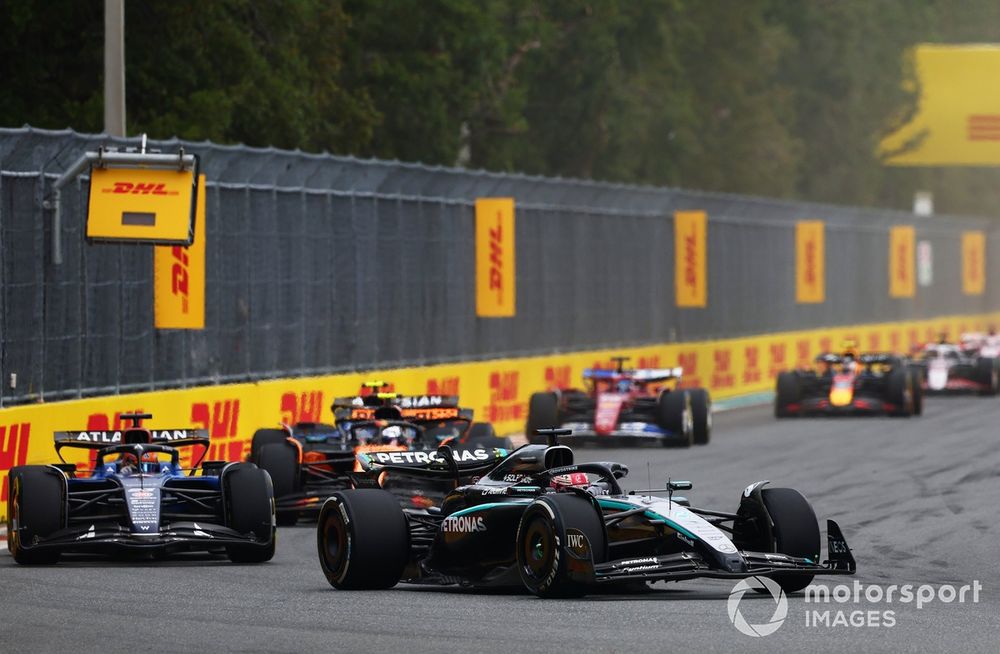
George Russell, Mercedes
Photo by: Andy Hone / Motorsport Images
Every year, the circuit is constructed around Hard Rock Stadium in Miami Gardens — and that process involves more than 10 million pounds of steel, 570,000 square feet of turf, 79,200 feet of fencing, 105 generators, and over 300 trucks on site daily. The team has just 12 days to deconstruct the Miami Open tennis stadium and transform it into the most unique team village in F1. What would normally take 40 days gets done in less than two weeks.
What emerges is a campus with various personalities. This year, the campus is divided into zones inspired by Miami’s most iconic neighborhoods, including Brickell, Wynwood, Little Havana, Coconut Grove, Key Biscayne, and Miami Beach. Each zone has its own identity, cuisine, and energy. More than 100 restaurants and dining options are available across campus during race weekend, including a Community Restaurant Program now in its fifth year that gives 15 local, predominantly female-owned vendors a global platform at one of the world’s most-attended sporting events. The MIA Academy, the race’s workforce development program, has moved dozens of local students into full-time careers in sports and entertainment.
Over its first four years, the Miami GP has contributed an estimated $1.5 billion in economic impact to the region. Eighteen thousand people are credentialed to work the event each weekend, the majority of them local. Hotels sell out. Restaurants book up for months. Flights into MIA spike for weeks leading up to race weekend. In 2025, South Florida Motorsports and Formula 1 locked in a 10-year extension, keeping the race on the calendar through 2041 — a billion-dollar commitment to a market that was skeptical of F1 not long ago.
What Attendees Get to See and Experience
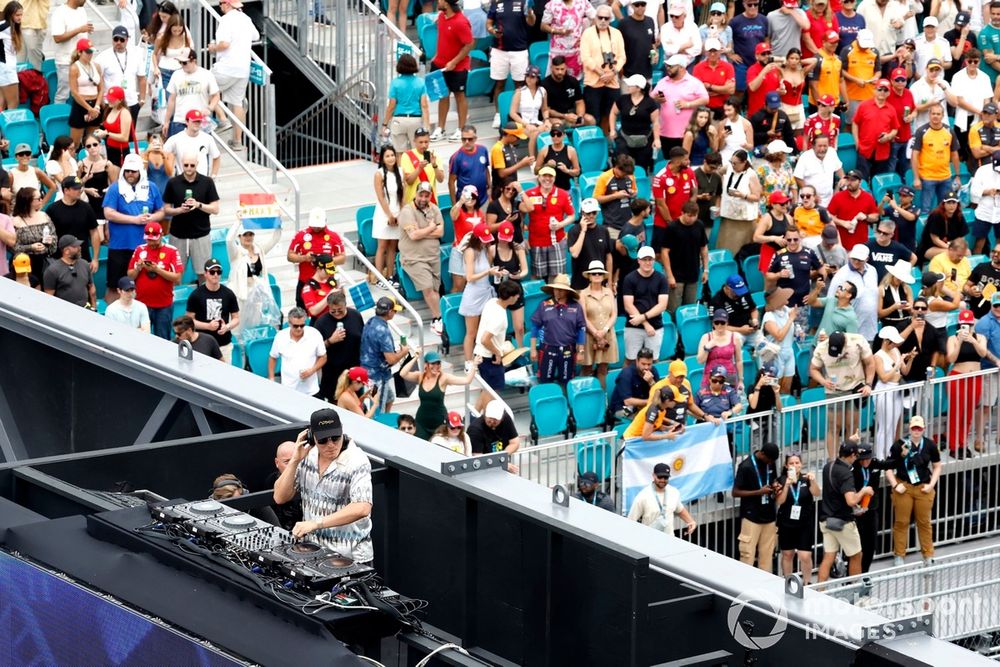
Tiesto performs on the grid
Photo by: Glenn Dunbar / Motorsport Images
Each lap around the Miami International Autodrome spans 3.36 miles across 19 turns, laid out around the iconic Hard Rock Stadium. In addition to the 57-lap Grand Prix, fans get a 19-lap Sprint race, adding a second full competitive race to the weekend’s schedule. Top speeds on track approach 220 mph, while pit strategy, tire management, and overtaking battles play out simultaneously across a field of 22 drivers representing 11 teams. The race history itself is becoming storied. While Red Bull’s Max Verstappen dominated the early years, the tide has shifted toward McLaren, with Lando Norris taking his maiden win here in 2024 and Oscar Piastri following suit with a victory in 2025.
Off the track, the paddock operates like adult Disneyland. LeBron James, Michael Jordan, Reese Witherspoon, Winnie Harlow, Patrick Mahomes, Jeff Bezos, Tom Cruise, Bad Bunny, Serena Williams, and David Beckham have all turned up in past years. The celebrity presence is now a fixture. Team and brand fan zones have spread across the city — McLaren at Regatta Harbour, Williams in the Wynwood Marketplace, and Audi in the Arts District, to name a few. This year, for the first time, the race has launched its own official Fan Fest at Lummus Park on Miami Beach: a free, five-day event with live track viewings, slot car racing, merchandise, sand sculptures, and more. This year’s music lineup includes Nelly and Zedd on Friday (plus a Shaboozey set at Jack’s Garage in the Marina), Marshmello and DJ Diesel (that’s Shaquille O’Neal) on Saturday, and Kane Brown and Loud Luxury on Sunday.
What the Miami GP Means for American Fans
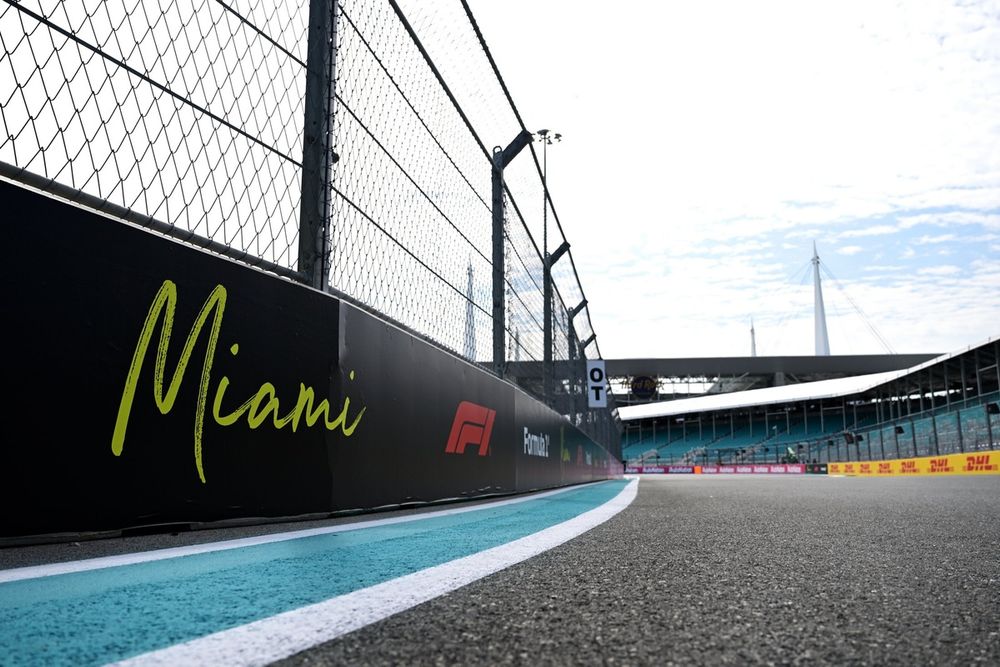
Miami trackside
Photo by: Sam Bagnall / Sutton Images via Getty Images
Miami has made F1 feel genuinely accessible to people who didn’t grow up watching it. Roughly 40% of ticket buyers are women. More than half come from out of state. The 2025 race drew 275,000 spectators over three days — numbers that belong in the same conversation as the Super Bowl and the Masters.
Whether you love the celebrity-laden grid walks or find the spectacle overwhelming, the Miami Grand Prix is undeniably effective. It has taken a niche, European-centric sport and translated it into a language the American market understands.
Michelai Graham is a New York City-based freelance journalist, on-camera talent, and digital strategist. Most recently, she served as the Senior Editor of Entertainment at Boardroom. Her work has also appeared in Ebony Magazine, AfroTech, Lifewire, HubSpot, and more. Michelai covers tech, entertainment, and the business and culture of Formula 1.
We want your opinion!
What would you like to see on Motorsport.com?
– The Motorsport.com Team
Disclaimer : This story is auto aggregated by a computer programme and has not been created or edited by DOWNTHENEWS. Publisher: motorsport.com



