Jacob Bridgeman is on a roll with his putter, and the numbers are pretty wild. This season, he led the field with 63.585 total Strokes Gained: Putting, more than 23 strokes ahead of the next-best player at 40.43. In other words, his putter gives him a serious advantage over his competitors.
<figure class="youtube-facade" data-content="
“>
So, what’s the secret to his success on the greens? Surprisingly, Bridgeman keeps things pretty simple. He doesn’t tinker with his stroke or get caught up in the mechanics. Instead, he focuses on his start line, distance control and building his consistency from close range.
In a recent video with TaylorMade, Bridgeman takes us inside his game on the green, sharing everything from his setup to his green-reading process, and even a step-by-step breakdown of his entire warm-up routine. You can watch the full video above or use the keys listed below to steal his practice routine and boost your performance on the green.
1. Start-line drill
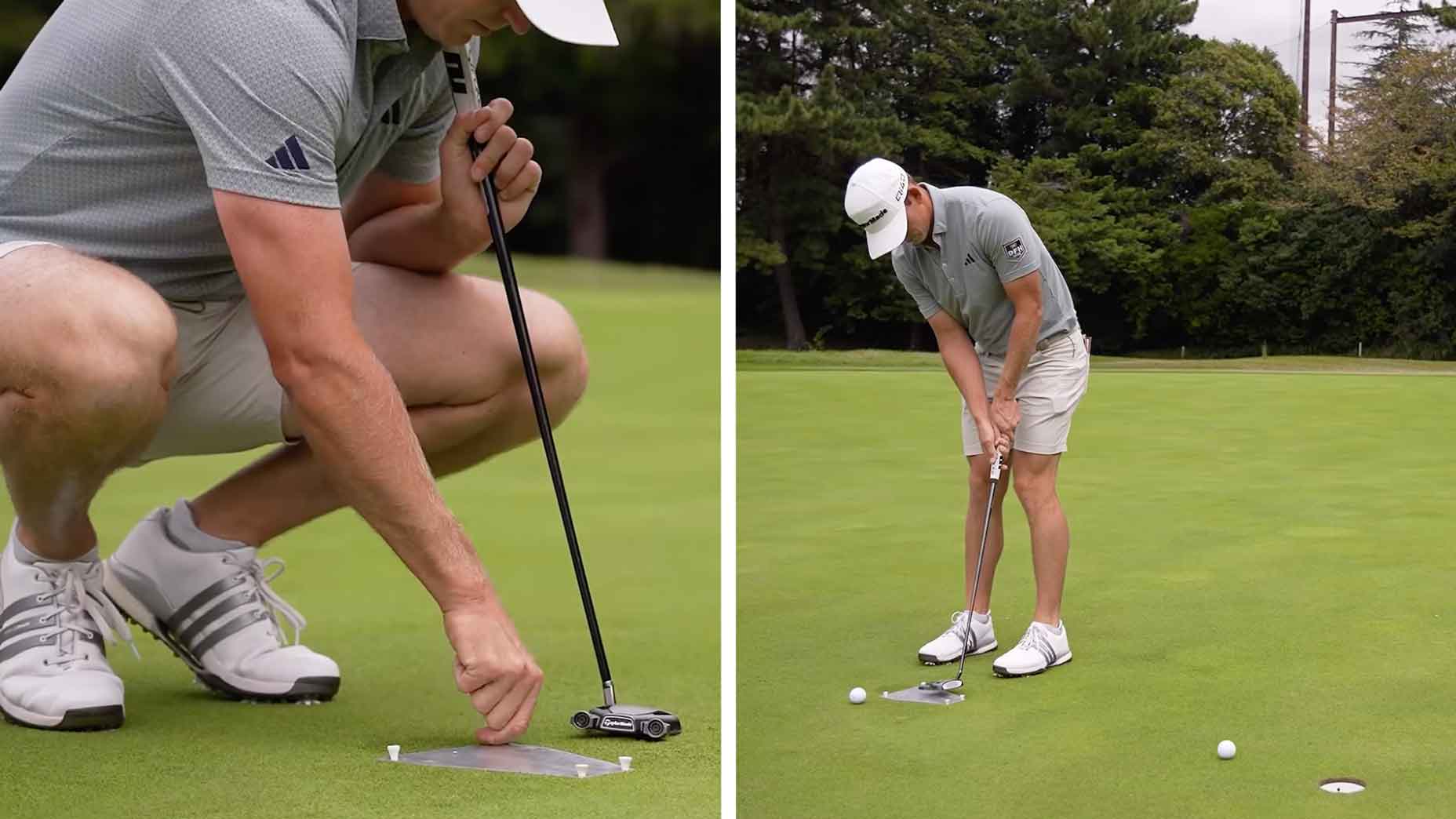
Bridgeman opens every warm-up with a simple start-line drill. He explains that he looks for a four- to six-foot putt that’s dead straight and slightly uphill when setting up his putting plate. As he places the tees to form a gate at his ball and the front of his putting plate, Bridgeman explains his goal for the drill.
“The basis of it is if I can hit maybe 10 putts that go through the tees, this narrow gate, then I’m pretty confident I can start any putt on line,” he says.
2. Get comfortable from short range
Next, Bridgeman moves around the hole, starting with four-footers before gradually working his way back to six feet. He hits two or three putts from different spots, using the reps to practice not just making putts, but controlling his speed.
When using three balls, Bridgemant likes to vary the pace of each putt. He explains that he likes to see the first just fall over the front edge. He hits the second putt at his normal “make” speed, and the third a little firmer. It’s a simple way to get comfortable making putts at different speeds while building confidence from a range where every make matters.
“So then, when I get out on the first hole and it’s my first putt of the day, I’ve already made 30 putts inside of six feet.”
3. Work your way back
From there, Bridgeman moves to seven-and-a-half and nine feet, using straight putts to establish his pace before working his way to breaking putts.
“I’m just getting a little bit longer trying to match up my speed,” Bridgeman says.
4. Learn by watching
Bridgeman doesn’t spend much time on formal green-reading drills. Instead, he pays attention to how putts roll — his own and everyone else’s.
“Someone told me a while back, they said the more you can build up your library of seeing putts go in, the better green reader you’re going to be,” he says.
5. Finish with real-life scenarios
Rather than mindlessly rolling putts in from the same spot, Bridgeman prefers to finish every warm-up with realistic scenarios. This lets him practice his full routine and commit to each putt, while also simulating some of the pressure he’ll feel during his round.
“[The only real] putting practice I do is kind of real-life scenarios,” Bridgeman says, “I’ll be really focused for 15 minutes, go through this full routine, and try to make them all.”
Bridgeman’s approach proves that practice doesn’t need to be complicated. Develop a consistent start line, get comfortable inside six feet and learn to trust your read.
As he puts it: “The less I do, the less can go wrong.”
Disclaimer : This story is auto aggregated by a computer programme and has not been created or edited by DOWNTHENEWS. Publisher: golf.com