
Human extinction fears make me want to flee AI and live on an island
-
Published
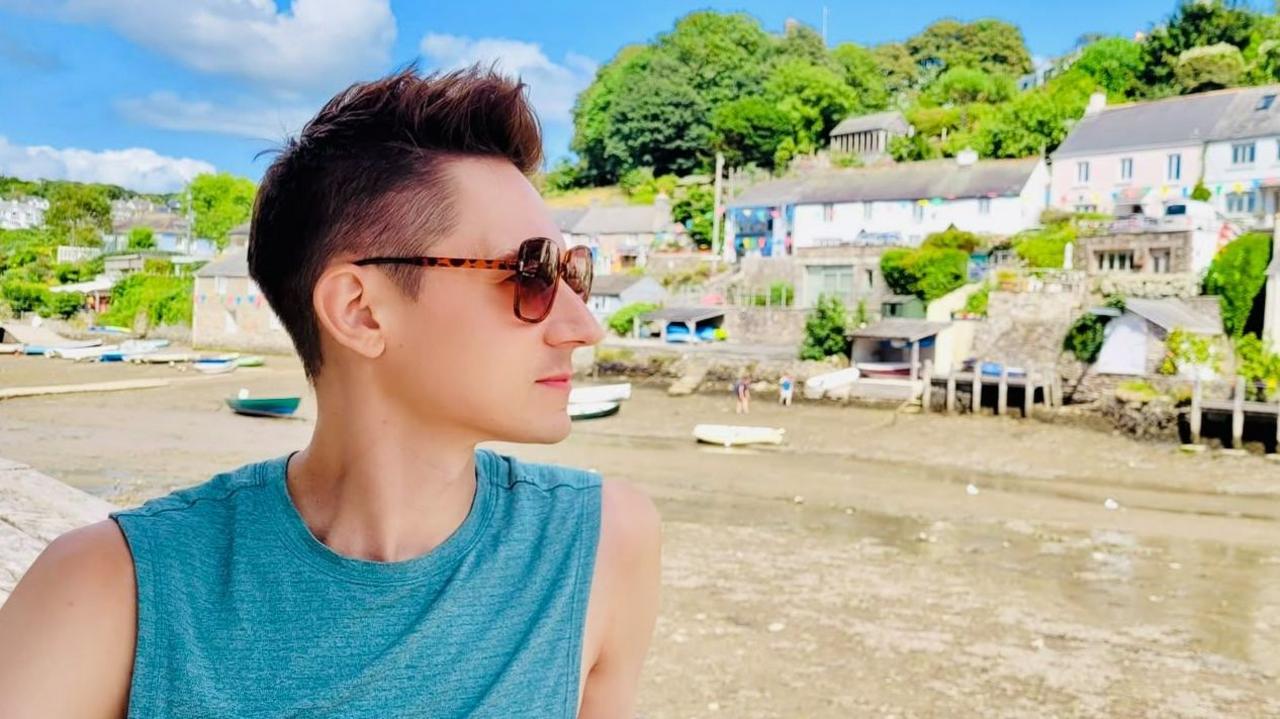
Since headlines broke about claims AI advancement could lead to human extinction, James Downs has felt his anxiety rising.
“It makes me almost feel powerless. Like, what can I do as an individual?” said the mental health campaigner from Cardiff.
This sense of fear has led him to check his phone for more news.
“And the more you look at it the more your attention’s drawn to the negative or scary things and the worse and worse it can seem,” said the 37-year-old.
Earlier this month, a top safety researcher at Anthropic warned AI was advancing so quickly he believed there was a greater than 10% chance it “could kill all humans” within the next decade.
Then computer scientist and Nobel Prize winner Geoffrey Hinton, known as the “Godfather of AI”, told the BBC that the claim was “not unreasonable”, external.
On Tuesday, amid rising public concerns about the risks, the boss of ChatGPT-maker OpenAI said people should have more faith in AI firms to keep the tech safe.
 Image source, James Downs
James, who is in recovery after being diagnosed with anorexia, anxiety and depression as a teenager, said the recent headlines about AI have added another layer of worry to ongoing concerns such as the climate crisis, the cost of living crisis, conflict around the world and nuclear threat.
“I can’t escape this background anxiety about the future – will I be OK? Will the planet be OK? Will my finances be okay? All of these different, multi-layered things which go from the big existential things, like what if it wipes us all out, to the day-to-day things.”
He said it could lead to a sense of helplessness.
“It kind of makes me want to give up trying to make a positive change in the world, or makes me just want to run away, be a nomad or something, go and live on an island somewhere with no technology, but that’s not a sustainable solution either.”
 Image source, Lucy Theo
James is not alone.
Lucy Theo, a psychotherapist from Bonvilston, Vale of Glamorgan, said clients had been bringing up the recent news about AI in therapy.
“It’s kind of intensifying people’s nervous systems which are already kind of stretched post Covid,” she said.
She said for a long time clients had been talking about their fears over what AI could mean for things like privacy and job security and the latest headlines had advanced that conversation.
“It kind of intensifies a general feeling of lack of stability,” she said.
“Fear of death is a very common fear and it can cross into that sense of ‘who am I? What’s my path? How are things going to be for me at the end of my life’?”

On an overcast Friday at Barry Island, Vale of Glamorgan, people’s reaction ranged from sceptical to concerned.
Chelsea Brown, 31, and her husband Luke Brown, 32, were out for a walk with their newborn.
“I’m nervous but also suspicious as leaders of AI companies say things when it suits them,” said Luke, who works in tech.
“That may be me trying to feel more comfortable about it, but I am sceptical because they do say things that either boost their stock or suit their agenda.”
But he said by using AI at work he had seen how quickly it had progressed.
“It does scare me but the way I cope with it is I look at the news with a sense of scepticism,” he said.
Chelsea, who works in marketing, said she feared what the speed of progress would mean for their new baby and four-year-old.
“I’ve got quite a lot of anxiety about it, we talk about it quite a lot… it’s terrifying,” she said.
“I really hope regulations come in a lot quicker than they did for social media. I don’t know why the regulatory process is so slow.”

Susan Harvey, a grandmother to five, said she was out for a walk to clear her head and escape the news.
“It is quite scary,” she said.
“The stories sound extreme and I worry for my grandchildren. I think everything is out of control.”
She too described feeling powerless, but did have some optimism.
“I do think things are changing, people are becoming more ‘let’s stand up against this and do something’,” she said.
The Royal College of Psychiatrists said AI’s rapid development could “understandably cause anxiety for some people”.
Its chair Prof Alka Ahuja said: “As with any major technological change, people may feel uncertain about what the future holds and what it could mean for their lives.”
He advised limiting exposure to alarmist content, discussing any concerns with trusted friends or family and seeking help from a GP if anxiety begins to affect daily life, wellbeing or relationships.
 Image source, Samaritans Cymru
Neil Ingham, executive director for Samaritans Cymru, said: “These headlines affect everybody and they can create anxiety and can make people feel like they don’t have control.”
He said there were steps people could take to reduce their anxiety.
-
Curate your social media feeds: “We can choose who we follow, who we don’t follow, what types of trusted news sources we choose to get our news from and who we choose to maybe ignore and mute,” said Neil. “We can also choose what alerts pop up on our phone.”
-
Think about what time of day you consume news: “If your phone is next to your bed when you wake up you’re going to pick up your phone, and if the start of your day is reading about big global news stories or a story about AI you’re not really giving yourself a chance to settle into the day,” said Neil. “Similarly, at the end of the day, if the last thing we do before we go to sleep is read about complex and potentially scary news stories, we’re not giving ourselves the best chance to calm down at the end of the day, get a good night’s sleep.”
-
Leave your phone downstairs: “Use something else as an alarm clock,” suggested Neil.
-
Avoid information overload: “Our instinct with these stories is to find out more information, to read more, to learn more – but actually, that can take us down a kind of route of losing ourselves in these stories and make it really hard to get any sense of perspective,” said Neil.
-
It’s good to talk: Neil said: “If you sit down and talk to a few people about it, you might share some concerns and you’ll probably find some useful perspective.”
If you have been affected by the issues raised in this story, the BBC’s Action Line contains a list of organisations who can provide support.
More stories
-
-
Published14 hours ago

-
-
-
Published6 hours ago

-
-
-
Published14 hours ago

-
Disclaimer : This story is auto aggregated by a computer programme and has not been created or edited by DOWNTHENEWS. Publisher: BBC




