Imagine 500 years from now. How would historians describe the world in 2026?
We had access to more information than any civilisation in history and used it to quarrel with strangers on platforms owned by hairless billionaires who’d monetised misery, vanity and emotional instability. We had unprecedented scientific data and used it to deny climate change and perfect plastic surgery techniques.
We built an economic system that prospered from oil spills, war, cancer, gambling addiction and mental health crises – but didn’t consider human or environmental health. We invented social media and it promptly addicted us, surveilled us, radicalised us, destroyed our attention spans and gave children eating disorders.
Every few years, millions of people would gather in school halls to vote for a few very similar-looking men to lead the country. Then, voters would spend subsequent years ignoring politics, watching reality TV, and listening to male podcast hosts discuss protein supplements and whether women’s rights were ruining civilisation.
Children were starving and – though we had the ability to stop that – we chose not to. And a very small number of individuals accumulated more wealth than entire nations, then used it to purchase yachts, media companies, private space programs and, often, the political system itself.
Humans are unique. Not in the impressive way, like an octopus changing colour, but in the way a person clipping their toenails on a public bus is unique.
We’ve split the atom, built machines that think, and hurtled expensive metal objects into space. But when it comes to the matter of whether we should keep our own planet habitable, and our own people alive, humans remain curiously undecided. We’ve turned the simple matter of survival into an endless controversy.
There’s nothing inevitable about the rules governing our society. Unlike the laws of nature – such as gravity, which applies equally to everyone – human-made systems like economics and politics are made up and often structured to benefit a narrow group of people. That’s why gravity applies to everyone, but tax loopholes do not.
Human and environmental suffering persist because they remain profitable, socially tolerated and politically viable.
But the world doesn’t have to work this way. We made it this way. And that means we can make it work differently.
Humans, unfortunately, have a history of abusing each other and the planet. So, perhaps it’s time we stopped looking exclusively to ourselves for guidance and took these lessons, from things that aren’t human, on fixing the world.
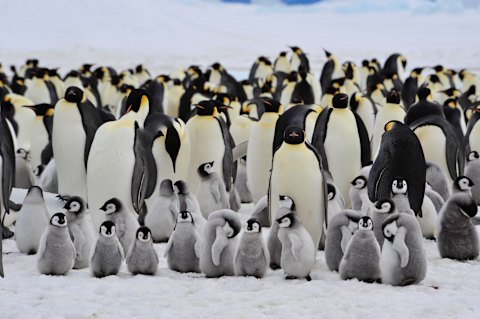
Penguins: In winter, emperor penguins form a huddle and then constantly rotate, so no one freezes on the edge. The lesson: survival depends on sharing hardship so no one is left to bear it alone.
Ravens: They track how others behave; they remember cheaters and exclude them in future interactions. The lesson: persistent cheaters don’t get socially promoted – and they certainly don’t become president.
Honeybees: When honeybees need a new home, scout bees inspect sites and perform dances to share location options. The hive chooses a new home by consensus. The lesson: healthy democracies rely on open participation and evidence. No single billionaire bee controls information.
Forests: Forests survive because no single tree monopolises resources indefinitely. When one species becomes too dominant, ecosystems are prone to disease. The lesson: when one tree takes too many resources, the whole system weakens. There is no oligarchy in the forest.
Elephants: In this matriarchal society, an experienced female leads the herd with wisdom and empathy. Elephants care collectively for calves, the injured and the elderly. The lesson: success lies not in dominance but empathy, wisdom and protection of others. The other lesson is that perhaps having women lead societies isn’t such a radical idea, after all.
The past few years have stripped away the illusion. The mask is off. We see what emerges when power operates without restraint, accountability or conscience. The powers that emerge today – the ones that shield paedophiles (or are paedophiles) and lock up children and bomb hospitals and raze forests and profit from war – are symptoms of these systems. Systems that we have abided.
The world as we know it is fracturing. Something new is taking shape. The question is: what will we allow it to become?
Too many of us have become complacent. We have allowed freedoms to erode, and wealth, information and power to concentrate into fewer hands.
Too many of us have stood by while others have suffered, comforting ourselves with the most dangerous sentence of all: “At least it’s not happening to me.”
Too many of us are living through machines and screens, while the real world, the one that holds our bodies, our rivers, our forests, our air, becomes something we pass through rather than belong to.
Too many of us have lost ourselves: our courage, our empathy – our connection to nature, to community, to reality. We have forgotten something simple. This world is shared. No species survives alone. We are not spectators to this world. We are participants.
The people with courage are fighting tirelessly, refusing to accept that this is inevitable. That this is the best we can do. That this is the world we are handing our children. They are standing on the frontlines wondering: where the hell is everybody?
We need to be more like penguins. We leave no one in the cold. We need to be more like ravens. We don’t reward bad behaviour. We need to be more like honeybees. We build collective intelligence. We need to be more like forests. We keep power in check. We need to be more like elephants. We are guided by empathy.
The future isn’t just shaped through grand gestures, but in the little moments. In the fights we refuse to abandon, the status quo we refuse to accept, the times we choose empathy over apathy and courage over silence.
The world doesn’t have to be this way. It doesn’t. We made it this way. We tolerate it. We endorse it. And now we must unmake it.
Natalie Kyriacou is the author of Nature’s Last Dance: Tales of Wonder in an Age of Extinction. This is the speech she delivered at the Reclaiming Democracy Together forum in Melbourne.
Get a weekly wrap of views that will challenge, champion and inform your own. Sign up for our Opinion newsletter.
From our partners
Disclaimer : This story is auto aggregated by a computer programme and has not been created or edited by DOWNTHENEWS. Publisher: www.smh.com.au