Hundreds of dead fish in river linked to heatwave
-
Published
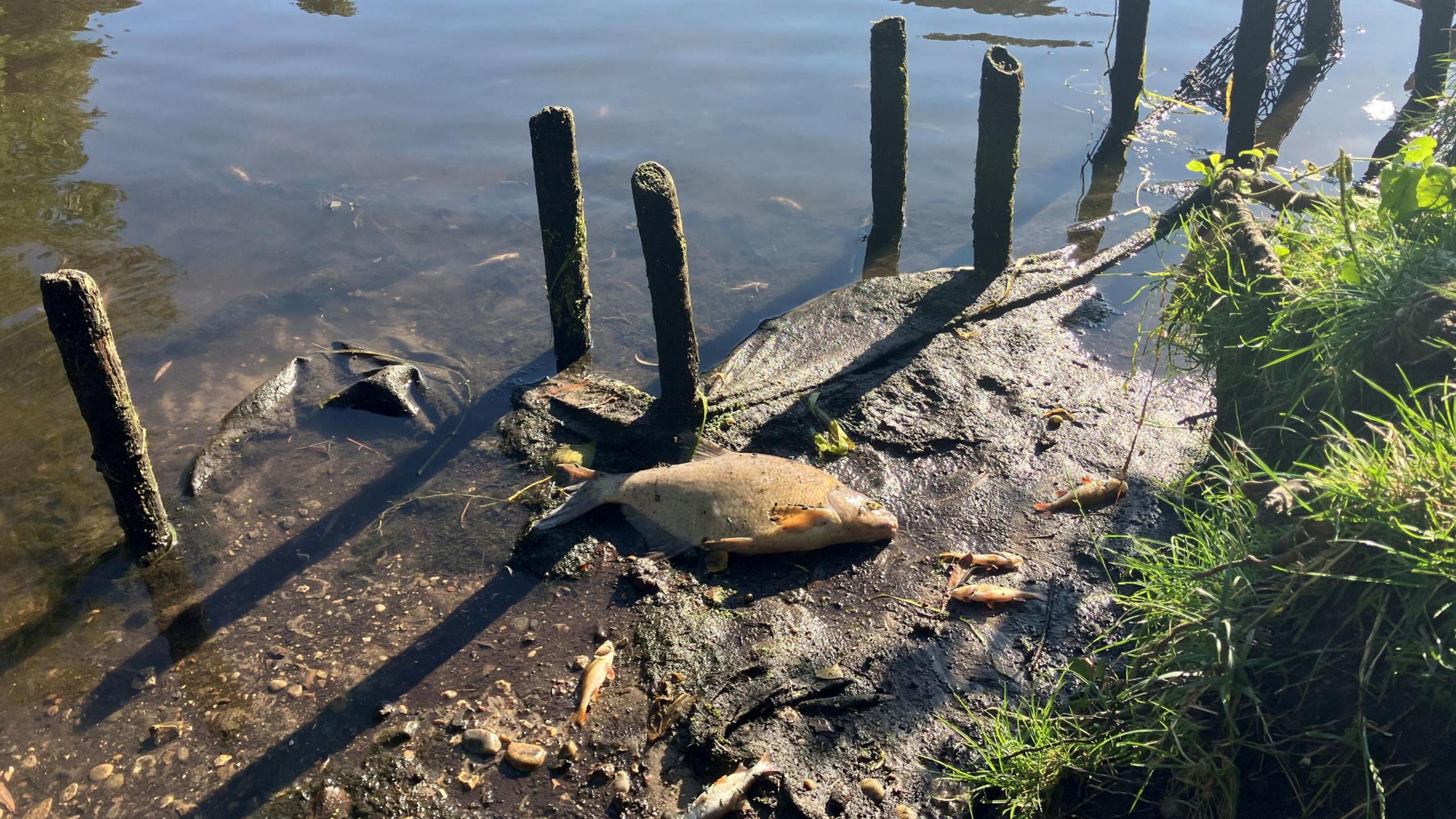
Hundreds of fish in a city centre river are believed to have died as a result of the recent heatwave and contamination from drainage water.
Residents and wild swimmers were horrified to find them washed up on Saturday, appearing to gasp for air, in the River Wensum through Norwich.
Local river campaigner Sarah Eglington said the scenes were “absolutely heartbreaking”.
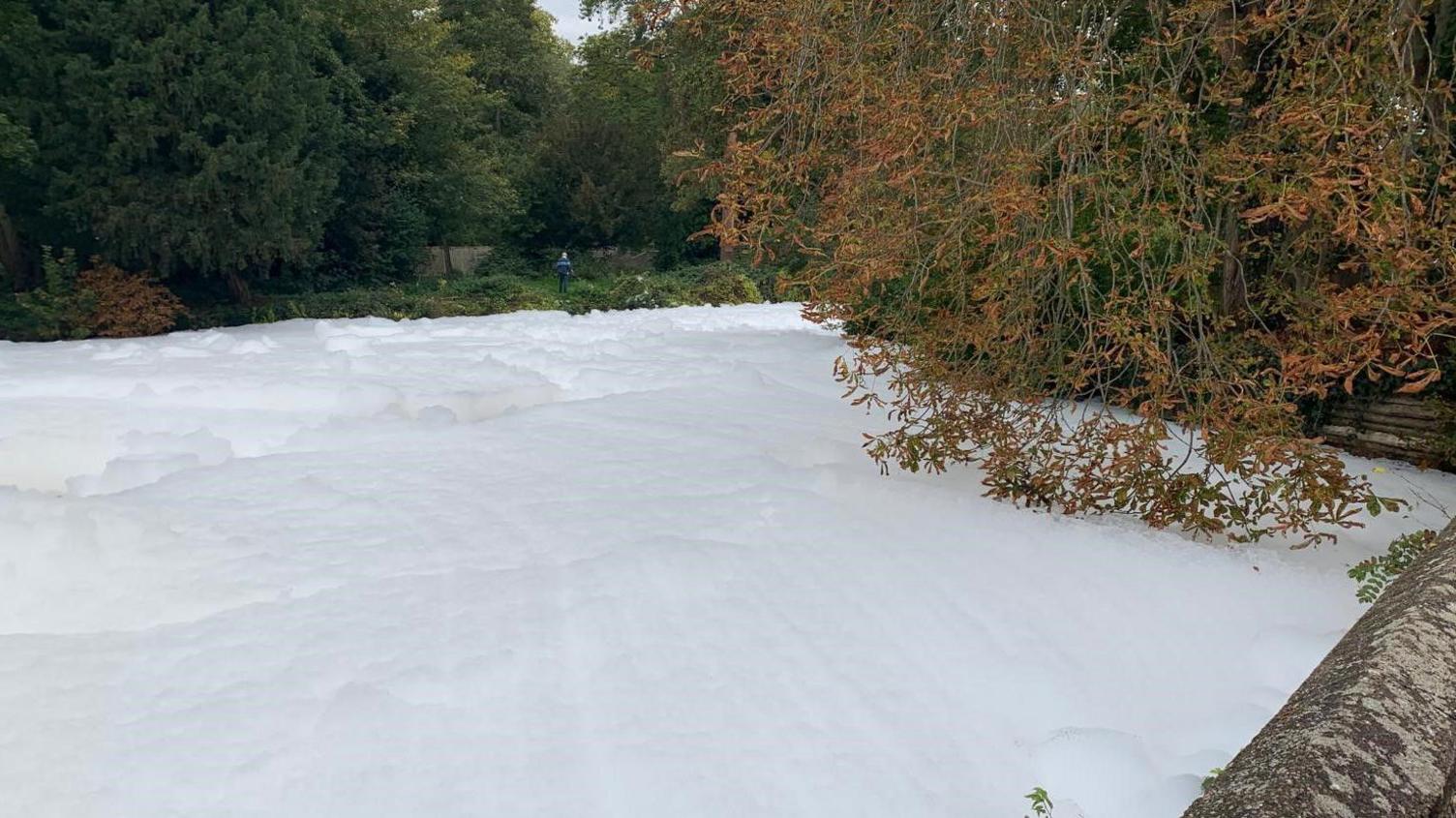
The Environment Agency said it believed the incident was the result of the recent heatwave – ultimately depleting the river’s oxygen – and because heavy rainfall on Thursday had likely flushed in contamination from surface water drainage systems.
A spokesperson explained that high temperatures created the conditions that “significantly” reduced dissolved oxygen levels in the water.
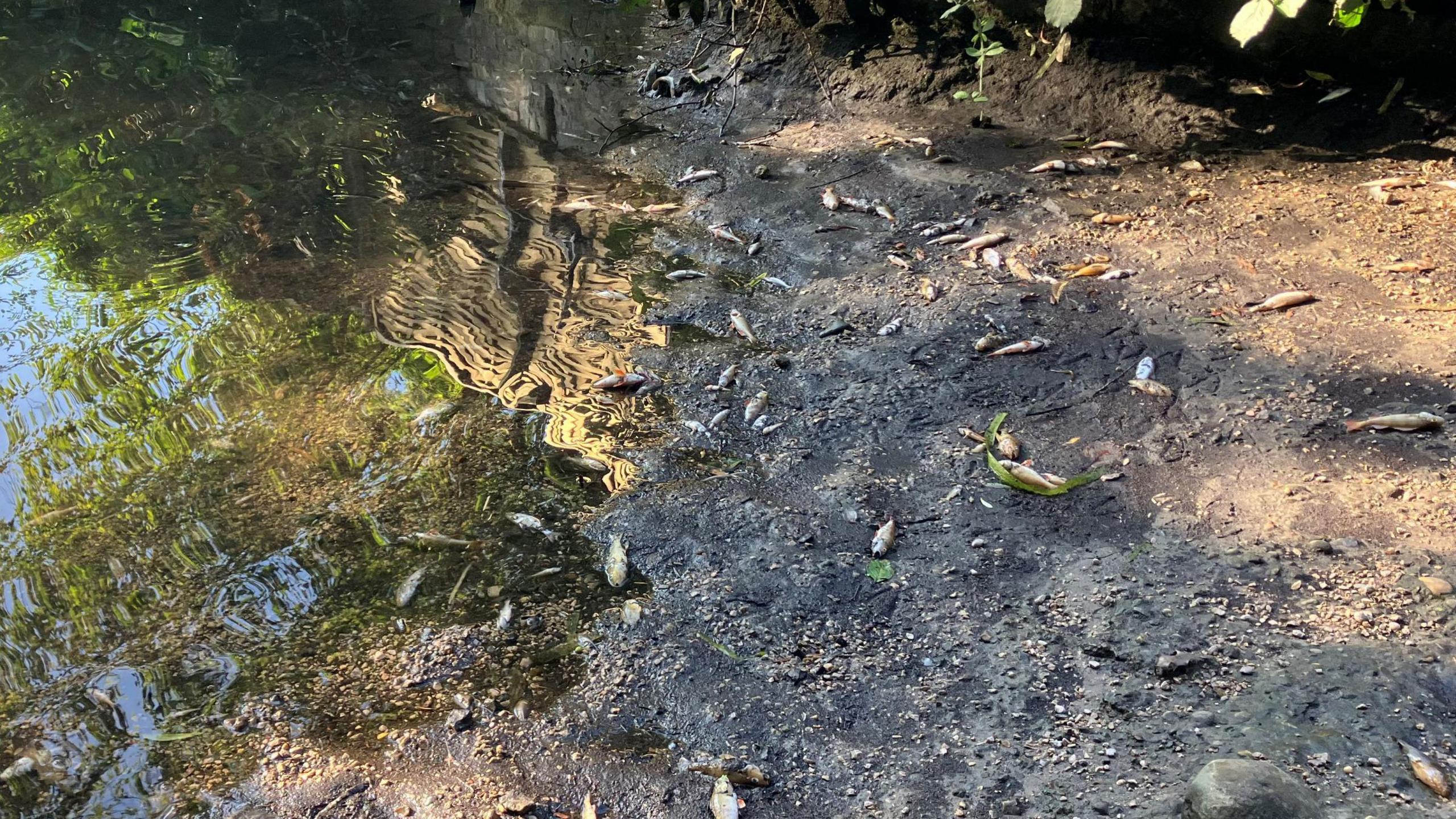 Image source, Owen Sennitt/BBC
Eglington is from the Wensum Riverkin group, which campaigns for better maintenance of the river, and said the water appeared “beautiful” when she swam there with her son on Wednesday.
She said “you wouldn’t recognise” it was the same river.
“I could cry,” she said.
“I can’t quite believe what I’m seeing. It’s absolutely heartbreaking.”
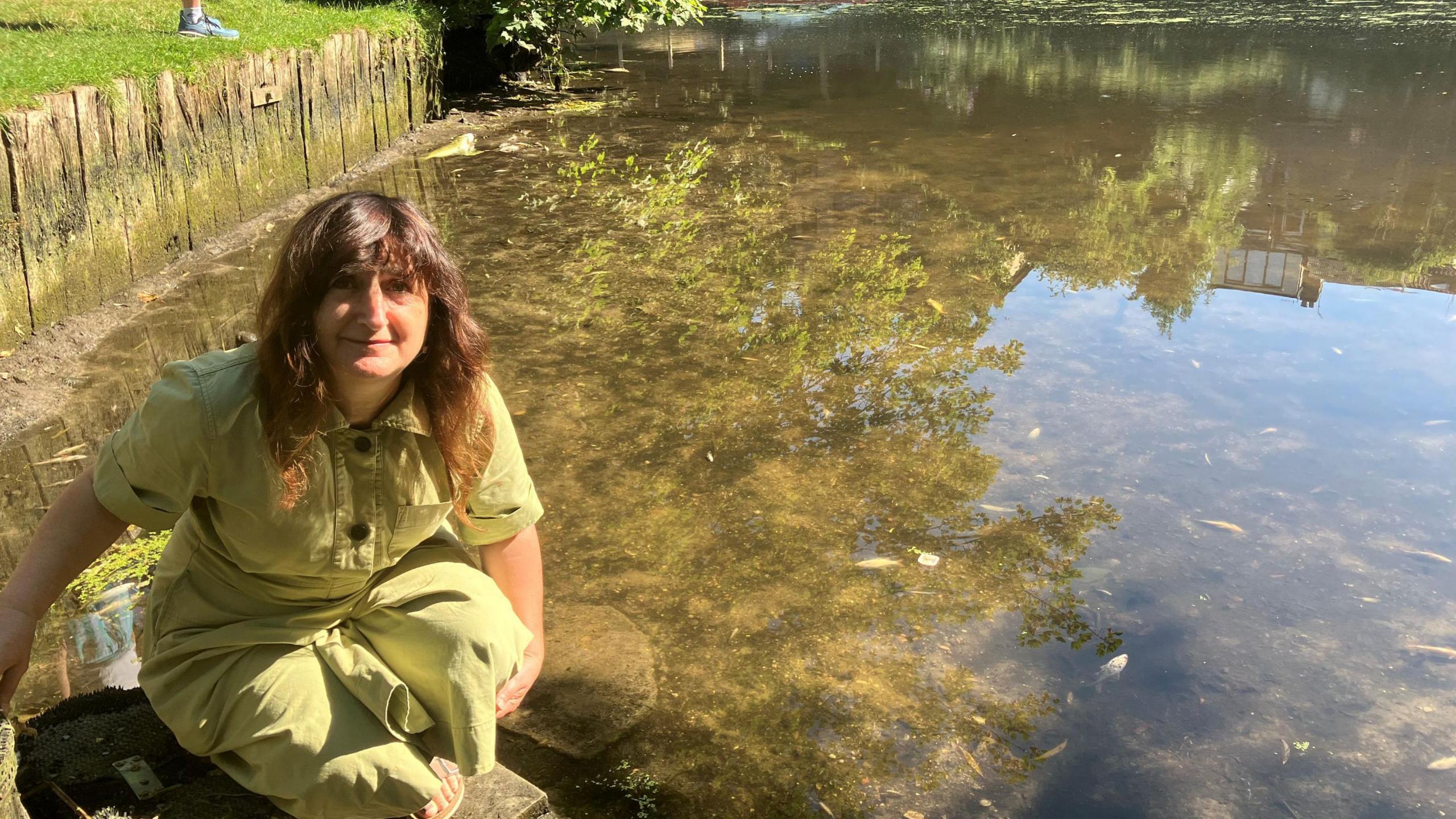 Image source, Owen Sennitt/BBC
Lucy Galvin, the Green Party leader of Norwich City Council, said she was “absolutely devastated” by what she had seen when visiting the river at Cow Tower.
She said she and other residents had noticed dead pike, carp, roach, eel, rudd and dace.
“What we are seeing are the effects of climate change and it is catastrophic,” said Galvin.
As has been well documented by scientists, climate change is causing hotter and longer heatwaves across the globe.
Rose, 24, is part of swimming group Cow Tower Dippers which meets at the river most weekends.
“It’s never been like this, it is devastating.”
 Image source, Owen Sennitt/BBC
The River Wensum, which stretches about 44 miles (71km) through Norfolk, is designated as a Site of Special Scientific Interest and Special Area of Conservation.
It is believed to be home to more than 100 plant species and rich invertebrate fauna, and is recognised as one of the most important chalk river habitats in England.
The Environment Agency said its officer “promptly attended the scene” and its investigation concluded: “The most likely cause of the incident was heavy rainfall on Thursday evening flushing contamination from surface water drainage systems into the river.
“This has coincided with a period of low river flows and high temperatures, creating conditions that significantly reduced dissolved oxygen levels in the water.”
It would continue to monitor the river and work with partner organisations, they added.
Do you have a story suggestion for Norfolk? Contact us below.
Get in touch
Your Voice
Follow Norfolk news on BBC Sounds, Facebook, external, Instagram, external and X, external.
-
-
Published13 November 2025
-
-
-
Published19 October 2025
-
Related internet links
Disclaimer : This story is auto aggregated by a computer programme and has not been created or edited by DOWNTHENEWS. Publisher: newsrss.bbc.co.uk