In February 2026, a resident of Kalipur village in West Bengal’s Paschim Bardhaman district was reportedly bitten by a rabid dog.
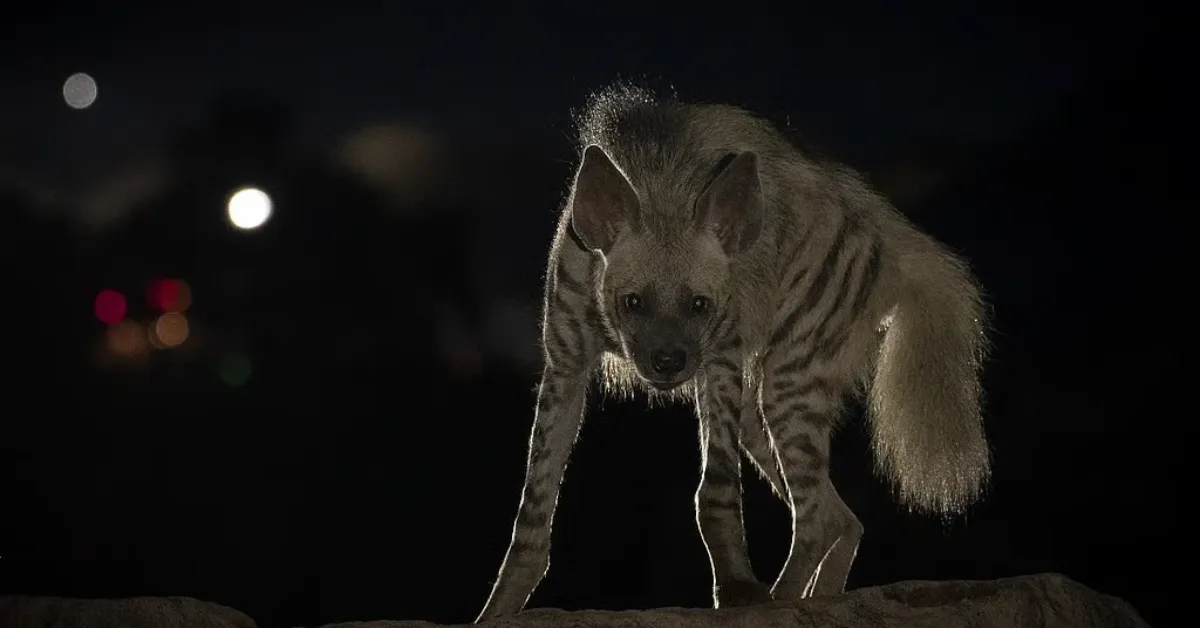
But as word spread through the village, the story began to change. People were saying that a striped hyena had attacked someone.
Now, imagine hearing that a wild animal has attacked someone near your home. You would naturally worry about your family’s safety. And the next time you spotted that animal, you might see it as a threat, even if it had done nothing to harm anyone.
That was the concern in Kalipur. An animal that had not attacked anyone was being blamed for an incident involving a dog. And if the rumour continued to spread, a hyena passing through the village could be chased or harmed out of fear.
For a species that people rarely see or understand, such misunderstandings can have serious consequences.
But a group of wildlife conservationists in West Bengal is working to change that, one village at a time.
A dog bite, a rumour, and a village learning the truth
On 19 February, members of WINGS (Durgapur Wildlife Information and Nature Guide Society) visited Kalipur to help residents understand what had actually happened.
With support from the Wildlife Trust of India (WTI), Fondation Segré and the West Bengal Forest Department, they organised an awareness programme for villagers and students.
The team explained that the reported attack had been caused by a dog. They also introduced residents to the striped hyena, an animal that lives around them but is rarely seen.
Unlike the spotted hyenas often shown in wildlife documentaries, striped hyenas are generally solitary and most active at night. They feed largely on animal remains, helping clear carcasses from the environment.
Most importantly, residents learnt what to do if they encountered one: Keep a safe distance. Do not chase, surround or try to harm the animal. Inform the Forest Department.
The idea was simple: people should know how to protect themselves without putting the animal in danger.
And soon, another village would have a reason to put that understanding to use.
When hyenas appeared on the village CCTV
A few weeks later, CCTV cameras in Jamuria, also in Paschim Bardhaman, captured striped hyenas moving through streets and areas regularly used by people.
This time, there was no mistaken identity. The animals were genuinely passing through places where people lived.
But why were hyenas coming so close to homes?
In this part of West Bengal, forests and scrubland exist alongside coal mines, industrial areas, roads and villages. Hyenas move through this patchwork of habitats, often at night when people are less likely to notice them.
For someone unfamiliar with the animal, seeing a hyena on a street captured by CCTV could understandably be frightening.
So, on 14 April, WINGS and its partners organised another awareness programme in Poniati, Jamuria, attended by more than 50 people.
Once again, the focus was on helping residents recognise hyenas, understand their behaviour and respond safely.
Why do we fear an animal we barely know?
A 2026 study published in Oryx, based on interviews with 104 people in West Bengal, helps explain why this work matters.
Researchers found that many residents were unfamiliar with striped hyenas and misunderstood their behaviour.
Some knew the animal as Gaadha, a relatively harmless scavenger. Others associated it with Kuia, a fierce creature believed to attack people and livestock.
The same animal had two very different reputations.
Because striped hyenas are elusive and mostly active at night, people rarely get to observe them for themselves. Instead, stories, rumours and occasional sightings can shape what they believe.
This is the gap conservationists are trying to close.
Across the Paschim Bardhaman landscape, the Rapid Action Project has conducted 15 awareness programmes, reaching more than 1,000 people.
The programmes are helping communities understand that a hyena sighting does not automatically mean danger, while giving them practical advice to stay safe.
A young Striped #hyena. We don’t have spotted hyena in India. They are nocturnal, move after dark. Monogamous, both male & female raise the kids. Naturally found in #India in many parts. They sometime stand against big predators also especially in groups. South #Bengal. https://t.co/B6rggHojbF
— Parveen Kaswan, IFS (@ParveenKaswan) September 17, 2019
Of course, learning about an animal does not mean people should approach it or ignore the risks of encountering wildlife. It means knowing when to keep their distance, how to avoid provoking it and whom to call for help.
Back in Kalipur, the animal responsible for the bite was a dog. In Jamuria, the animals caught on camera really were hyenas.
Neither incident involved a confirmed hyena attack.
Yet both show how easily uncertainty can turn into fear, and why getting the facts right matters.
The next time a striped hyena wanders past someone’s home, the hope is that people will recognise it, keep their distance and let it pass. Because sometimes, protecting wildlife begins with something as simple as understanding the animals we share our surroundings with.
Sources:
‘From Fear to Coexistence: Community awareness helps reduce Striped Hyena conflict in Paschim Bardhaman’: By WTI, Published on 14 September 2026
‘Hyena butchered in Purulia-Suspicion: retaliation for preying on livestock’: By Debraj Mitra, Published on 18 July 2020
‘Beyond dichotomies: unravelling the nuances of local perceptions of the striped hyaena Hyaena hyaena in West Bengal, India’: By Vasudha Mishra, Tiasa Adhya, Sayan Banerjee, and Arjun Srivathsa, Published on 14 July 2026
Disclaimer : This story is auto aggregated by a computer programme and has not been created or edited by DOWNTHENEWS. Publisher: thebetterindia.com