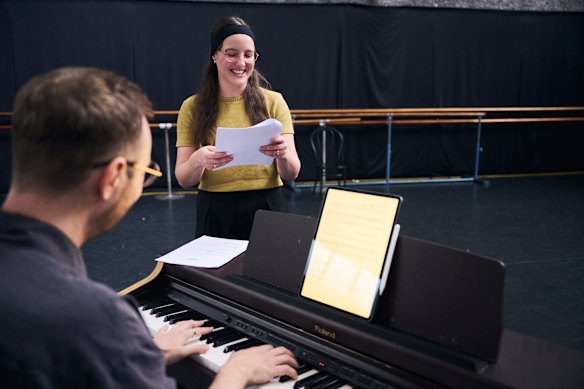
Fourteen years ago, I played Bielke in a high school production of Fiddler on the Roof. It was a small part – the extent of my “acting” included clutching a little rag doll and desperately trying to blend into the background while singing Sunrise Sunset.
So you can imagine my surprise – nay, terror – when, more than a decade later, I found myself auditioning for one of the musical’s main roles in front of an award-winning director.
Let me be clear: I’m no thespian. I enjoyed musical theatre at school, but I haven’t set foot on stage beyond that. No acting classes, no voice lessons, nothing. Yet, there I was, standing on a little “x” made of masking tape in an imposing North Melbourne dance studio, the eyes of five ridiculously talented people burning into me. This included director Jordan Fein, whose UK revival of Fiddler received 13 Olivier Award nominations last year.
I considered throwing up, but then thought better of it – there’s no up-chucking in showbiz.
My nerves still got the best of me. I shook each person’s hand, babbling away about my brief stint as Bielke.
“Nell, we do the talking,” the casting director said, point-blank. That shut me up.
Returning to my mark, I waited for my cue to begin. I was reading for Hodel, one of the rebellious daughters, in a scene alongside student revolutionary Perchik. I learned this was the scene I’d be reading five minutes before entering the room – talk about feeling ill prepared. I looked up, waiting for them to say “action” or something, but received only blank, expectant stares. They were waiting for me to begin because I had the first line. Already, I’d messed up.
Brushing that off, I laughed – or choked – and leapt into the scene. When it was over, Fein smiled kindly (or pitifully, difficult to tell), and suggested I “go off paper”. Having read the scene only once, I knew there was no chance of this, but I gave it my best shot.
Relief swept my body as I finished the second run-through. But nothing could have prepared me for the horror to come.
The casting director gently steered me towards a piano in the corner of the studio. “You don’t have to sing if you don’t want to,” she said, as the auditions’ music consultant immediately launched into the opening notes to Far From the Home I Love. It seemed I had a choice – but not really.
Knees trembling, sweat pouring, I sang my first note. With no practice and little knowledge of the song itself, it’s difficult to describe how challenging it was to keep my voice from wobbling. If I felt like vomiting before, I now felt like my body would simply melt into the ground. By the time I finished – slightly off-key, I might add – the sheet music I’d been holding was crumpled and moist with sweat.
“We’ll call you in about a week,” the casting director said, all smiles as I tried not to self-destruct. I left the room, and that was it. Spoiler: I didn’t get a call.
Thankfully, my audition wasn’t a real one. It was a hyperrealistic simulation of sorts – a glimpse into what it’s like to try out for a professional musical production. That didn’t make it feel any less terrifying.
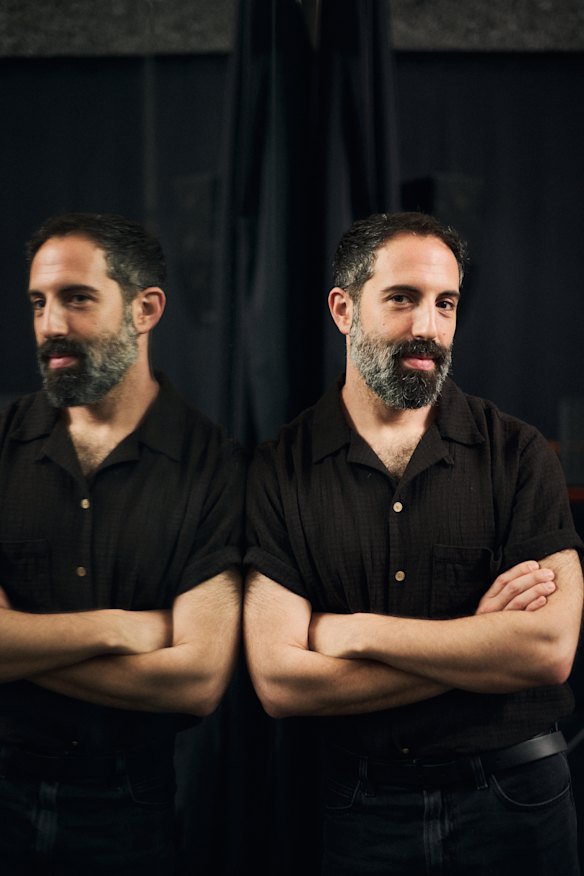
The production team, which is bringing Fiddler back to Australia in July for its first run here since 2016, was about three weeks into auditions, and things were looking promising. Some roles practically cast themselves, Fein said, as performers immediately connected with the material. For others, it required several lengthy callbacks.
“I never want to waste a performer’s time because what they’re doing is so vulnerable,” he said. “Tevye is the audience’s conduit into this world, but I really believe we’re creating a community. Especially in our production, it’s so important to us that every person on-stage is an artist and has something to say.”
The musical itself certainly has a lot to say. Based on Yolem Alaishem’s Yiddish short stories, Fiddler follows a Jewish milkman named Tevye in the small town of Anatevka. Tevye is proud of his traditions, most of which are challenged by his five headstrong daughters and the increasing antisemitism around him.
Fein says his iteration of Fiddler “respects what was, but allows you to hear it through the lens of today”. Given the alarming rise in antisemitism across the globe and the oppression of particular communities, Fein said he felt Fiddler would resonate acutely with contemporary audiences: “[T]he notion of a community being destroyed by political forces beyond their control is just something that is way, way too present at the moment, all over the world…
“We understand what we have to lose now,” Fein said. “I’ve no interest in putting cynicism on stage, but being realistic about the world we live in is really important. The fact that these characters can still manage to love and connect when faced with such awful situations is really profound.”
It’s this family love and connection that has kept Fiddler in the cultural zeitgeist for so long, regardless of its cultural specificity. Since it was first staged in 1964, it has travelled the world, becoming one of Broadway’s 20 longest-running shows and scooping awards at the West End. It inspired a film adaptation in 1971, which earned three Academy Awards.
“It’s so honest, direct and heartfelt. There’s an honesty to it that I just find arresting every time I see it,” Fein said. This, in turn, offers hope – something the world needed when Fiddler first took the stage six decades ago, and something it needs just as much now.
Leaving the audition studio on that fateful day, I experienced each of the five stages of grief: denial that I sang in front of the pros; anger for putting myself in such an exposed position. I attempted to bargain with myself, wondering delusionally what would happen if I had miraculously wowed them. The fact that this even crossed my mind sent me right into depression. And finally, I accepted the audition was both the beginning and the end of my time in the theatre.
But if I learned anything from singing in front of an award-winning director, it was to never underestimate professional performers. How they audition day in, day out with such conviction is beyond me. It requires not only talent, but also resilience and vulnerability. So, to every performer out there, I have one thing to say: L’chaim.
Fiddler on the Roof is at Theatre Royal Sydney from July 31 to October 3 and at Melbourne’s Her Majesty’s Theatre from October 31.
The Booklist is a weekly newsletter for book lovers from Jason Steger. Get it delivered every Friday.
Disclaimer : This story is auto aggregated by a computer programme and has not been created or edited by DOWNTHENEWS. Publisher: www.smh.com.au