

Are you curious about what the future of airport security might look like? A visit to one of the busiest airports on the East Coast offers a sneak peek at one possibility.
Earlier this summer, the Transportation Security Administration began trialing new “e-gates” at Charlotte Douglas International Airport (CLT).
And this week, I had the chance to try out the automated process for the first time.
What are TSA e-gates?
The new TSA process is the first of its kind at a U.S. security checkpoint.
Instead of human officers checking your ID, it’s all self-service: You scan it yourself, and the machine takes your photo. Then, the electronic gates open up to let you through.
If all goes well here, it’s possible this could be a model for other airports in the future.
How do the TSA’s new e-gates work?
The TSA’s e-gates are available across eight lanes at CLT’s Security Checkpoint 2.
To use the higher-tech lanes, you have to be a TSA PreCheck member. Beyond that, you don’t have to register for special access or go to a special line.
What is it like going through TSA e-gates?
As I approached the security area, I thought the setup looked very similar to security concepts you’ll find at some major airports in Europe.

Daily Newsletter
Reward your inbox with the TPG Daily newsletter
Join over 700,000 readers for breaking news, in-depth guides and exclusive deals from TPG’s experts
By signing up, you will receive newsletters and promotional content and agree to our Terms of Use and acknowledge the data practices in our Privacy Policy. You may unsubscribe at any time.
To use the TSA e-gates, you’ll get in line like you normally would. But once you reach the front of the line, you won’t see an officer waiting to check your ID.
Instead, you’ll find automated booths equipped with clear gates.
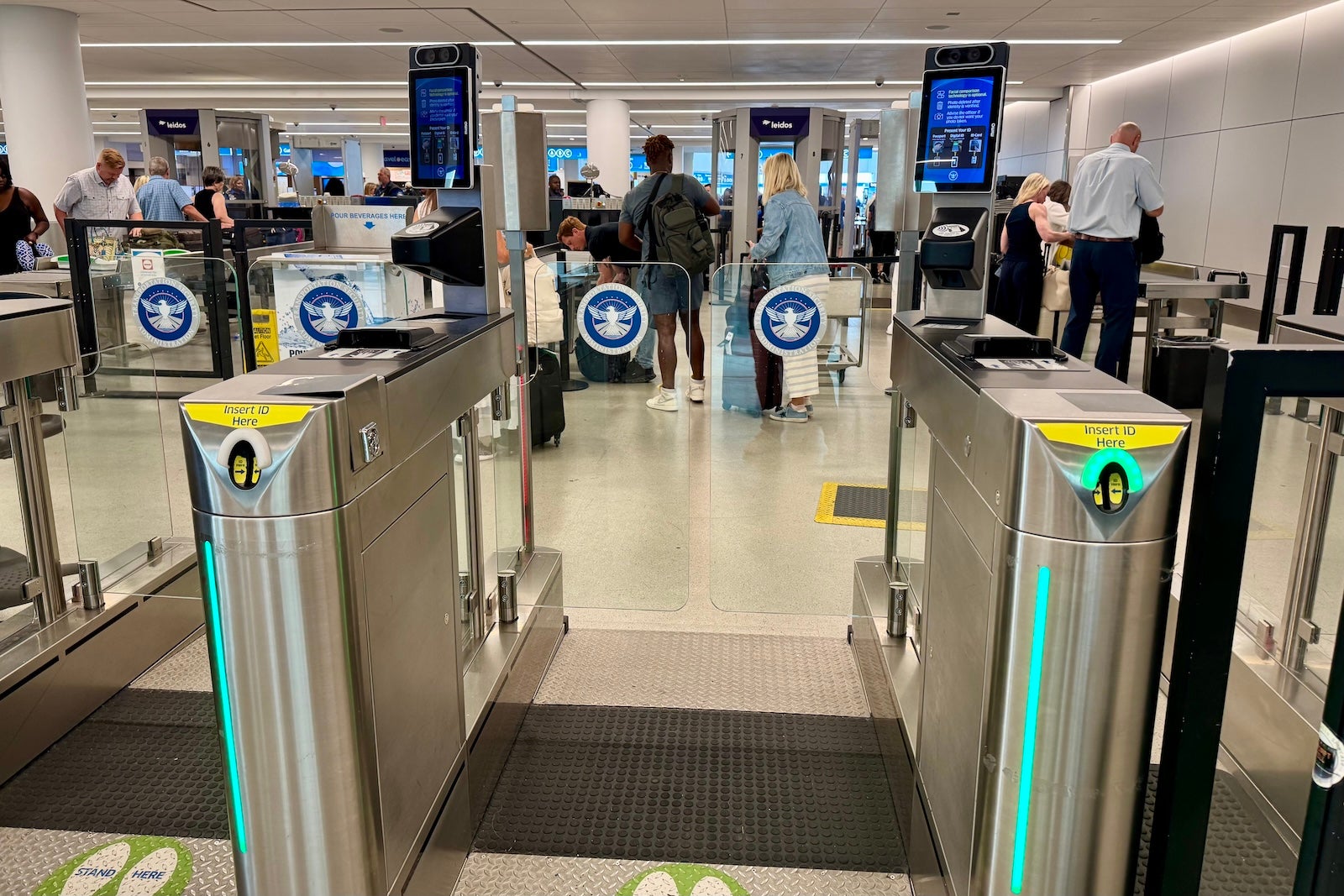
Depending on what type of ID you have, you can choose one of three ways to let the machine check your ID:
- If you have a Real ID-compliant driver’s license, there’s an ATM-style slot to insert your ID.
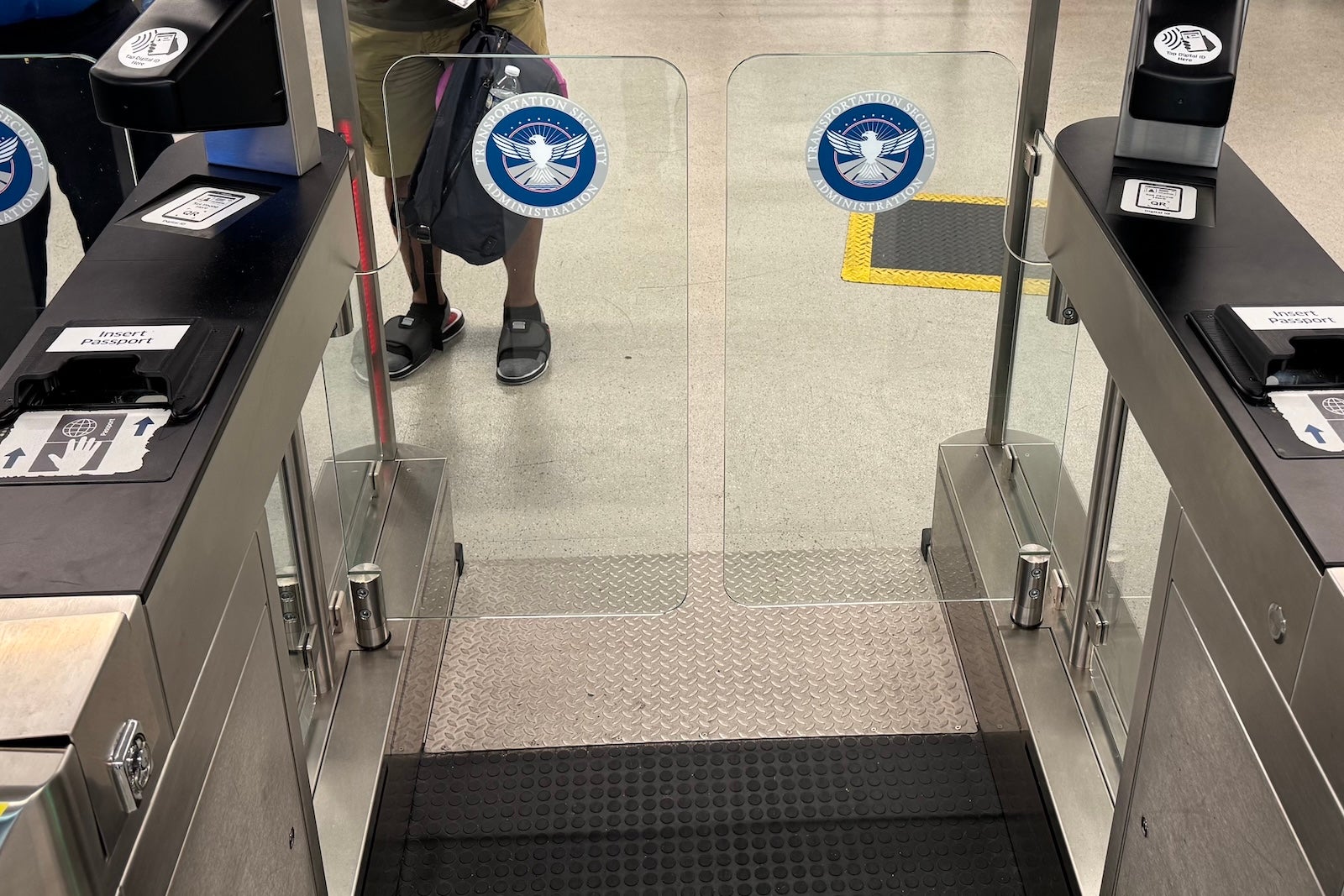
- If you have a passport, you can scan it on the designated spot.
- If you’re set up with a mobile ID, there’s a place to tap it.
Then, you’ll pause as a mounted camera takes your photo — just like it would at any other checkpoint. (But, again, there’s no officer sitting there.)
1 of 3
SEAN CUDAHY/THE POINTS GUY
The TSA’s software compares the photo it takes to the one on your ID. Assuming everything checks out, the screen will give you the all-clear to proceed, and the gates will open.
I tested this process a half dozen times, and it never took me more than a few seconds.
From there, the rest of the security screening is the same as every other TSA checkpoint: You place your carry-on items on the conveyor belt and then proceed to the scanner.
Is TSA PreCheck Touchless ID available at the e-gates?
Yes. The TSA has some e-gates equipped for its fast new program that allows passengers to pass through security without pulling out a driver’s license and passport.
If you’re using Touchless ID at the e-gates, the setup is basically the same. However, instead of inserting your license or tapping your passport, you’ll just look at the camera — and then the gates should open right away.
Are the TSA’s e-gates faster?
Maybe a little.
The TSA notes that this new process is about three seconds quicker, on average, and that time adds up fast when multiplied across thousands of passengers per day.
But speed isn’t the only goal here.
The agency believes these e-gates could free up more officers to assist with other security duties, such as helping less frequent flyers navigate the standard TSA lanes.
What I thought of the TSA’s new e-gates
I found the TSA’s new e-gates in Charlotte seamless and easy to use.
It seemed like other passengers had similar luck; I didn’t see many major glitches or hang-ups. (Sometimes, when airports use automated gates like this, passengers can get “stuck,” holding up the line when a problem pops up.)
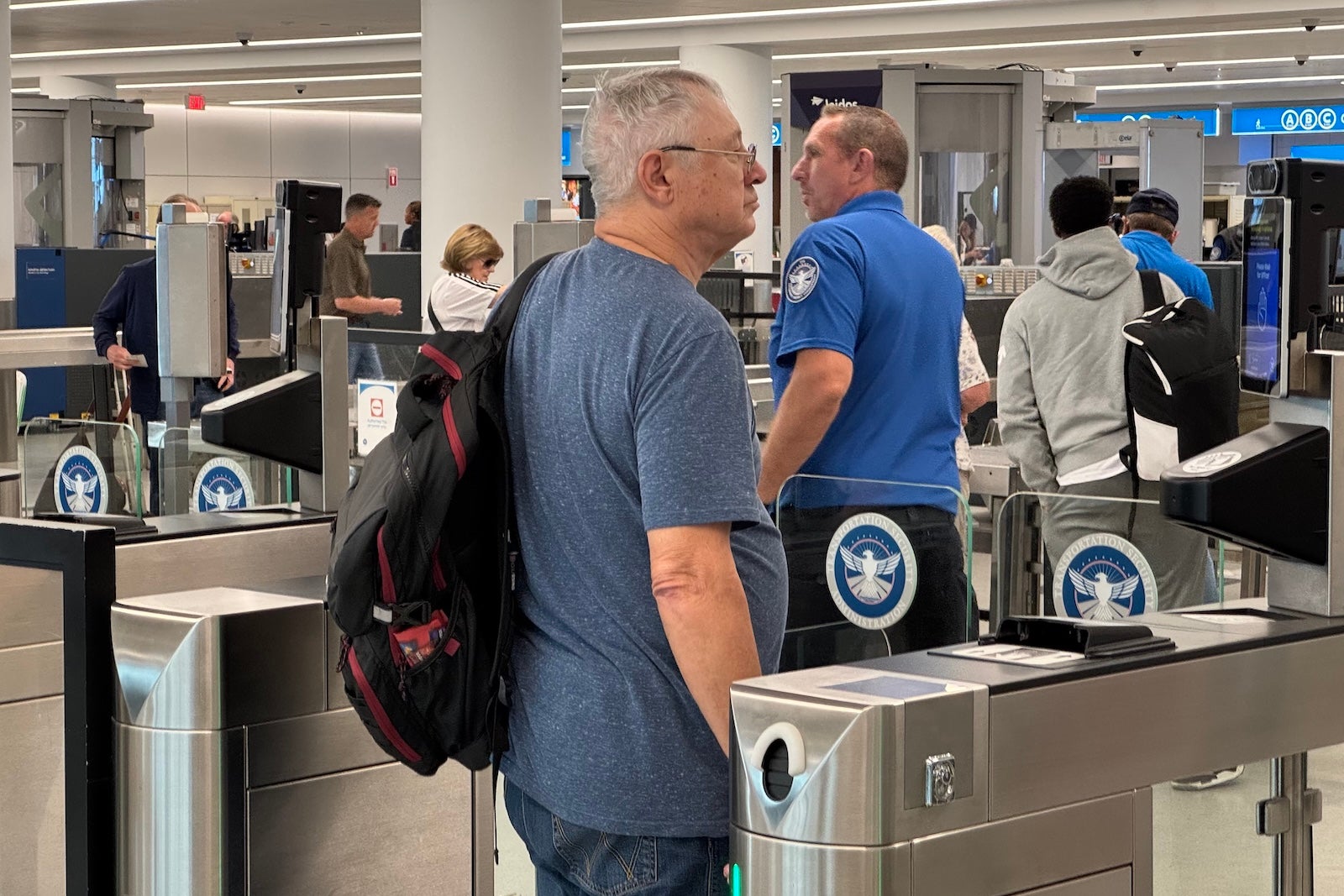
The TSA had officers stationed near the e-gates to assist flyers with the process.
Main takeaways
For the most part, this whole security experience is pretty familiar to anyone who regularly goes through TSA checkpoints.
The key difference: Instead of an officer sitting in front of you checking your ID, TSA’s computer systems handle the work.
The agency is calling this CLT e-gates setup an “operational assessment” to see how smoothly the lanes work.
TSA has also conducted testing on these high-tech lanes at Ronald Reagan Washington National Airport (DCA). It’s likely you’ll see the agency test this process at other airports in the not-so-distant future.
Bottom line
This new e-gates trial comes at a time of big changes for TSA. Last week, TPG reported that three airports had become the first to sign on to the new “TSA Gold Plus” program, a partnership that will bring private screening companies to more airports.
Meanwhile, the agency recently finished rolling out the fast-tracked TSA PreCheck Touchless ID program to more than 60 major airports. Plus, the U.S. Department of Homeland Security is in the process of introducing time-saving “one-stop security” programs at some U.S. hubs, intended to reduce wait times for passengers after international flights.
Related reading:
Disclaimer : This story is auto aggregated by a computer programme and has not been created or edited by DOWNTHENEWS. Publisher: thepointsguy.com







