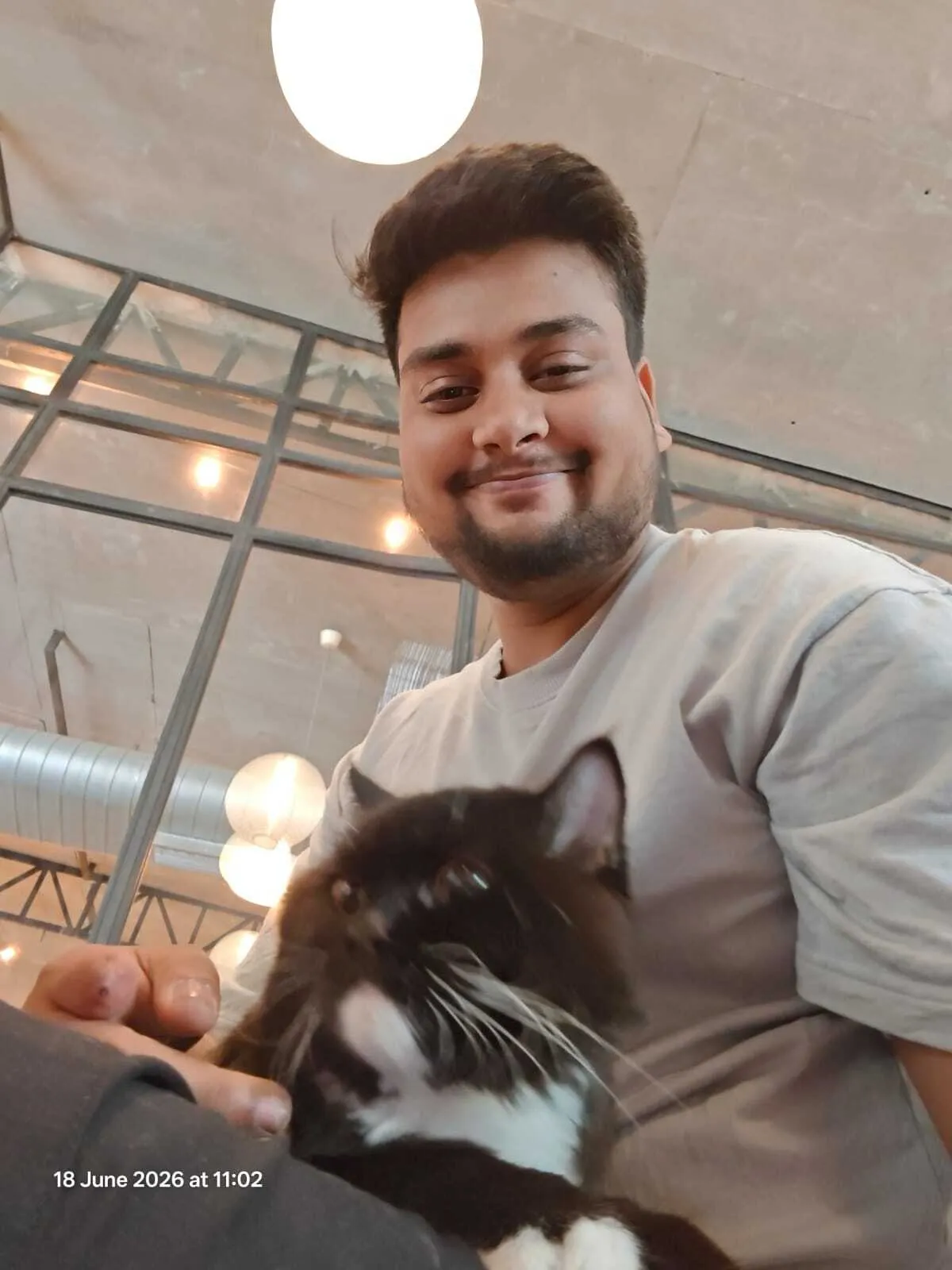
When Gautam Ram Chandra began taking calls from queer and transgender people seeking emotional support, some of the experiences they heard felt painfully familiar.
Years earlier, living in Lucknow, Gautam had struggled to find other queer and trans people they could connect with. As a transmasculine person, they had also faced discrimination while seeking healthcare.
“I had no hope back then, and I thought I couldn’t survive,” they recall.
Today, Gautam helps create the kind of space they once needed. Listening to people who were going through similar experiences gave their work a deeply personal meaning.
“I was helping myself… I was helping my inner teenager when I was talking to those people,” they share.
Gautam is part of Safe Access, a non-profit organisation working to make healthcare and emotional support more accessible to LGBTQ+ people across India.
Through its Community Wellbeing Project (CWP), trained queer and transgender peer supporters offer a listening ear to people who may have nowhere else to turn.
The programme receives an average of more than 750 support calls every month, according to its founder, Shubham Choudhary.
For Gautam, however, the journey began with a simple desire to find people who understood what they were going through.
Finding a place where they could belong
In 2019, Gautam came across an advertisement for a fellowship with Safe Access.
At the time, they were living in Lucknow and felt isolated from the queer and transgender community. Their own experiences of discrimination had also made accessing healthcare difficult.
They applied for the fellowship and began helping the organisation identify queer-affirmative healthcare professionals in Lucknow.

The experience introduced Gautam to people who understood their struggles. It also helped them recognise that the discrimination they had experienced was something they could speak up against.
“I realised what happened to me was not normal and that I should raise my voice,” they say.
What began as a fellowship eventually became a longer commitment.
“I joined them as a permanent employee after the fellowship because I liked the work. I wanted to do more, specifically around health, as a trans person,” Gautam explains.
They would go on to help develop the Community Wellbeing Project, a programme that brought together people from the LGBTQ+ community to offer emotional support to one another.
Why finding the right mental health support was so difficult
Safe Access was founded in 2019 by Shubham Choudhary, now 33, who grew up in Delhi.
The idea took shape when Shubham was filling out an application for an incubator programme. One question made him think seriously about the work he wanted to do.
“What do you want to do for your own community?”

“This is when everything came together, and I knew that I wanted to work for queer and trans healthcare because it is a very neglected topic,” he tells The Better India.
Although the 2018 Supreme Court judgement decriminalising consensual same-sex relationships between adults was an important milestone, Shubham says many LGBTQ+ people continued to struggle with accessing healthcare.
Finding a doctor who understood their identity could involve travelling long distances, worrying about discrimination or deciding whether it was safe to disclose personal information.

“There was a shared struggle with me and people from the community in seeking healthcare. Travelling long hours, fearing discrimination, feeling a constant push and pull about disclosing identities to doctors,” he recalls.
Safe Access initially focused on building a directory of queer and trans-affirmative doctors and mental health professionals.
But conversations with community members and a survey conducted by the organisation revealed another pressing need: accessible mental health support.
The challenge became more apparent during the COVID-19 pandemic in 2020.
As people faced isolation and emotional distress, demand for mental health services increased. Several affirmative mental health professionals listed in the directory were booked for six to 12 months and asked to have their names removed.

Shubham and his team began exploring another possibility.
What if people within the LGBTQ+ community could be trained to offer emotional support to others who shared similar experiences?
“Peer support has existed within the community for a very long time. People have been turning to each other for support for years,” Shubham says.
“We may not have called it peer support, but we have always been doing it. I have received it, and I have provided it.”

The team wanted to build on this existing practice by providing structured training, supervision and clear boundaries.
That idea became the Community Wellbeing Project.
How the programme helps people find someone to talk to
In early 2021, Safe Access brought together its first group of 30 peer supporters.
They were queer and transgender students and working professionals from different regions, languages, religions and backgrounds.
Over approximately three weeks, the group completed 32 hours of online training.
The sessions covered active listening, basic counselling skills, ethical boundaries, preventing burnout, suicide prevention, and identifying resources for people seeking support.
They also practised through mock calls and supervised sessions.

After training, the peer supporters began a six-month period of supervised practice. If they encountered a situation they were unsure how to handle, they could seek guidance from queer mental health professionals associated with the programme.
For someone looking for support, the process is designed to be accessible.
A person can visit the Safe Access website, browse the available peer supporters and choose someone based on factors such as language, identity or location.
They can then connect through a common helpline number for a free, confidential, one-on-one conversation.

If they feel comfortable, they can arrange another call with the same peer supporter. They can also choose someone else if they prefer.
The programme provides a space for emotional support and listening, with trained peers and professional supervision forming part of its model.
Since its beginning, CWP has grown to four cohorts, with 120 peer supporters trained or involved across them.
Some have continued their involvement for four to five years, something Shubham considers particularly meaningful.

For him, another encouraging sign is when someone who initially reaches out for support eventually decides to become a peer supporter themselves.
One such person is Rohan (name changed), a medical student who first discovered Safe Access in 2024.
‘I felt like I was being heard without being judged’
In his medical college, Rohan did not know a single openly queer person.
He found it difficult to speak about his identity or share what he was experiencing.
“I don’t even know any other queer person in my college, and I cannot talk to anyone about my feelings… because of this, I feel like my identity gets pushed back,” he says.
During his first year, an experience involving someone he trusted left him feeling anxious and emotionally overwhelmed.
But speaking about what had happened also meant potentially revealing his queer identity to people around him.
“I couldn’t tell anyone what I was going through without revealing my identity. I felt like I was in a bubble that I couldn’t burst,” he recalls.

In 2024, he came across Safe Access on Instagram and began using its peer-support service.
For the first time in a difficult period of his life, he felt that he could speak openly about his emotions.
“I felt like I was being heard without being judged, and that my emotions had a place in society. It was very helpful for me during that time in my life,” Rohan shares.
What stayed with him was the way his peer supporter listened.
“The concept of active listening and reflecting emotions was very helpful when my peer supporter did that for me,” he explains.

The experience made Rohan think about other queer people who might be going through similar situations without anyone to talk to.
“I was in a place where I couldn’t even talk about my problems with my mother or my brother. I wanted to join Safe Access because I want to provide a much better space to other community members. A non-judgmental space where their voices could be heard.”
He eventually joined the programme as a peer supporter himself.

At the time of the interview, he had been offering support through CWP for a little over two months.
His experience reflects something Shubham has seen within the programme: people who once needed someone to listen are now choosing to become that person for others.
Finding purpose in helping someone else feel less alone
For Gautam, becoming a peer supporter also changed how they understood the challenges faced by other members of the community.
They had initially expected to offer support and connect people with useful resources.
But as the calls began, they heard about experiences that went far beyond their own.
“Once I started working under CWP, I thought that I could provide help or resources to people, but after I completed my training and started doing calls, the stories and the people were a major awakening for me,” Gautam shares.
They encountered transmasculine and non-binary people facing restrictions at home, forced marriage, violence, interrupted education and financial barriers to seeking mental healthcare.

Gautam was particularly concerned about those living in smaller cities and rural areas, where accessing affirming counselling could be difficult.
“They can’t even go for counselling because they don’t have money, and this was the only way they were able to talk to someone,” they say of some people seeking support.
These conversations made Gautam more aware of how differently people experience discrimination and isolation, even within the same community.
The work also gave them a sense of connection they had struggled to find earlier in life.
They built relationships with other peer supporters who understood the importance of listening, respecting boundaries and making space for difficult conversations.
“We were trained to listen to people, but we were also practising that with each other. I got that kind of space for the first time in my life,” Gautam recalls.

For someone who had once felt alone in Lucknow, being able to offer that same understanding to others has become an important part of their life.
And for Rohan, who has only recently begun his journey as a peer supporter, the purpose is similar.
There is a message he often returns to, especially when he begins doubting himself.
“I heard this line, ‘You Are Enough’. Sometimes I think, am I enough? I have to keep reassuring myself of this, because I am enough,” he says.
“Now, my mission is to also tell others that they are enough, too.”
If you or someone you know is looking for queer-affirmative emotional support, Safe Access’s Community Wellbeing Project offers free, confidential peer-support calls across India. You can contact its helpline at +91 01141219911 or email [email protected].
Editor’s note: The contact details and current availability of the service should be reconfirmed before publication.
Disclaimer : This story is auto aggregated by a computer programme and has not been created or edited by DOWNTHENEWS. Publisher: thebetterindia.com