Decades after he was assaulted by a counsellor meant to help him, Ian is reckoning with the day that altered the course of his life and how West Australia has changed since.
When Ian was 14 years old, he rode his bike out to a shopping centre that sits on the edge of Perth’s eastern foothills.
It was a long ride – the furthest he’d ever cycled – and away from the safe suburb in the city’s south he called home.
When the teenager pulled up, he made sure to lock his bike up before getting in the waiting Mercedes. He’d later recall it was blue, but he couldn’t be sure.
Slamming the car door behind him, Ian was unsure about how he felt. Whether it was trepidation or relief – it was hard to say.
Either way, the slight young boy got inside and slammed the door behind him.
Hours later, the sun was beginning to fade. All the while, Ian’s bike remained locked up outside the Carousel shopping centre, waiting for its owner to return.
Now aged 60, Ian – who asked his last name not be used to maintain his privacy – has spent much of his life reckoning with what happened that day.
“My innocence was stolen [through] my experience of being sexually assaulted,” he said.
“The young Ian was stolen that day.”
Ian was in his mid-teens in the 1980s when he reached out for help navigating his sexuality from WA’s Gay Counselling Service, and subsequently was sexually assaulted at the hands of one of its volunteers.
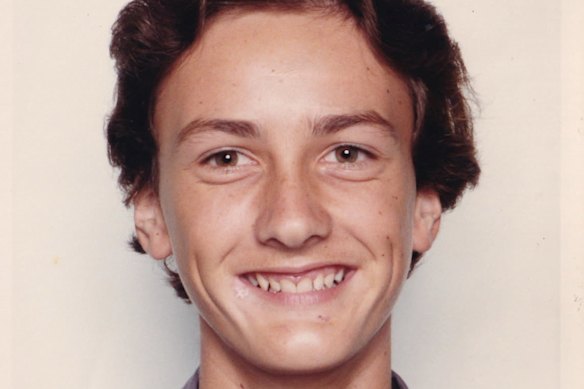
It took him years to come forward with his story, which went on to spark a two-year police investigation. But Ian said his goal is now broader than just prosecuting his attacker – he wants to reach other survivors.
“Part of why I’m doing this today is that I’m pretty sure I’m not the only person this happened to,” he said.
“[The perpetrator] had a fertile field of vulnerable boys back at that time, and I’m sure that he probably likely targeted other people.
“I’m thinking people of my age – they would have had possibly similar experiences where they thought maybe they were the only person in the world [who was gay], or it was unacceptable to be gay – and they were terrified to get support.
“But I just want to let people know that there is support now. No matter how old you are, reach out.”
A different time for LGBTQI+ rights
To understand Ian’s experience is to understand what life was like growing up in Western Australia in the 1980s, and just how vulnerable people like him were back then.
Ian was born and raised in Belfast, Northern Ireland, to loving and supportive parents. He remembers his mother grappling with loneliness due in part to his father’s long hours at work, and his subsequent decision at four years old to go around to each of their neighbours and ask them around to their house.
“I’d ask them, ‘Can you come and have a cup of tea with my mum? Because she’s lonely’,” he said.
His family moved to Australia when he was seven, and they settled in a home south of Perth.
Ian initially had trouble at school due to his strong accent and slight frame – sports weren’t his forte, he readily admits – and at the same time, something else was happening.
“I noticed boys for the first time,” he said.
“I think it was [the fact] they were wearing shorts. I’d never seen boys bodies like that before.”
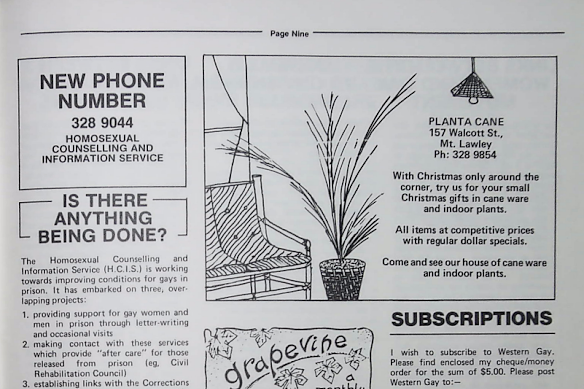
It was a thought Ian admits he kept incredibly suppressed for years, and it wasn’t until he was about 14 or 15 that he flicked through classified advertisements in the local paper and realised there may be a name for what he was experiencing.
“I had just heard about [the idea] of being gay, but didn’t really know what gay was. But I knew I was attracted to boys,” he said.
“I saw one about the Gay Counselling Service of WA.”
The Gay Counselling Service of WA only started up in 1974, and later became known as a branch of WA’s Living Proud organisation. It was an anonymous service where gay people could phone up and chat about any challenges they were facing.
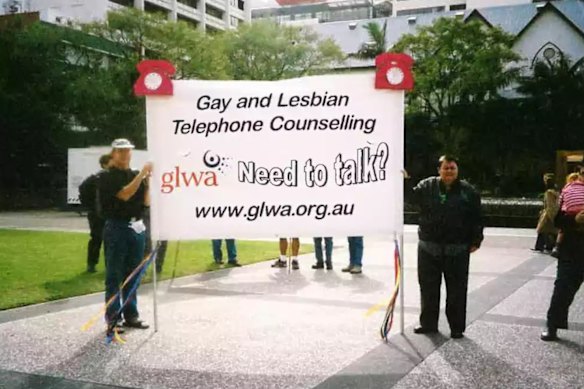
Living Proud chief executive Meaghan Holden said early iterations of the service were ad hoc.
“Like how so many LGBTIQA+ plus organisations start, they start from someone’s lounge room,” they said.
“There’s a bit of a roster of people are there on demand by the phone if someone needs to talk.”
Colin Longworth was one of the first trainers at the service, and once said early days of the Gay Counselling Service resembled an organisation that was “ran on the smell of an oily rag”.
There were few safeguards in place, and volunteers did not often have formal mental health support qualifications.
“When you ask ‘why did you volunteer?’, it’s often to give back to the community because they recognise their own struggle, and if they can, then it’s paying it forward,” Holden said.
The service had to operate discreetly given homosexuality was criminalised in WA at the time, and Longworth even recalled people attempting to volunteer for the service in a bid to “talk callers out” of being gay.
But it filled an important gap for Ian, who could not fathom telling his family about his sexuality.
He remembers the anxiety he felt when he dialled its number one day.
“I was terrified,” Ian said.
A voice at the other end would eventually pick up, and Ian said the conversation began as normal as could be for a vulnerable teenager voicing a suppressed secret.
“He was asking a lot of questions about me and my family,” Ian said.
The conversation continued, and Ian remembered its tone changing.
“I distinctly remember thinking these questions are really quite strange,” he said.
The questions became more probing and personal – and while Ian said his gut was beginning to feel a bit uneasy, he pushed it down.
“I think he realised that I was young, and that I was really scared of anyone knowing [about me being gay]” he said.
“[So he said], ‘oh look, I think it’s really important that we meet face to face. I don’t think I can help you over the phone’.”
They arranged a time, and Ian made his plans to cycle the full 10 kilometres to the suburb of Cannington to meet with his counsellor.
And on that day, without telling his mum and dad where he was going, he went.
A remote meeting, a long drive, and a threat
When Ian got into the Mercedes, he was met by the large, hairy, red-headed man with a moustache who looked to be in his mid to late twenties. To a teenage Ian at the time, he looked much older.
The car had separate seats, and when Ian buckled himself in, the man told him they needed to go somewhere more private to talk. It’s these details he remembers.

“So we drove. And we drove, and we drove, and we drove,” he said.
“I remember thinking … why are we so far away? This feels really strange.
“At that point, I didn’t feel safe, but I didn’t know what to say.”
Eventually and deep into the dense bushland of Perth’s hills, the man turned the car down what looked like a fire break and continued on off the road. They were so far off the beaten track, and Ian doesn’t remember the pair speaking.
When he did pull over, Ian remembers his entire body freezing.
“It wasn’t until years later, talking to people about it, I realised I’ve been raped,” he said.
He described a common phenomenon experienced by survivors of sexual assault. That is, the mind disassociating from the body and watching the attack from above.
“I remember thinking you can have my body, but you can’t have me,” Ian said.
Afterwards, the man dropped Ian off at his bike.
“He said, ‘If you tell anyone what happened today, I will tell your parents,’” Ian said.
“And that was it.”
He cycled home, and began his descent into repression and chaos.
The road back
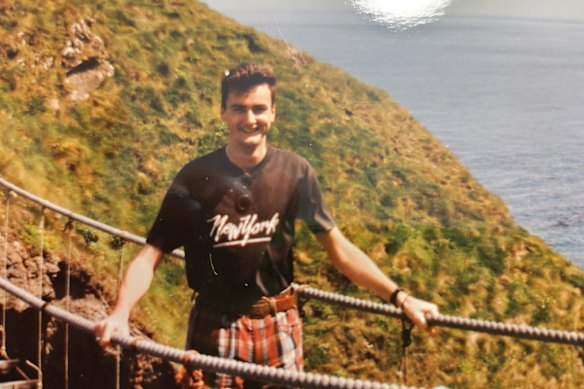
Ian’s late teens and early twenties were characterised by wrecked self-esteem, addiction and adrenaline.
He attempted suicide at 17 due to what he said was the “shame” of his assault, and he continued to struggle to understand why he was the way he was.
Eventually, he developed a protective cocoon of humour and self deprecation to keep himself afloat.
“I think I just became an angry young man,” he said.
After some reckoning Ian came out to his parents in his 20s, and eventually, due to what he now recognises as a lot of love from friends and family, he began to pull himself out.
He threw himself into LGBTQI+ advocacy and community health work. It was through this work he realised what had actually happened to him.
“I was working for an organisation where I was approving a brochure for adult survivors of child sexual abuse, and as I read the behaviours, and I thought I’ve got every one of those,” Ian said.
“Then it came back – that memory of what had happened.
“It threw me off my feet.”
He was living in London in 2016 and dealing with the fallout of his realisation when he attempted to pursue the matter with police, but the statute of limitations meant he was unable to go further with his report.
“They said there was nothing that could be done because it was too long ago. That was the end of that chapter,” Ian said.
“It was disappointing. I just wanted him to pay the price.”
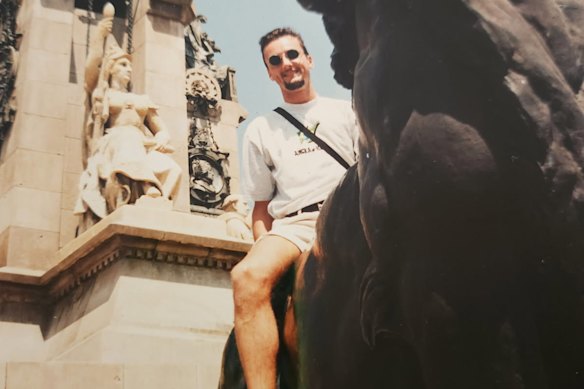
Time went on, and Ian eventually moved back to Australia and went on to work in WA’s LGBTQI+ community.
Years passed, and one day, Ian had to go and report to WA police about something entirely unrelated to his sexual assault.
“We’re just talking about law changes, and I said I had wanted to pursue this case, but I was told [I couldn’t] due to statute of imitations. And that’s when they stopped and said ‘oh, that law has changed’,” he said.
Police informed him the government had recently passed laws that would allow men to make claims of historical sexual abuse regardless of how much time had passed, and what followed was a two-year-long investigation into Ian’s report of abuse.
“They were fantastic, very supportive, and very sensitive in their questioning. At no point did I ever feel doubted or ridiculed,” he said.
Detectives combed through records at Murdoch University, which held the archives of WA Pride, to find a man who matched the description Ian had given. They reached out to the new iteration of the Gay Counselling Service, Living Proud. Eventually, they believed they found him.
“When they closed the case, they came round to my house, and [the detective] sat down,” Ian said.
“He went through what I could see was hours of work. One of the interesting things he said was their first strategy was to look at gay men who fit the kind of physical description I gave, with a criminal record.”
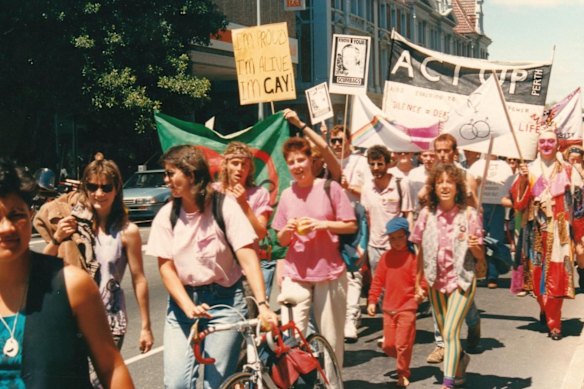
But it was more challenging to find a gay man at that time in Perth who did not have a criminal record.
Due to the criminalisation of their sexuality before 1990 in WA, many men and women would have black marks against their name for breaching the state’s Criminal Code for “buggery” or “gross indecency” purely for engaging in consensual relationships.
Many people before 1990 have since been able to have their criminal charge expunged, after WA parliament voted to decriminalise homosexuality, but it still left a significant group for detectives to go through.
There was also the reckoning Ian had to go through trusting police with his story.
“I was [initially] scared of police, because of the historical context there,” he said.
Police across Australia have had a fraught relationship with the LGBTQI+ community, including incidents of entrapment where they would lure gay people to known “beats” and arrest them, from failing to pursue credible allegations of hate crimes, and treating gay people through the lens of “perversion” due to old stigmas.
However, Ian said his experience in nearly 40 years late appeared to show a police force that had matured and progressed.
“They were brilliant,” he said.
Further searches, interviews and investigations would reveal the man police believed was responsible for Ian’s assault. Unfortunately, he had since died.
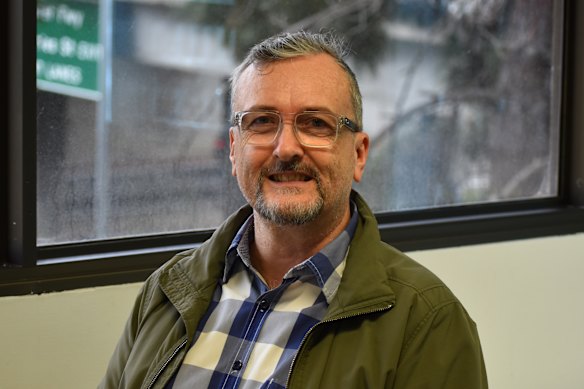
When Living Proud became aware Ian’s case had closed with no real result, Holden said it was equally difficult for the service to understand how someone could be so violated through using its early days hotline.
But, they say, they too have changed over the last 40 years.
“Back then it was volunteer-run by community, for community,” they said.
“Whereas now we’re like a registered organisation – a professional organisation – we have the digital health standards that we have to adhere to, we’re a child safety organisation, we’re registered with the Australian Charities and Not-For-Profits Commission, we’ve got our board of government.
“Back then it really was just a roster of people of who’s available – we’ve still got that now.”
But in 2026, Holden said the group’s volunteers had to pass its strict training standards and get a Working With Children check.
“We are very aware that people may read this story, and that may prompt them to come forward,” Holden said.
“We understand that and obviously we would support them. I would encourage anyone who has had these experiences to reach out for help first, because even if you want to take action, you need to have a support system – whether that’s a counsellor or whether that’s family and friends.”
Ian said at its heart, he wants his experience to help someone else.
“It wasn’t your fault. You were a child. There are support services there for you,” he said.
“If they’ve had an experience the police are one potential avenue, but equally there are a lot of support services within the gay community [and outside of it].
“If you have experienced childhood sexual abuse, step forward. There’s support.”
*Ian’s last name has been withheld to protect his privacy.
QLife 1800 184 527 qlife.org.au; Lifeline 13 11 14 lifeline.org.au; Kids Help Line 1800 55 1800 kidshelpline.com.au
Disclaimer : This story is auto aggregated by a computer programme and has not been created or edited by DOWNTHENEWS. Publisher: www.smh.com.au