Thirty years after he stood down as skipper of the national side, Will Carling is still outspoken about the state of the game.
Even now, 30 years after stepping down as England captain, Will Carling remains among the most recognisable names in rugby, writes Alex Spink.
The man who led his country more successfully than anyone, before or since. A friend of the late Princess Diana, sacked for calling his bosses “old farts” when demanding the game be run more professionally.Who better to assess the progress rugby has made in the years since?
In three decades, England have won fewer Grand Slams than Carling managed in five seasons, the biggest clubs are in debt, the national team isn’t able to pick its best players and a disconnect exists between the need to create stars and the cult of personality so frowned upon in rugby circles.
“Let’s be honest, rugby is still way off where it needs to be,” says Carling. “I still don’t think the game is achieving its potential. I don’t think there’s a strong enough relationship between the RFU and the clubs. I don’t think we’ve got the England bit right, in terms of enhanced (Elite Player Squad) contracts for some and how that leads to creating the right culture in terms of playing for England.
“It’s great that players get paid and are professional, but we’re still not running the game as a business. We haven’t got the best minds working out how we maximise the potential of this game, how we sell ourselves to new audiences.”
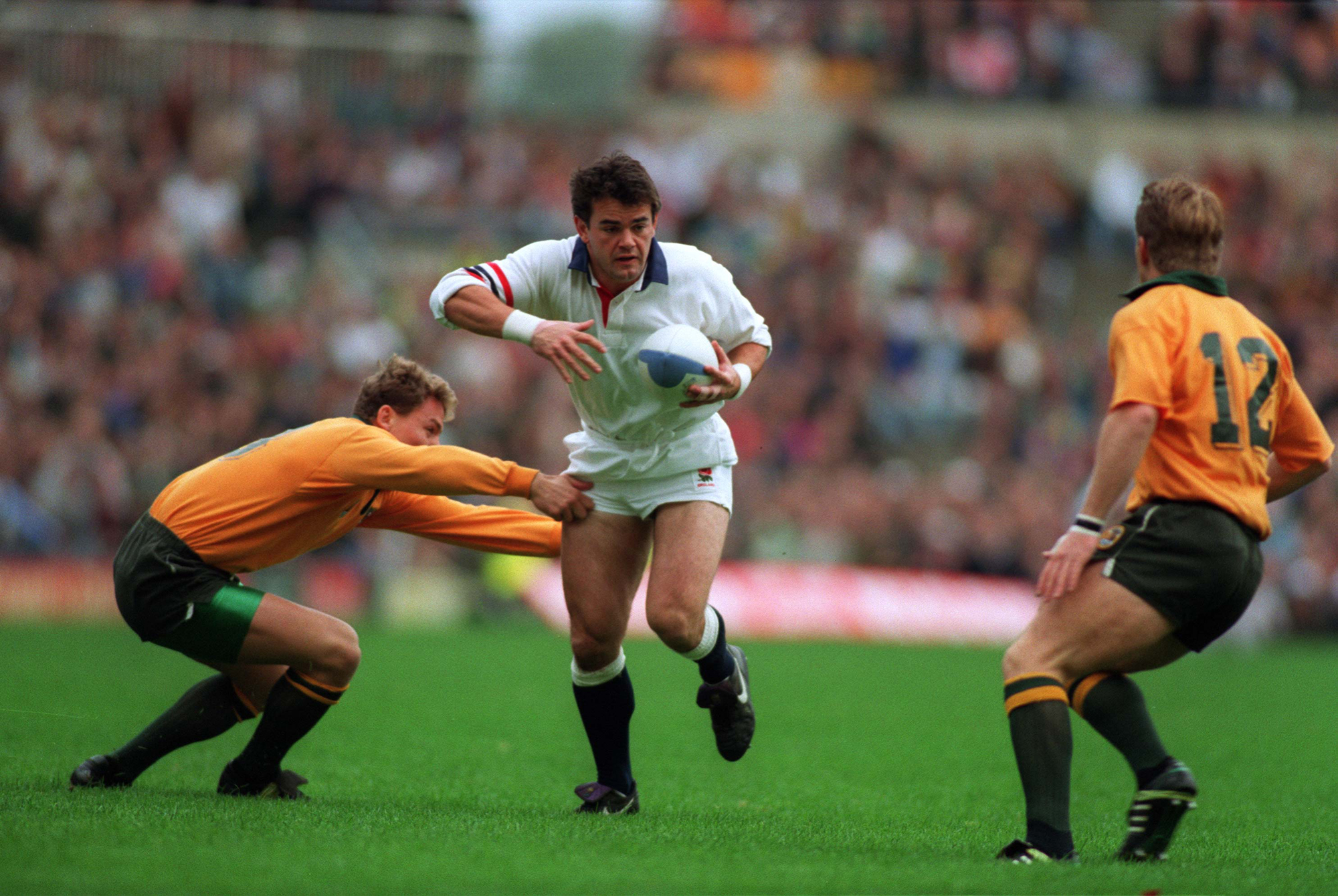
Carling led England to their first World Cup final in 1991, where they lost to Australia (Mark Leech/Offside/Getty Images)
Carling says he was reminded of this when listening to Vic Banerjee, managing director of The Hundred, identify cricket’s ageing support base and why, basically, it needed to innovate to survive.
“Rugby’s also got an ageing demographic,” he adds. “What new formats are we creating, how are we appealing to younger people, how have we innovated since the game went professional?
“There are so many more entertainment options available to youngsters these days. Rugby needs to learn it has to fight for attention. For me, it needs a significant transformation.”
Where’s Willis?
The fact England don’t pick Jack Willis, Toulouse captain and player of the match in successive Top 14 final triumphs, because he plays outside the Gallagher PREM is a striking example of dysfunction.
“This guy has gone to the best club in France and not only is he playing regularly, they think he’s incredible and they have made him captain,” says Carling. “An Englishman! Captain!
“Now for me that is a flashing light because Jack has something special about him and that is what we need. Yet we leave him there.
“I’m not being funny. If someone suddenly said to me, ‘Will, you’re in charge of England’, I’d say, ‘Right, I need money because I need to get that guy. I need to buy him out of his contract, bring him back to England. And he’s England captain’.”
Carling is not finished. “There are arguments for and against selecting players who choose to go to France,” he continues. “But since 2003 we’ve won one Grand Slam. For the talent we’ve got now and we’ve had in between, we cannot say we’re achieving our potential.
“So why are we not sitting down and working out what isn’t working and being honest about it? How on earth is Johnno (Martin Johnson) not involved in some shape or form? Why is Clive (Woodward) not involved in some shape or form? They’ve been there, done it. If we’re serious about trying to do it again, why would we not be learning from them and involving them?”
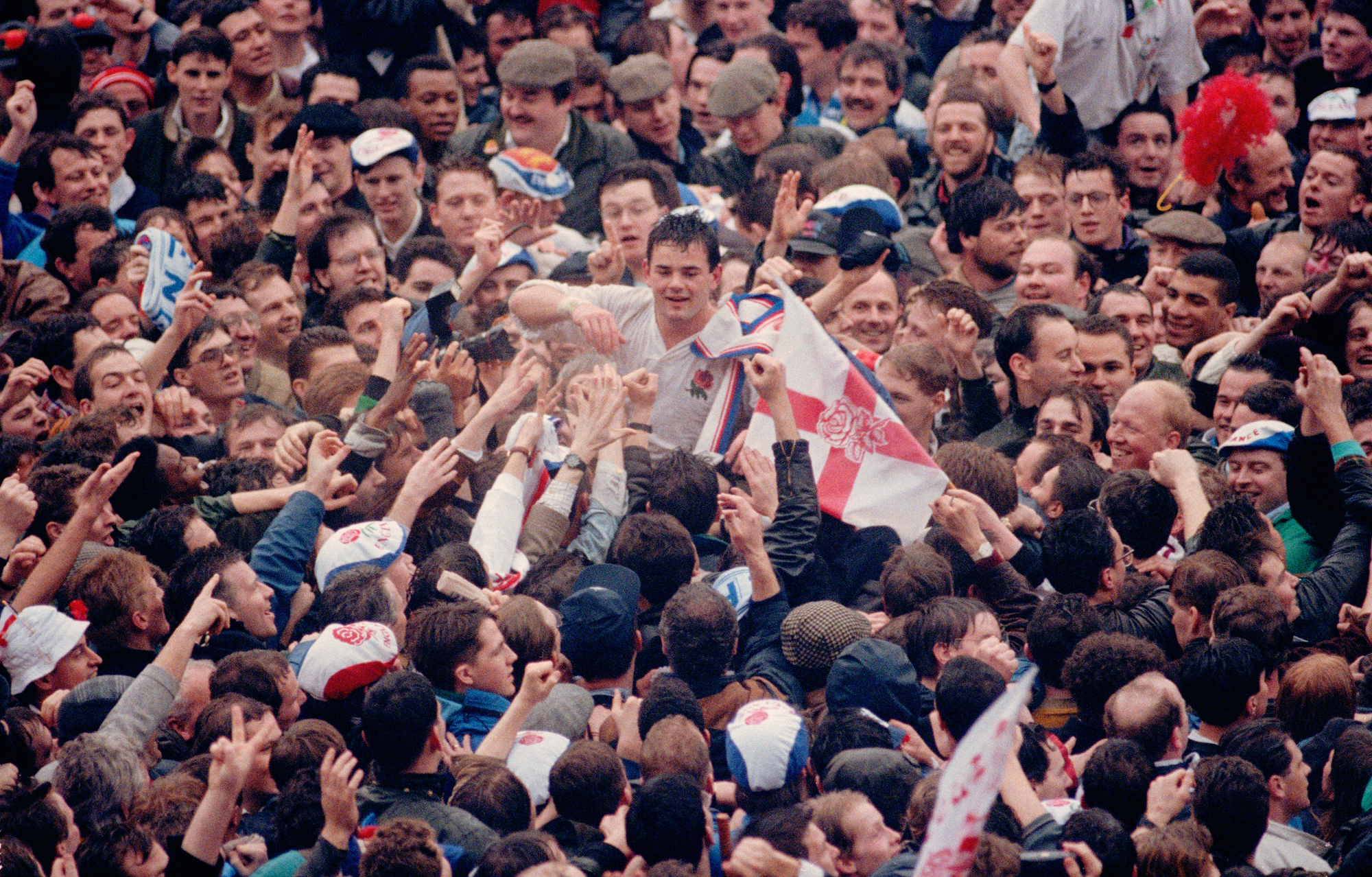
Carling is carried on a wave of jubilant England fans after winning the Five Nations Grand Slam in 1991 (Dan Smith/Allsport/Getty Images)
What England do have is Henry Pollock, a player with one start for his country whose agent, Eddie Hearn, insists is worth £1 million a year. Does Carling approve of the hype – much self-generated – of the 21-year old Northampton Saints back-row?
“Pollock is a character and wow, he’s got talent,” he says. “I talked to my former team-mates about him. The general consensus was ‘Listen, as long as he is delivering on the pitch and none of the stuff he is doing in any way disparages the opposition, carry on.’ The game needs characters, it really does.”
A whole new ball game
Carling has never been afraid to speak his mind. It earned him the England captaincy at 22. It also led him to be stripped of it, briefly, seven years later when, speaking off-camera to a TV documentary maker, who chose to broadcast the remark over the closing credits, he said: “If the game is run properly as a professional game, you don’t need 57 old farts running rugby.”
Then, as now, he was all about wanting a fair deal for the players – and for the sport he loves to put its best foot forward.
“For me, it’s always been about the players,” he says. “However many mistakes I made as captain – and I made loads – the team was always my driving force.”
That loyalty was repaid when the RFU sacked him as skipper. The senior players in his team told the blazers that none of them were prepared to step into his shoes.
Furthermore, he had the support of the public in his assertion that “everyone seems to do well out of rugby except the players. It has become more than a fun game. What gets me, and a lot of players, is the hypocrisy of the situation. Why not just be honest and say there’s a lot of money in the game? It’s becoming a professional game.”
This was May 1995. By August of that year, with Australian media moguls Rupert Murdoch and Kerry Packer offering vast sums to revolutionise the code, the pressure told. The International Rugby Board (now World Rugby) buckled, throwing open the gates and lifting restrictions on payment to players.
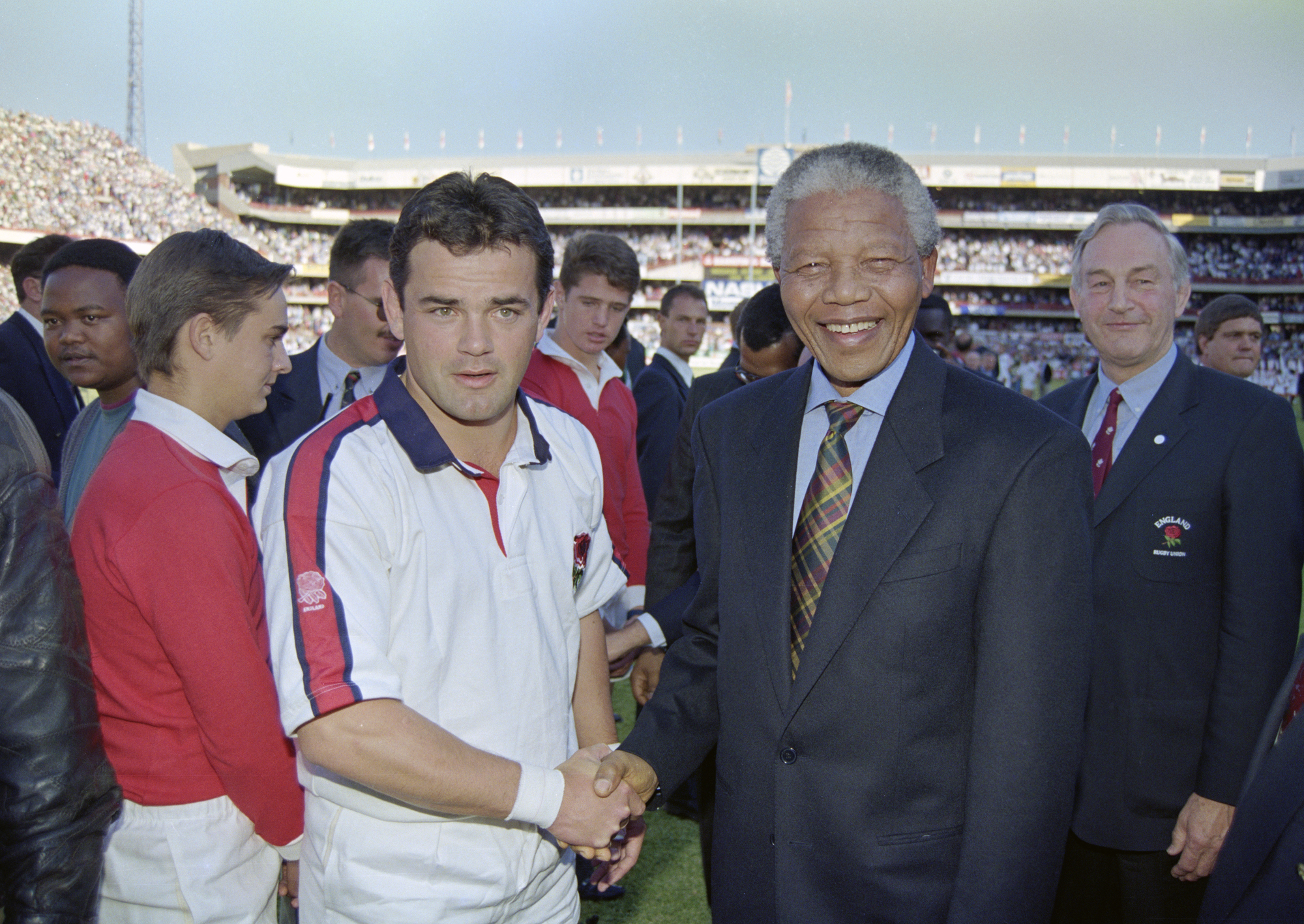
Carling meets South Africa’s newly elected president, Nelson Mandela, ahead of a 1994 Test against the Springboks in Pretoria (David Rogers/Allsport/Getty Images/Hulton Archive)
“It was sheer panic, wasn’t it? Carling says. “Declaring the whole game open was the most damaging part because the game couldn’t sustain it. The structure was wrong.
“Instead of some careful planning, there was just a sheer panic that there was a professional league who were talking to me and Fitzy (Sean Fitzpatrick) and Francois Pienaar and Michael Lynagh.
“Suddenly, instead of, ‘We need to sit down and talk sensibly, work out which parts of the game need to go professional and how that transformation should look’, it was just, ‘Right, the game’s professional’. It was carnage. Awful.”
“I wasn’t the right guy anymore”
A matter of months later, Carling made a shock announcement of his own. In the days before he led England to a fourth Five Nations crown in six years, he took the decision to step down as captain.
Eight years after getting the job, in circumstances every bit as surprising given his age and inexperience, the country’s longest-serving captain decided he’d had enough of being the dimple-chinned face of English rugby. He wanted just to be a player again, plain and simple.
“With everything that had gone on in that last year, I realised I wasn’t the right guy anymore. I just wasn’t doing it properly,” he reflects, whilst insisting his decision wasn’t influenced by his treatment from the authorities.
“Getting sacked actually had no impact at all in terms of my decision. I don’t mean this nastily but I wasn’t doing it for them (the RFU committee), I did the job for the players.
“My relationship with the committee was never great. I spent most of my captaincy being hauled off to the East India Club to be told off for something.
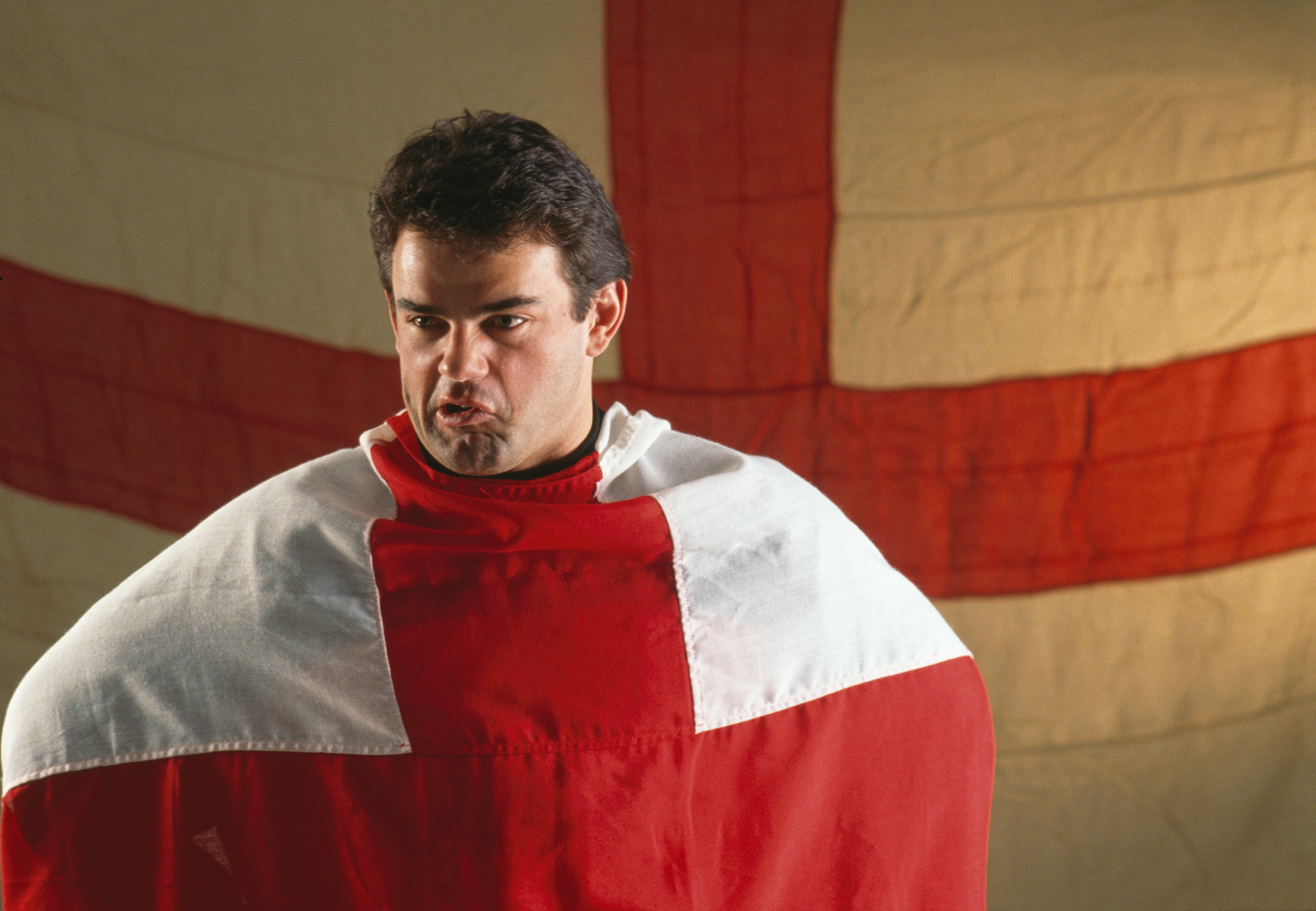
Not an alternative England kit – it’s actually Carling wrapped in a St George’s flag (Russell Cheyne/Getty Images)
“Some of the arguments I had with them about giving ourselves a better chance of winning just didn’t register with them. I had to turn up to the East India once to basically be told I took winning too seriously. I was like ‘wow’. This guy said to me, ‘Will, it’s not all about winning, you know. We set the moral tone for world rugby.’ I looked at him and just went, ‘No, we don’t. Most of world rugby hates us because of this.’
“For all that, it was honestly not why I stepped down. Having muddled through and, Christ, I got so much of it wrong, I just thought I’d run out of time.”
The end of the captain’s run
Carling was 30 and had captained his country a record 59 times, losing only 14. He had taken England to a World Cup final. He had also lived under a media spotlight of incredible intensity, one precious few even in this social media age would recognise.
“I suddenly thought, ‘do you know what, Will, you’re not the right guy anymore,” he explains.“You’re not the best guy for this’.”
He sought out Jack Rowell, England’s head coach, and told him: “I have to stop. I’m not doing this well enough.”
“Yes, you are,” Rowell replied.
“No, Jack, I’m not doing this the way I used to. I’m not pushing this hard enough. I can’t look myself in the face.”
Carling’s team won Grand Slams in 1991, 1992 and 1995. In the three decades since, England have managed two (2003 and 2016).
“Yeah, but I wasn’t doing it the way I had,” he reiterates. “Without getting too heavy, when I first started captaining I knew nothing, I had no experience. But I said yes to the call for definite reasons.
“Not because I wanted to be the focus of attention and sought the profile, that wasn’t at all what it was for me. I did it for the team because I wanted England to win rugby matches.
“It wasn’t about me running out in front of all those people, about doing interviews, it wasn’t about my profile, it was about, ‘did I do a good enough job in the eyes of my team-mates?’
“I was 22 years old and sitting on selection, which still blows my mind. The guys in that team were my heroes. I thought, ‘How on earth do I have a say here?’
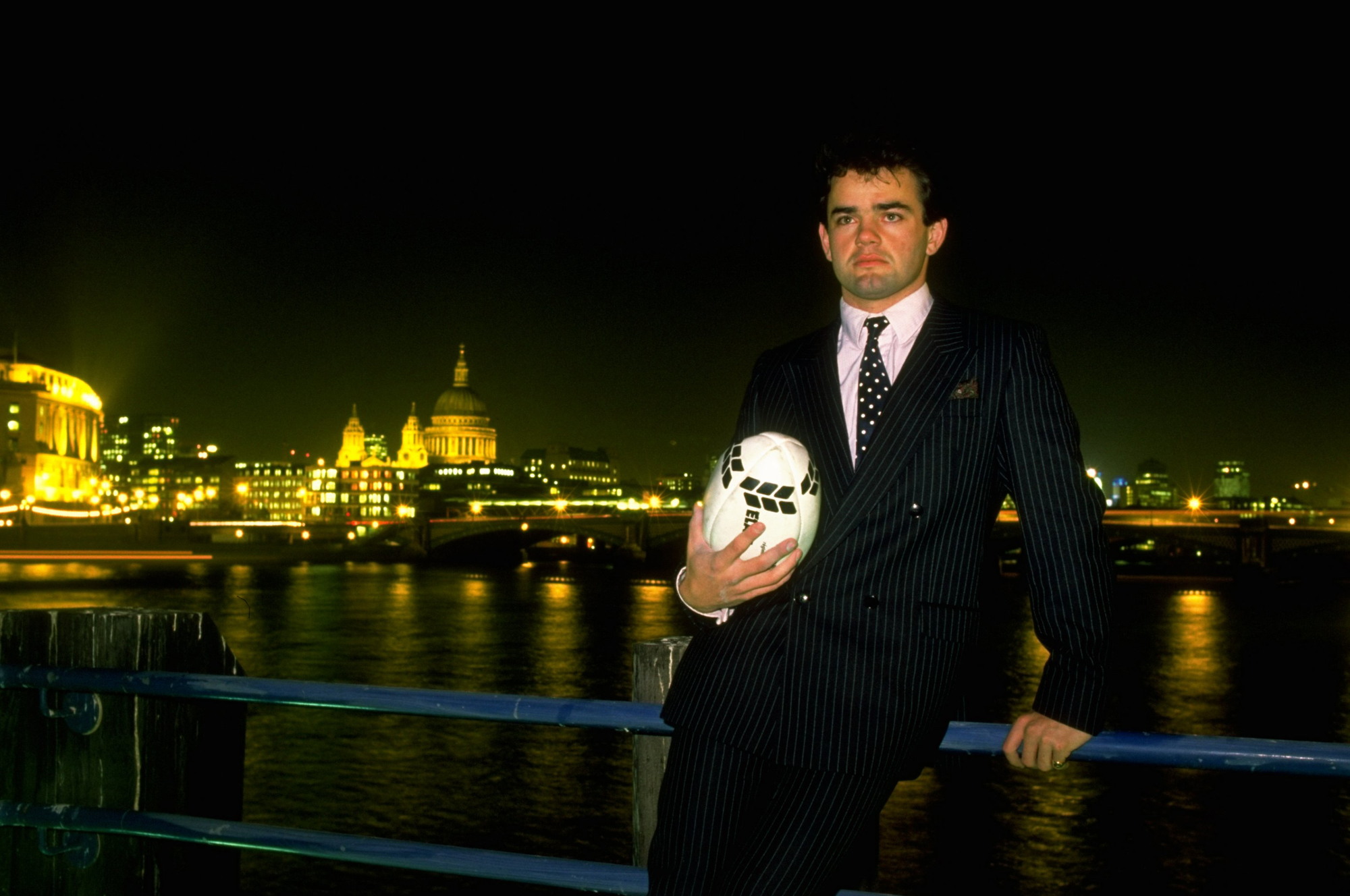
Carling looking moody in front of the River Thames after being appointed to the England captaincy (Russell Cheyne/Allsport/Getty Images)
“I worked out that the ‘say’ was, you don’t pick your mates and you don’t drop your enemies. You talk about the right characters to be in the team and the people who are pushing, who are good to have around. However many mistakes I made, the team was my driving force. But by 1996 I didn’t have the energy to push the envelope. I wasn’t coming up with new things.
“Also, in the back of mind, I thought, ‘God, I’d love a year just playing alongside Jerry Guscott without anything external, being able to concentrate on my game’.
“Maybe I conned myself that I could really enjoy it, that I could be a different guy. Because the reality was I felt selfish. In a way, of course, it was easier. But that whole year I could just feel myself unwinding. I knew I was done.”
Crazy times
One wonders what he makes of Owen Farrell’s decision to step down as England captain “to prioritise his and his family’s mental wellbeing” after a 2023 World Cup at which his name, shockingly, was booed by some supporters?
“I don’t think he was well enough protected,” Carling says, candidly. “I felt unbelievably sorry for him. There’s a guy who has been one of England’s greats yet took a huge amount of social media stuff.
“To be fair to mainstream media, they were pretty fair with him. There was pretty much a consensus that the guy is an incredible player. But captaining England is a tough gig.
“I remember talking to Eddie (Jones) about this when he invited me into the England camp and sought my opinion on future captains. I told him he had to be careful because playing for England is one thing, captaining England is a completely different level of scrutiny and analysis.”
Carling describes his time at the helm as “crazy”. He talks about getting the job and, without warning, being walked into a room full of journalists. ‘Do a press conference, you’re England captain’. I’m like, ‘No one said anything to me about this’.
“Then, what was it, three games in, I told everyone (the press) to f*** off! A really good PR strategy that! I thought you guys had got the reporting of a game wrong. I learned the hard way that people are going to have opinions and they won’t always be the same as yours.”
Rugby life around William David Charles Carling was rarely dull. But, for the most part, it is consigned to the past. “When (second wife) Lisa and I had kids, I just wanted to be a dad. That was it. I didn’t want any of the other stuff. No memorabilia around the house. All that happened then. I want to live now.
“I do, though, sometimes wonder what I did to be so fortunate. To have been in a team where I was looked after by people I thought were amazing and who to this day are still my heroes. A few bits I might not have chosen but the vast majority of it was incredible. For some soft kid from private school… you couldn’t have written it.”
Interview by Alex Spink
Disclaimer : This story is auto aggregated by a computer programme and has not been created or edited by DOWNTHENEWS. Publisher: rugbyworld.com