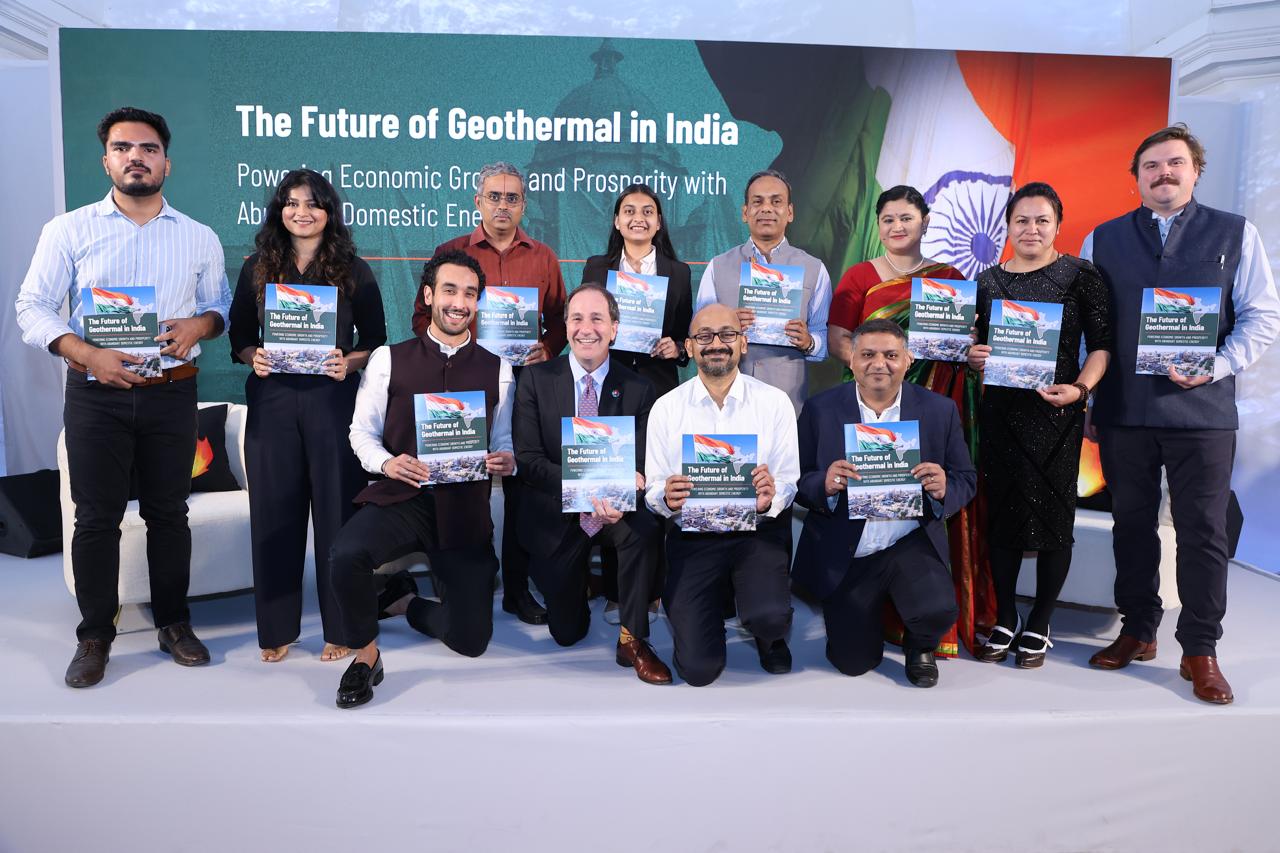
Project InnerSpace, in partnership with the Council on Energy, Environment and Water (CEEW), has released a new report titled The Future of Geothermal in India, highlighting the country’s vast geothermal energy potential. According to the report, India has the technical potential to generate 11,000 gigawatts (GW) of industrial heat, over 1,500 GW of cooling, and 450 GW of electricity — nearly equivalent to the nation’s current installed power capacity.
The report states that even partial deployment of geothermal energy could ease pressure on India’s power grid while helping industries meet rising energy demand. It identifies geothermal energy as a key solution for energy-intensive sectors such as data centres, urban infrastructure, and manufacturing, while also enhancing energy security, reducing emissions, improving climate resilience, and generating employment opportunities.
Geothermal energy, derived from the Earth’s natural heat, is described as a reliable and domestically available clean energy source. The report outlines a roadmap for scaling the sector through pilot projects, supportive policies, and targeted incentives. Although India began exploring geothermal resources decades ago, progress remained limited due to high exploration risks, uncertain drilling outcomes, and the lack of policy support.
However, advancements in drilling technologies, better subsurface data, and India’s recently introduced National Policy on Geothermal Energy have improved the prospects for large-scale deployment. Several geothermal initiatives are already underway, including the Tapri Geothermal Cold Storage Project in Himachal Pradesh, supported by Project InnerSpace’s GeoFund initiative.
Jamie Beard, Executive Director of Project InnerSpace, said geothermal energy represents a major untapped opportunity for India, particularly for industrial heat and cooling applications that can be deployed economically today. She added that geothermal offers a resilient and locally available energy source amid growing demand and potential supply disruptions.
Karthik Ganesan, Fellow and Director – Strategic Partnerships at CEEW, emphasized that energy diversity is essential for India’s transition to clean energy. He said geothermal energy can strengthen energy security with minimal environmental impact and without being affected by weather variability or climate change.
Mirik Gogri, Head of Corporate Strategy at Aarti Industries, noted that geothermal energy could help hard-to-abate industries such as chemicals reduce their carbon footprint while ensuring uninterrupted industrial heat and power supply. He welcomed the report’s identification of Jhagadia as a potential geothermal development zone for industrial applications.
The report was prepared by Project InnerSpace in collaboration with CEEW, with contributions from 12 institutions from India and abroad.
Disclaimer : This story is auto aggregated by a computer programme and has not been created or edited by DOWNTHENEWS. Publisher: deccanchronicle.com