Newcastle University is facing a backlash from conservationists over the appointment of the heir to an Indian oil and gas fortune who runs a controversial mega-zoo as a professor of sustainability.
The university announced that Anant Ambani had been given a professorship of practice for “his work in conservation, biodiversity protection, animal welfare, and environmental stewardship” and “significant contributions to advancing a more sustainable future”.
Ambani is the son of India’s richest person, Mukesh Ambani, who made his fortune primarily in oil and gas, is the owner of the world’s largest oil refinery and has close ties with the ruling Bharatiya Janata party (BJP). Mukesh Ambani has enthusiastically praised BJP policies, while firms linked to his Reliance conglomerate have recently made significant donations, and the prime minister, Narendra Modi, attended Anant Ambani’s lavish 2024 wedding in Mumbai.
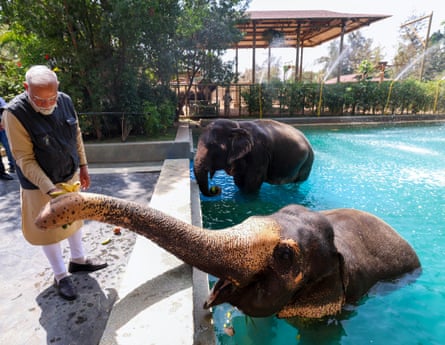
Anant Amabani, who is 31, leads on renewable energy on the Reliance Group’s executive board, and is worth an estimated £90bn, has also set up Vantara, a 1,400-hectare (3,500-acre) private zoo near the family’s oil refining facilities in Gujarat, which reportedly has more than 150,000 animals including 200 lions, 250 leopards and 900 crocodiles, and where he hosted his opulent pre-wedding celebrations attended by celebrity guests and politicians.
Conservation groups have previously raised questions about how some of the animals were sourced, given many were endangered species. Vantara has never been found guilty of any wrongdoing.
The announcement was met with incredulity and derision from academic staff and Indian and international conservationists and environmentalists.
Ramachandra Guha, a leading Indian public intellectual and author of the book Speaking With Nature: The Origins of Indian Environmentalism, said: “I must say that it is a rather mystifying choice. As a scholar of Indian and global environmentalism, I can name at least 50 – perhaps 100 – individuals who are far better qualified to be thus honoured. They include soil scientists, energy scientists, water conservation experts, community forest workers, ecologists, pollution abatement experts, etc who have made real and tangible contributions to a more sustainable future for India and Indians.
“I wonder on whose advice Newcastle University has acted, and whether it did due diligence on what has and has not been done in these fields. Its appointment of Mr Ambani is puzzling in the extreme, and is likely to adversely affect the university’s institutional credibility and intellectual standing.”
Bhuvan Mangalore, an Indian illegal wildlife trade investigator who is completing a dissertation on Vantara at Anglia Ruskin University, asked: “Is this a joke?”
Prof Matt Perry, the chair of Newcastle University’s University and College Union branch, said staff members had objected to the appointment citing environmental concerns.
Prof Lyla Mehta, the head of the climate, environment and sustainability department at the University of Sussex’s Institute of Development Studies, shared concerns that “as public funding for universities falls, there is a real danger that billionaire and corporate money begins to shape academia”.
She added: “Universities are supposed to be places that question power and hold corporations to account, not give them academic legitimacy.”
In April, Anant Ambani launched Vantara University, billed as the world’s first global university dedicated to wildlife conservation and veterinary science.
Lorne Stockman, a research co-director at Oil Change International, said: “At a time when the climate crisis demands an urgent phaseout of oil and gas, we must demand our publicly funded institutions do better.”
In 2025, an investigation by the German newspaper Süddeutsche Zeitung found that many animals delivered to Vantara arrived through countries with opaque wildlife trading networks such as the Democratic Republic of the Congo and the United Arab Emirates, raising concerns that endangered species may have been illegally trafficked.
In August last year, an investigation by India’s supreme court, which lasted less than three weeks, cleared the zoo’s operators of any wrongdoing. A subsequent fact-finding mission into the zoo by Cites, the UN body that regulates the trade of endangered species, found that some of the permits used to bring animals to Vantara were likely forged.
“There is a need for caution to ensure that imports of large numbers of animals by these facilities are not inadvertently creating a demand for illegally sourced animals,” the report found. Cites recommended restrictions on India’s imports of endangered wild animals. However, it subsequently reversed its decision after objections from India, the US and Japan at a Cites meeting after they argued there was not enough proof of illegal imports.
In August, the zoo launched a “reset” in its operations by appointing a former Cites head to oversee its operations and said it would voluntarily pause all wildlife imports until June next year.
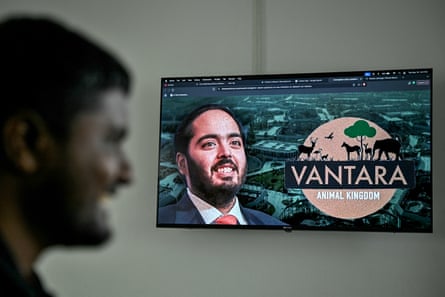
Vantara has declined to comment. The Ambani family and Vantara have previously denied the allegations of wildlife trafficking. They have said: “Our mission and focus continues to be the rescue, rehabilitation and care of animals.”
A Newcastle University spokesperson said: “The award of a professorship of practice recognises Mr Ambani’s contributions to conservation, biodiversity protection, animal welfare and environmental stewardship through his work with Vantara, a wildlife rescue and conservation initiative, and as the executive lead for the Reliance Group’s transition toward a green energy future.”
Disclaimer : This story is auto aggregated by a computer programme and has not been created or edited by DOWNTHENEWS. Publisher: theguardian.com