In most Indian kitchens, cheese still arrives in familiar cubes of paneer or in the household-favourite form of Amul cheese.
But beyond supermarket shelves and café menus, another cheese map exists across the country. In the high Himalayas, milk was boiled, pressed, and dried into hard nuggets that could survive long winters.
In Jammu’s pastoral belts, handmade discs of fermented cheese hissed on iron tawas before being tucked into kulchas.
Along Bengal’s old river ports, cheesemakers smoked salted curds over wood fires, carrying traces of colonial trade routes into local kitchens.
Long before imported cheddar or processed slices entered Indian cities, communities across the subcontinent had already developed their own ways of preserving milk.
India has always been rich in dairy traditions. But heat and humidity made European-style ageing difficult across much of the country. Instead of long-matured wheels of cheese, food cultures evolved around ghee, curd, buttermilk, khoa, and fresh chhena. Here are some of India’s own cheeses:
Chhurpi: The cheese built for the Himalayas
In the mountain regions of Sikkim, Darjeeling, Arunachal Pradesh, Nepal, and Bhutan, chhurpi has long been less a delicacy and more a survival food.
Made traditionally from yak milk or cow’s milk, chhurpi appears in two forms. The softer version resembles cottage cheese and is often added to soups, momos, or eaten with rice. The harder variety is something entirely different, dried until it becomes almost stone-like.
People chew on hard chhurpi slowly for hours.
Its texture comes from repeated boiling, curdling, pressing, and drying. In remote Himalayan economies where refrigeration was unavailable, the cheese became portable nutrition for herders and traders traversing difficult terrain. It stored well, carried protein through harsh winters, and wasted little milk.
The taste is mildly smoky, earthy, and slightly sour, carrying traces of the wood fires often used during preparation.
Kalari: Jammu’s street-side cheese tradition
Further west, in Jammu’s Udhampur and Chenani regions, another cheese tells the story of pastoral communities who learned to preserve excess milk without industrial systems.
Kalari is often compared to mozzarella because of the way it melts and stretches when heated. But the cheese existed in Jammu’s food traditions long before global cheese comparisons became fashionable.
Traditionally prepared by the Gujjar and Bakerwal communities, kalari is made from cow’s or buffalo milk. The cheese is lightly fermented, shaped into discs, and stored briefly before cooking.
/filters:format(webp)/english-betterindia/media/media_files/2026/05/29/famous_kalaadi_of_ramnagar-2-2026-05-29-18-39-25.jpg)
Its transformation happens on the pan.
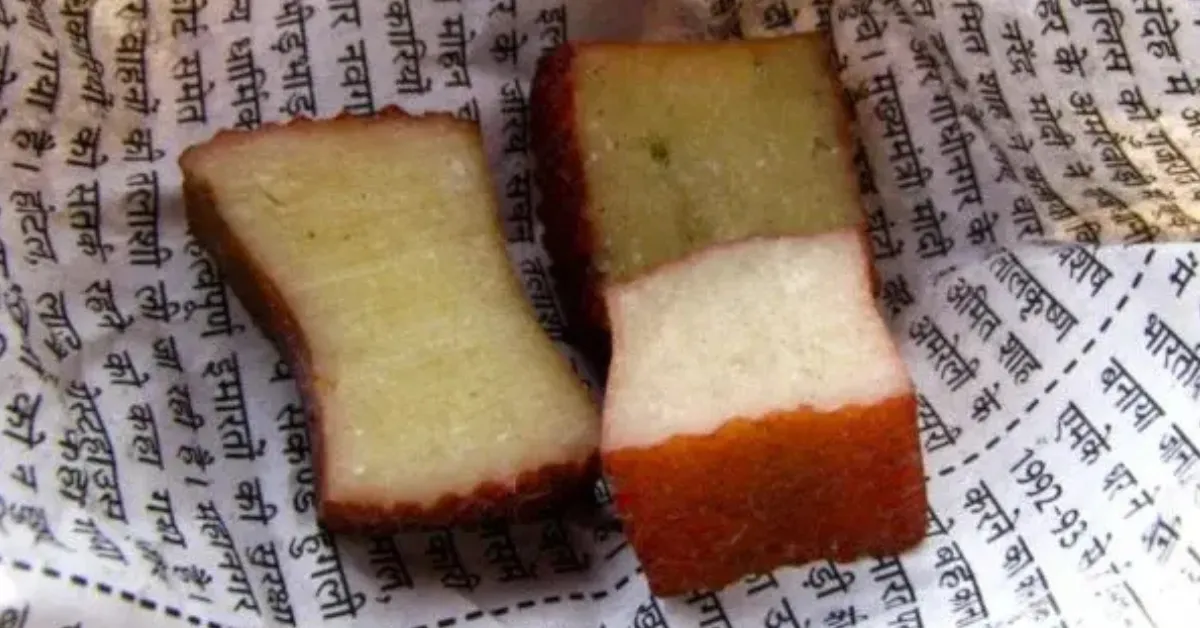
Placed on a hot tawa, kalari slowly fries in its own fat. The outside turns brown and crisp while the inside softens into a molten, stretchy layer. Street vendors usually tuck it into kulchas with chutney, creating one of Jammu’s most recognisable local snacks.
Unlike factory-made cheese, kalari changes with the seasons. The flavour depends on the milk, grazing conditions, and the person making it. Some batches taste smoky. Others carry a mild tang or deeper creaminess.
Its unpredictability is part of its identity.
Bandel cheese and Bengal’s colonial memory
Near the Hooghly River in West Bengal, Bandel cheese still carries the imprint of Portuguese settlements that once shaped trade and food cultures across the region.
Believed to have evolved from cheesemaking techniques introduced centuries ago by Portuguese settlers and missionaries, Bandel cheese remains one of India’s most distinct dairy products.
Made from cow’s milk, the cheese is small, salty, dry, and dense. After the curds are separated, they are smoked, giving the cheese its sharp flavour and faint woody aroma. It is usually sold in two forms: plain and smoked.
Unlike cheeses designed to melt, Bandel cheese is often crumbled over toast, salads, snacks, or pasta. Its saltiness once helped preserve it in Bengal’s humid climate.
/filters:format(webp)/english-betterindia/media/media_files/2026/05/29/indian-cheese-4-2026-05-29-18-41-20.png)
For decades, the cheese survived mostly within Anglo-Indian and Bengali Christian households, rarely appearing beyond niche local markets. But chefs and artisanal food stores are now reviving it as a heritage ingredient tied closely to Bengal’s layered history.
Topli: Goa’s Indo-Portuguese steamed cheese
Named after the small woven basket or “topli” in which it is traditionally shaped, Topli na cheese reflects Goa’s long Indo-Portuguese culinary history, where European cheesemaking methods slowly adapted to local milk, climate, and food habits.
Unlike aged European cheeses, Topli na cheese is delicate and highly perishable. It is made by curdling fresh cow’s milk and then lightly steaming or draining it inside small baskets, which give the cheese its characteristic round ridged shape. The result is a soft, airy texture somewhere between ricotta, cottage cheese, and soufflé.
/filters:format(webp)/english-betterindia/media/media_files/2026/05/29/indian-cheese-5-2026-05-29-18-44-00.png)
The cheese carries a mild sweetness and fresh milky flavour rather than sharp saltiness.
More than just cheese
Across India, indigenous cheeses reveal how communities adapted to climate long before refrigeration or industrial food systems arrived.
Some cheeses were shaped by mountain survival. Others emerged from trade routes, migration, or pastoral movement.
Many never became large commercial products because they were designed for local climates and immediate consumption. But together, they challenge the idea that India lacked a cheese tradition.
The country’s cheese history was regional, practical, and hiding in plain sight for centuries.
Sources:
‘Indian cheese wins four medals at Mundial do Queijo do Brasil 2026′: by The News Mill, Published on 23 April 2026
‘Bengal’s truly, sourly & surely? Campaign to get GI tag for 500-year-old ‘Bandel cheese’ gathers pace’: by Deccan Herald Web Desk, Published on 25 August 2025
‘India’s cheese story is changing and mozzarella isn’t the star anymore’: by Mehak Malhotra, Published on 11 March 2026
Disclaimer : This story is auto aggregated by a computer programme and has not been created or edited by DOWNTHENEWS. Publisher: thebetterindia.com