
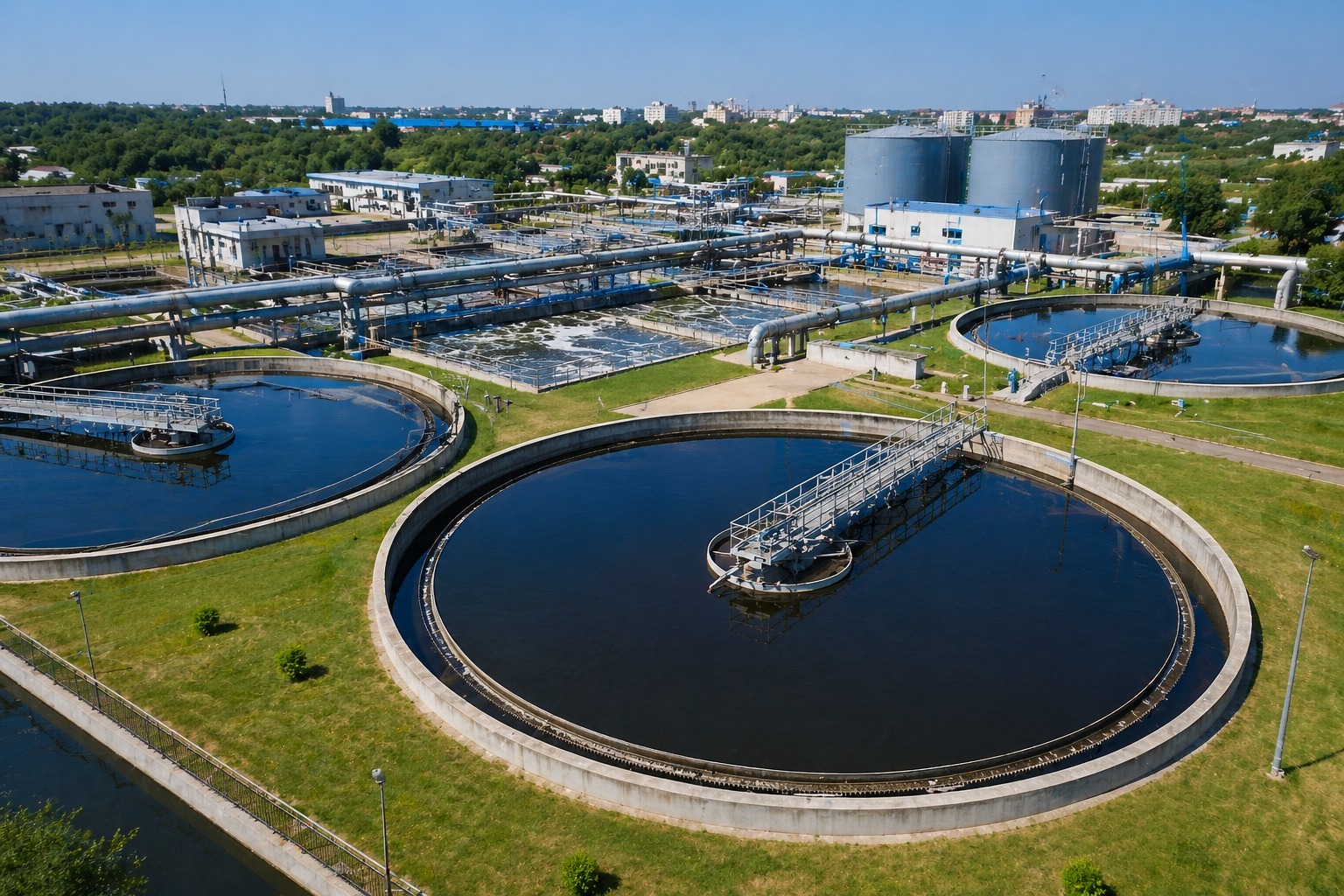
Everyone agrees that India has a water problem. What doesn’t get discussed enough is that India also has a wastewater opportunity. The two are connected.
Urban India generates nearly 72,368 million litres of wastewater every day. Only around 20,236 million litres is treated. The remaining 72 percent flows into rivers, lakes, drains and groundwater systems. A significant portion of the water we already have is being discarded after a single use.
For years, wastewater was viewed almost entirely through the lens of sanitation and compliance. Municipal bodies built sewage treatment plants because regulations required them. Industries treated wastewater because they had to. The objective was disposal, not value creation. That mindset is beginning to change.
Water is becoming harder to access in many parts of the country. Groundwater levels are falling. Cities are expanding. Industries are growing. At the same time, climate uncertainty is making water availability less predictable than it was a decade ago.
When water becomes scarce, people start looking more closely at resources they once ignored. Wastewater is one of them. What makes this particularly interesting from a startup perspective is that the demand already exists. Unlike many emerging sectors where founders first have to create awareness, the customers in wastewater are already looking for solutions.
According to Sumeet Mehra, President and CEO, Sparkle Clean Tech (SCT), a water technology company that offers water and wastewater treatment systems, many industries are looking at treating water security as a business continuity issue rather than just an environmental concern. He says, “Talk to any large industrial facility today and water has become a serious business concern. Whether it is manufacturing, oil & gas, commercial real estate or data centres, nobody wants to depend entirely on tanker water or uncertain groundwater availability. Water shortages can affect operations. Rising water costs can affect profitability. Increasing environmental regulations can affect expansion plans. This is where treated wastewater starts becoming attractive.”
India has spent years discussing treatment capacity. The next phase of growth will be driven by what happens after treatment. Industries do not necessarily care about treatment plants. They care about reliable access to high-quality water. As Sumeet Mehra points out, “If treated wastewater can provide that reliability, it becomes a commercially viable product rather than a waste management exercise”.
Making room for entirely new business models
Instead of selling equipment, companies can sell outcomes. Instead of building infrastructure and walking away, they can provide long-term water services. In many cases, customers are willing to pay for certainty. The economics are becoming difficult to ignore.
Freshwater is becoming more expensive in many regions. Regulatory scrutiny is increasing. Water-intensive industries are under pressure to demonstrate sustainability while also ensuring operational continuity. Recycled water addresses multiple challenges at the same time.
Another area where we can see significant opportunity is in improving existing infrastructure. India has already invested heavily in wastewater treatment facilities. Yet many plants continue to face operational challenges. Energy consumption remains high. Monitoring is often inconsistent. Maintenance can be reactive rather than preventive.
This is where technology startups can create value without building new treatment plants from scratch. Smart sensors, automation platforms, predictive maintenance systems and real-time monitoring tools can improve efficiency, reduce operating costs and increase treatment performance. Sometimes the biggest opportunity is not creating new infrastructure. It is making existing infrastructure work better.
A growing number of residential communities, office campuses, hotels and commercial developments are adopting decentralised treatment systems. Some are doing it because regulations require it. Others are doing it because freshwater costs continue to rise. Either way, it is creating demand for operators, technology providers and specialised service companies.
Many of the most promising opportunities in wastewater are not necessarily visible to the public. They sit within supply chains. Treatment chemicals, filtration technologies, membranes, digital monitoring platforms and operational services all represent growing markets as adoption increases. The buyers are already there.
Industries need reliable water. Commercial developments want lower dependence on freshwater sources. Municipalities are searching for more sustainable ways to manage urban growth. Agricultural users are exploring alternative water supplies. The challenge is not finding customers. The challenge is changing perceptions. Wastewater is still seen as a niche sector. It doesn’t generate the excitement that artificial intelligence, electric vehicles or consumer technology do. Yet water affects every industry and every city. Few sectors have a larger addressable market.
The next decade will be important
India’s wastewater sector does not need more awareness about the problem. Most stakeholders already understand that untreated wastewater is damaging rivers, lakes and groundwater systems. What the sector needs is greater focus on solutions that create economic value.
The countries that have made the greatest progress in water management are not necessarily the ones with the most water. They are the ones that have learned to reuse it effectively.
India has an opportunity to do the same. The technology exists. The demand exists. The business case is becoming stronger every year. The question is whether enough entrepreneurs, investors and policymakers recognise the scale of the opportunity before them.
Looking ahead, Sumeet Mehra from SCT adds, “When most people look at wastewater, they see a liability. I see one of the largest untapped resource opportunities in the country. And I believe that over the next decade, some of India’s most impactful cleantech businesses will be built around solving exactly this challenge.”
Disclaimer : This story is auto aggregated by a computer programme and has not been created or edited by DOWNTHENEWS. Publisher: deccanchronicle.com



