Andrea Felsted
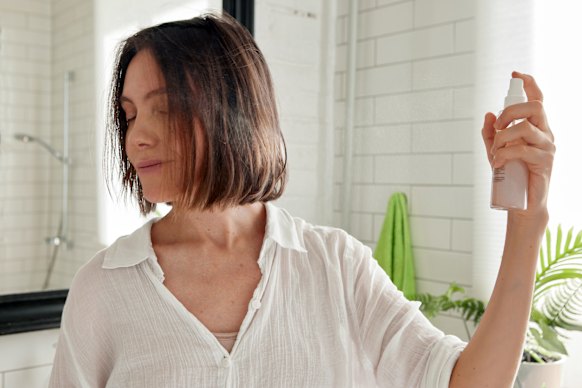
The beauty industry is experiencing a new wave of demand for affordable treats, from mini-sized cosmetics to cheaper body mists, and salon-grade hair treatments used at home are emerging as a key part of the trend. Men and women are fashioning glossier locks as the antidote to tough times, with a healthy scalp and stylish tresses becoming the new perfect pout or mood-boosting scent.
It’s reminiscent of the “Lipstick Index” coined by Leonard Lauder, the late chairman of Estée Lauder, to describe how consumers cut back on bigger purchases amid uncertainty, opting for small indulgences instead.
When inflation spiralled in 2022, it ushered in the Fragrance Index with people reaching for luxury scents. As consumers grapple with more expensive food and fuel once more, home hair products are proving popular pick-me-ups. Haircare has the potential to be the next big thing in beauty, offering an opportunity for expansion as explosive fragrance sales settle down to more pedestrian growth.
But economics aren’t the only factor driving the hair boom. GLP-1 weight-loss drugs have been linked with hair thinning, while younger consumers suffering from hair loss are more openly discussing the health of their scalps on TikTok and Reddit.
Haircare was the fastest-growing part of the US premium beauty market by sales in the first quarter of this year, according to research group Circana, expanding in the so-called prestige sector ahead of fragrances. Haircare sales at L’Oréal, the world’s biggest beauty company, rose 12.9 per cent in 2025, outpacing all other divisions, including fragrance.
As with the perfume craze, the red-hot hair market has its origins in pandemic-era lockdowns. After Dyson released its Airwrap in 2018 — a styler that could dry, curl and smooth hair — a torrent of TikTok videos landed demonstrating how to achieve its trademark voluminous waves.
Given the desire among consumers to both spoil themselves and address specific hair problems, pricey haircare probably offers the most growth potential for the beauty industry
Consequently, hair has undergone a “skinification,” with serums used to nourish and prepare, heat sprays to protect and oil to tame frizz, mimicking multi-product skincare routines. Indeed, L’Oréal told a conference last week that almost three-quarters of French women embraced more than three haircare steps.
For all the videos demonstrating how to get a bouncy blow-out, many people around the world were grappling with the anxiety of the pandemic. One side effect of stress is hair loss. Consequently, they turned to scalp treatments to strengthen their hair and stimulate growth. At the same time, many upmarket brands, faced with shuttered salons, expanded online, so shoppers could splurge on their expertise at home, even as they opted for cheaper versions of necessities such as shampoos.
Not only has the economic and geopolitical backdrop remained unpredictable, but the rapid weight loss from GLP-1 drugs is being associated with thinning hair. Younger demographics are now reaching the stage where they are experiencing hair loss. They are buying specialist products, but some are also undergoing aesthetic treatments.
With men under more pressure than ever to look youthful, and cosmetic surgery becoming more acceptable, there is no longer a stigma attached to hair transplants: Turkey is estimated to generate at least $US1 billion ($1.4 billion) annually from hair-transplant tourism.
Given the desire among consumers to both spoil themselves and address specific hair problems, pricey haircare probably offers the most growth potential for the beauty industry. Premium products account for just 25 per cent of the haircare market, compared with 50 per cent of skincare, L’Oréal said last week.
The company owns upmarket brands such as Kérastase and Color Wow, so is well-placed to benefit. Its dermatological beauty houses CeraVe and Vichy have also developed specialist hair ranges, including a serum from Vichy’s Dercos line to combat hair loss.
Unilever has Living Proof and fast-growing K18, best known for its patented peptide designed to reverse damage. Schwarzkopf owner Henkel earlier this year agreed to buy K18 rival Olaplex Holdings for $US1.4 billion. Estée Lauder’s stable includes Aveda, which has won new customers with Miraculous Oil. Its more affordable skincare line The Ordinary has also introduced a hair serum.
Larissa Jensen, global beauty industry adviser at Circana, told me that demand for prestige products was broadening beyond treatments, to shampoo and conditioner. Dry shampoo sales, which had been weak for the past couple of years, have begun to grow again.
Enthusiasm is also moving into the mainstream market. Jason Harcup, who leads research and development for Unilever’s beauty and wellbeing arm, told me that Dove’s range to repair inner hair fibres helped the mass-market brand’s haircare sales grow by a double-digit percentage in the first quarter. That outpaced the company’s overall hair sales.
At both the top and more affordable segments of the market, science-backed and clinical lines that address specific hair needs are likely to continue to gain ground. Some skincare brands are already offering products to combat so-called Ozempic face, the gaunt look or sagging skin that can accompany rapid weight loss.
Sara Hudson, a partner at McKinsey & Co., told me that haircare could follow the same route, with treatments marketed to GLP-1 users or tested on people taking weight-loss drugs.
One area to monitor, as economists look for signs that the consumer is cracking, will be home hair dyes. Sales of premium colour products rose about 9 per cent in the US in the first quarter, with a 4 per cent expansion in the mass market, according to Circana. If people visit salons less regularly, lines that maintain shades in between appointments, such as root touch-ups, could take off.
The pandemic taught us how to colour our hair without the need of a hairdresser, and the intervening period has shown us how to keep our tresses in tip-top condition. As risks to the economy rise, the coiffure index is worth watching.
Andrea Felsted is a Bloomberg Opinion columnist covering consumer goods and the retail industry. Previously, she was a reporter for the Financial Times.
From our partners
Disclaimer : This story is auto aggregated by a computer programme and has not been created or edited by DOWNTHENEWS. Publisher: www.smh.com.au