From nail-biting elections to the latest big-budget German TV series and the world’s biggest beer festival, Inside Germany is our weekly look at some of the talking points that you may have missed.
You’ve probably heard by now that two state elections are taking place on Sunday, including one in Berlin – which, as always, is being pitched as an event that could shape the city’s future.
Does it make you wonder what the German capital might look like in 20 or 30 years’ time?
Perhaps you picture a sweltering city-state transformed by climate change? With a wealthy elite living beneath an air-conditioned dome while everyone else endures crime, corruption and temperatures of over 40 degrees?
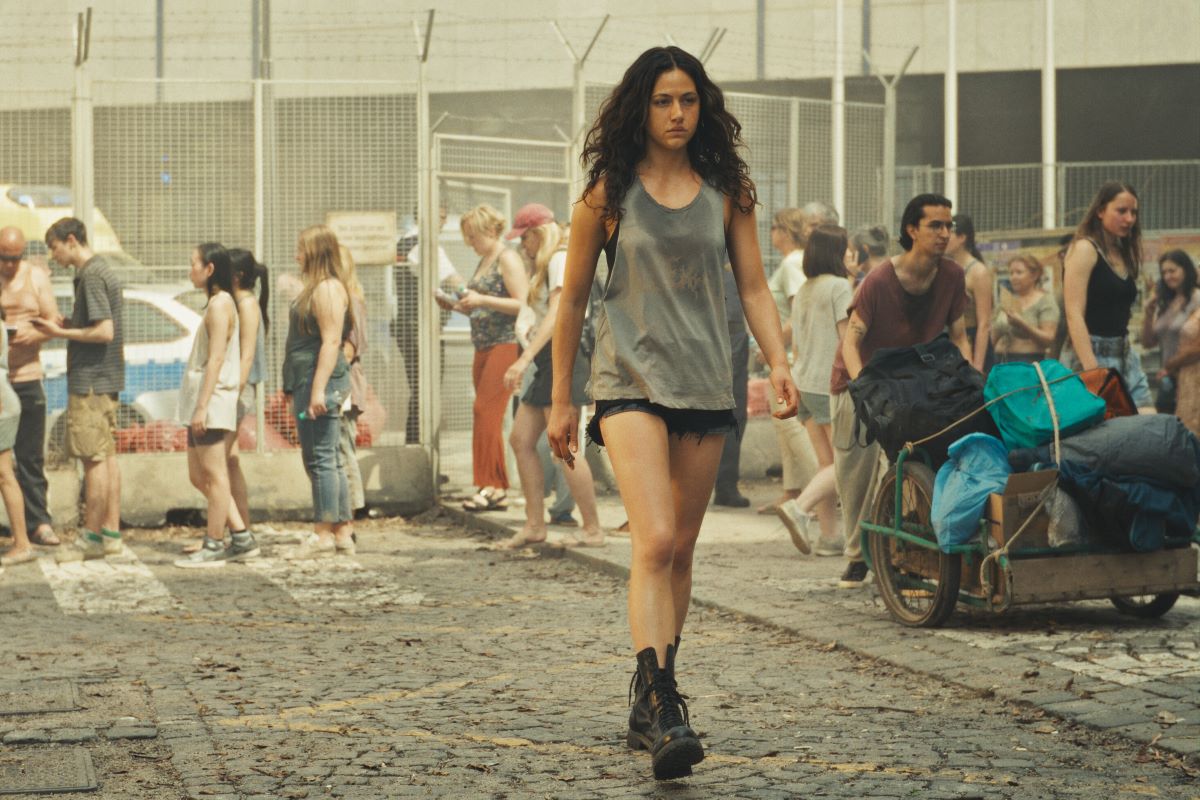
If so, there’s a good chance you started watching City of Blood this week, the new big-budget, star-studded German-language TV series based on the graphic novel Berlinoir.
What’s it about? Well, an important election is approaching when two sisters uncover a bigger problem. Vampires have infiltrated organised crime and are quietly reaching for political power. Blood, it turns out, has become the city’s most valuable currency…
From Babylon Berlin to City of Blood – and trash
By a strange coincidence the new series launched at almost exactly the same time as the final season of Babylon Berlin.
For years, Germany’s most celebrated television drama asked viewers to look back at the 1920s. Now, its possible successor in that category is inviting us to cast our gaze forwards into a dystopian future.
Could this mean we’re actually enjoying the calm between two storms at the moment?
After all, for all the election grumbling in Berlin – and in Germany more widely – we’re not wrestling with an active vampire problem just yet. Instead, the topics which reportedly come up most often on doorsteps, as politicians canvass for votes, are housing, transport and rubbish.
That’s right, rather than Weimar era thugs or 21st century bloodsuckers, it’s the state of the city’s streets, parks and playgrounds which has emerged as the one subject on which almost everyone seems to agree.
Political hopefuls have fallen over themselves promising to tackle the issue with everything from new surveillance protocols to dedicated waste investigators and additional bulky-waste collection services.
READ ALSO:
Where is this?
Berlin sometime in the future. The wealthy live beneath an air conditioned dome while the poor swelter in unbearable heat. Soma Pysall as Phoebe in a scene from the miniseries “City of Blood”. Photo: picture alliance/dpa/Disney+ | Julie Vrabelova
The election Berlin isn’t having
Berlin has around 3.9 million residents, of whom roughly 851,000 are adults who can’t vote in state elections because they don’t hold a German passport. This means that nearly a quarter of Berlin residents won’t get to cast a vote on Sunday, despite wading through just as much rubbish as everyone else.
Even if you instinctively feel that elections are for citizens, as many people do, it still feels awkward that quite this many people – who live and work and raise families in the city – should be effectively excluded from having a say in how it’s run.
It also raises numerous tantalising questions. Would foreign residents vote if they could? Who would they vote for? And could their votes swing the balance of power in the city?
READ ALSO:
Admittedly, some parties seem more interested in learning the answers than others.
The Left Party (die Linke) are openly suggesting that long-term residents in the city should be given a vote regardless of their nationality. It’s a move which makes perfect sense when you consider what happened when the Green-led administration in Mitte recently organised a symbolic election for non-citizen residents.
Participation was low, but the results offer an intriguing if unscientific glimpse into how some excluded residents view Berlin politics.
The Left Party won 39 percent of the non-citizen vote, ahead of the Greens (19.5 percent), the centre-left SPD (15.9 percent) and the conservative CDU (8.5 percent).
What do the kids think?
The results of a second ‘symbolic’ election were also published this week, after nearly 40,000 children and young people under the age of 16 cast ballots across the city.
Here, too, the Left Party emerged as the clear winner, securing 32.8 percent of the vote.
They were followed by the Greens on 20.9 percent, the SPD on 11.9 percent and the CDU on 8.3 percent. In other results, the Animal Welfare Party secured 7.7 percent of the vote and the far-right Alternative for Germany (AfD) 5.8 percent.
Neither exercise will have any direct influence on Sunday’s result, but both offer a reminder that Berlin contains many more political opinions than will be counted when the polls close.
O’zapft is!
If all this talk of elections, dystopian futures and vampire infiltrations is making you thirsty, then thank God for Oktoberfest.
The world’s largest folk festival officially begins at midday on Saturday when Munich’s mayor taps the first keg in the Schottenhamel tent with the traditional cry of O’zapft is! (the keg is tapped!).
More than six million visitors are expected over the following weeks, many of them attempting to master the delicate balancing act between securing a seat in a packed beer tent and remaining upright after several litres of strong lager.
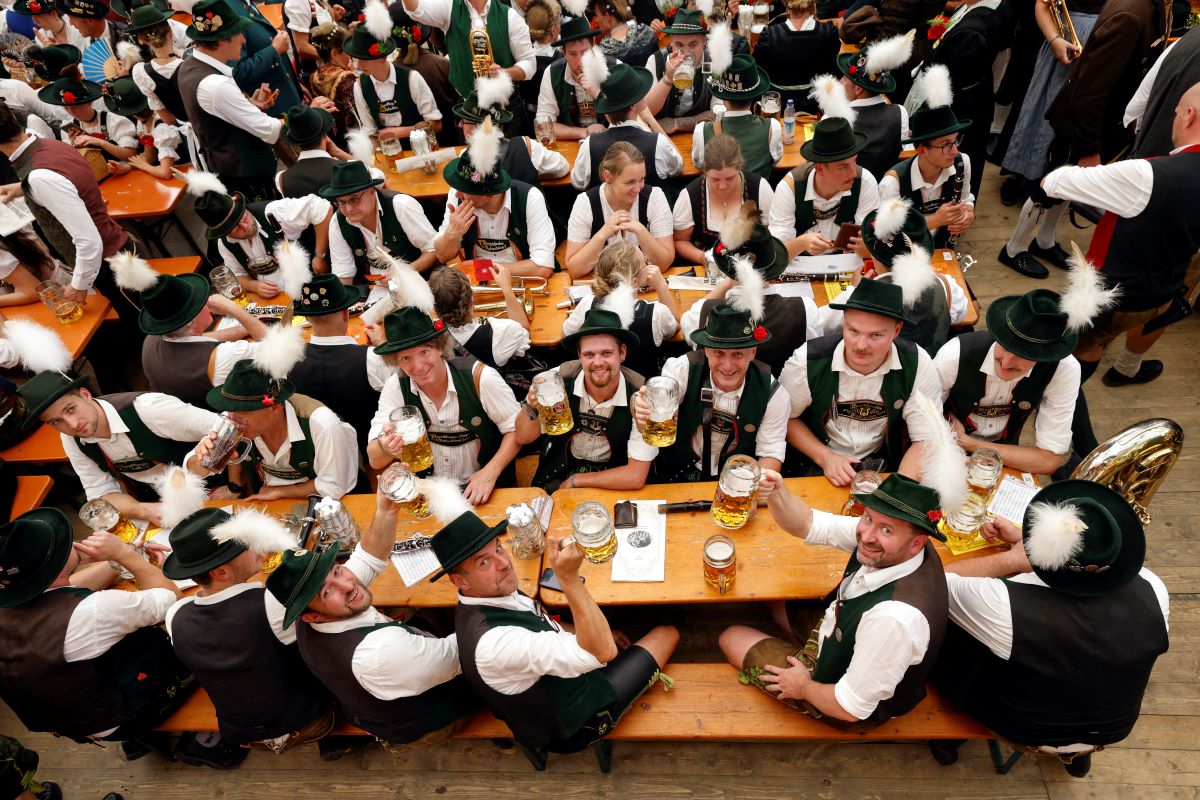
Visitors wearing traditional Bavarian clothes toast at the ‘Crossbowmen’ beer tent at the 190th Oktoberfest beer festival in Munich, southern Germany on September 21, 2025. Photo: MICHAELA STACHE / AFP
But remember that you don’t have to visit the Bavarian capital to join in the fun. These days, most major German cities host their own Oktoberfest celebrations, complete with beer tents, live music, oversized pretzels and even lederhosen and dirndls.
In Berlin, for example, venues such as the Hofbräu Wirtshaus host their own Bavarian-themed festivities, while Hamburg’s Fischauktionshalle and Frankfurt’s annual Oktoberfest festival draw thousands of visitors each year.
READ ALSO: The key advice I wish I’d known before my disastrous Oktoberfest
Disclaimer : This story is auto aggregated by a computer programme and has not been created or edited by DOWNTHENEWS. Publisher: thelocal.de