From faith in football to an almighty Olympics row and Daddy Pig being among the runners in this year’s Berlin Marathon, Inside Germany is our weekly look at some of the talking points that you may have missed.
Can Klopp put a smile on German faces?
It’s been a tough year for German football, but if anyone can persuade a nation to smile again, it’s probably Jürgen Klopp.
Germany’s new national team coach began his reign with a 1-1 Nations League draw against the Netherlands on Thursday night. Felix Nmecha’s first-half goal looked set to give Klopp a winning start before Cody Gakpo struck a late equaliser. Yet the result felt almost beside the point.
Klopp arrived with his trademark energy, big grin and promises of high-intensity football. More importantly, he arrived carrying hopes that extend well beyond the pitch.
After years of disappointing tournament exits and a growing discomfort around expressions of national pride, many Germans seem ready for a figure who can make supporting the national team feel joyful again.
READ ALSO: New manager wants German team to help reclaim national pride from far-right
Perhaps that’s why so much attention this week focused not on tactics but on Klopp himself. Can his enthusiasm prove infectious? Can he make fans fall back in love with the team? And can he help reclaim national colours and symbols from the noisy minority who have spent years trying to monopolise them?
Germany’s next opportunity to answer those questions arrives on Sunday night when Klopp’s side face Greece in Augsburg.
That match will also mark another small piece of history. Klopp’s first games are among the last before the German Football Association ends its 77-year partnership with Adidas.
From 2027, Nike takes over as kit supplier and for many fans who grew up watching German teams in the famous three stripes, it will feel like the end of an era. Certainly, some legends of the game in Germany seem very attached to their adidas kits.
Germany’s Olympic race narrows to two
On Saturday, the German Olympic Sports Confederation (DOSB) will choose Germany’s candidate to host the Summer Olympics in 2036, 2040 or 2044. The race has narrowed to two contenders: Munich and the Cologne/Rhine/Ruhr region.
Missing from the shortlist is Berlin.
The capital’s withdrawal has sparked an increasingly heated blame game, with critics accusing Die Linke of derailing the bid.
In fact, the main sport in Germany this week has arguably been finding reasons to attack Berlin’s Left Party.
Following the party’s election victory, critics from across the political spectrum have lined up to issue warnings. Brandenburg’s SPD Minister-President Dietmar Woidke, former SPD Berlin mayor Michael Müller and Green Party Minister-President Cem Özdemir of Baden-Württemberg have all cautioned against a coalition involving Die Linke.
READ ALSO: Jewish group urges Berlin far-left vote winners to tackle antisemitism
The warnings have focused on a range of issues, including the party’s housing policies and allegations of antisemitism within parts of the wider movement.
Addressing the second accusation following her victory, Elif Eralp of the Left Party said: “I stand for the protection of Jewish life, just as I stand for the protection of every life, and I pledge to ensure that people in our city can feel safe again.”
In response, some commentators cautioned that words alone weren’t enough, while others – including more than 150 Jewish Berliners who signed an open letter this week – described some of the accusations as “cynical political manipulation” that “equates nearly every criticism of Israeli policy with antisemitism”.
The debate is important and likely to play a major role in whether Die Linke is able to form a governing coalition for Berlin. But going on to blame Die Linke for the capital’s Olympic failure feels like a stretch.
Yes, the party opposed an Olympic bid (as did the Greens), but Berlin was already at a disadvantage compared with its rivals.
Unlike Munich and the Rhine-Ruhr region, Berlin never held a referendum to demonstrate public support for hosting the Olympics – and it was actually outgoing CDU mayor Kai Wegner who pulled the plug on the capital’s bid this week.
READ ALSO: What does Die Linke’s election win mean for foreigners in Berlin?
Graphic of the week
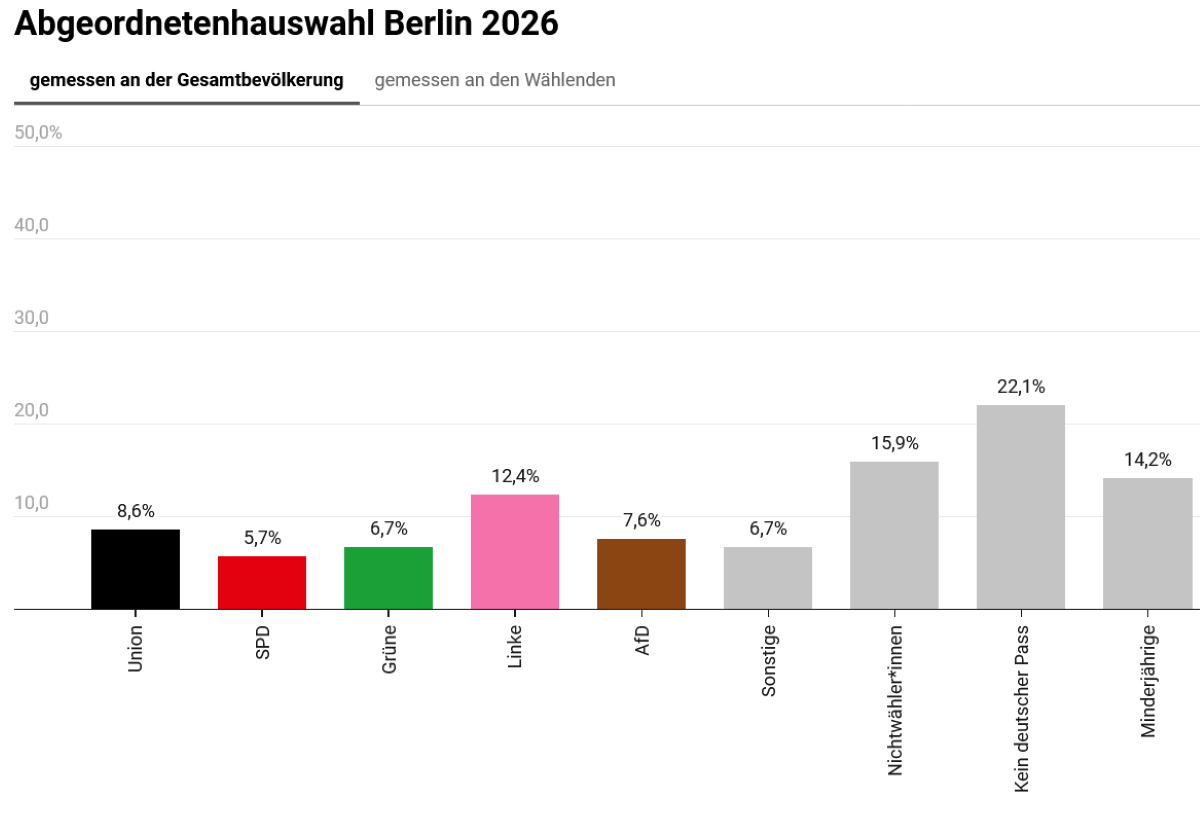
Who actually voted in the Berlin state election? Screenshot of FragDenStaat graphic. Source: Berlin-Brandenburg Statistical Office Download data Created with Datawrapper
Without wanting to cover the same ground again, last week’s edition of Inside Germany discussed the huge number of Berlin residents who can’t vote in state elections because they don’t hold German citizenship.
This graphic from FragDenStaat lays out the issue nicely. Sonstige are people who voted for parties that didn’t reach the five percent threshold to enter the Berlin senate. Nichtwähler*innen are people who chose not vote. Kein deutscher Pass refers to non-citizens and Minderjährige are people under the age of 16.
According to these calculations, even the winning party only received an endorsement from 12.4 percent of the people who live in Berlin.
Berlin’s annual sporting festival
Returning to sport, Berlin Marathon weekend has arrived.
There are plenty of great sporting events in Germany, but few transform a city quite like this one. More than 56,000 athletes will take part, with runners, wheelchair athletes, handcyclists and skaters turning central Berlin into a giant street party.
The atmosphere is usually fantastic. Crowds line the route, bands play from street corners and thousands of people spend the day cheering on complete strangers. Even if you have no interest in running 42.195 kilometres yourself, it’s difficult not to get swept along by it.
READ ALSO: Everything that changes in Germany in October 2026
If you’d like to watch, Kurfürstendamm, Torstraße and the area around the Brandenburg Gate are all popular spectator spots.
This year’s marathon also coincides with the International Day of the Deaf. To mark the occasion, organisers have invited children’s television character Daddy Pig (Papa Wutz in German) to take part in support of inclusion and deaf awareness initiatives.
In 2026, the creators of Peppa Pig introduced a storyline where George Pig (Schorsch Wutz) undergoes a routine hearing test, receives a diagnosis of moderate hearing loss, and is fitted with a bright blue hearing aid.
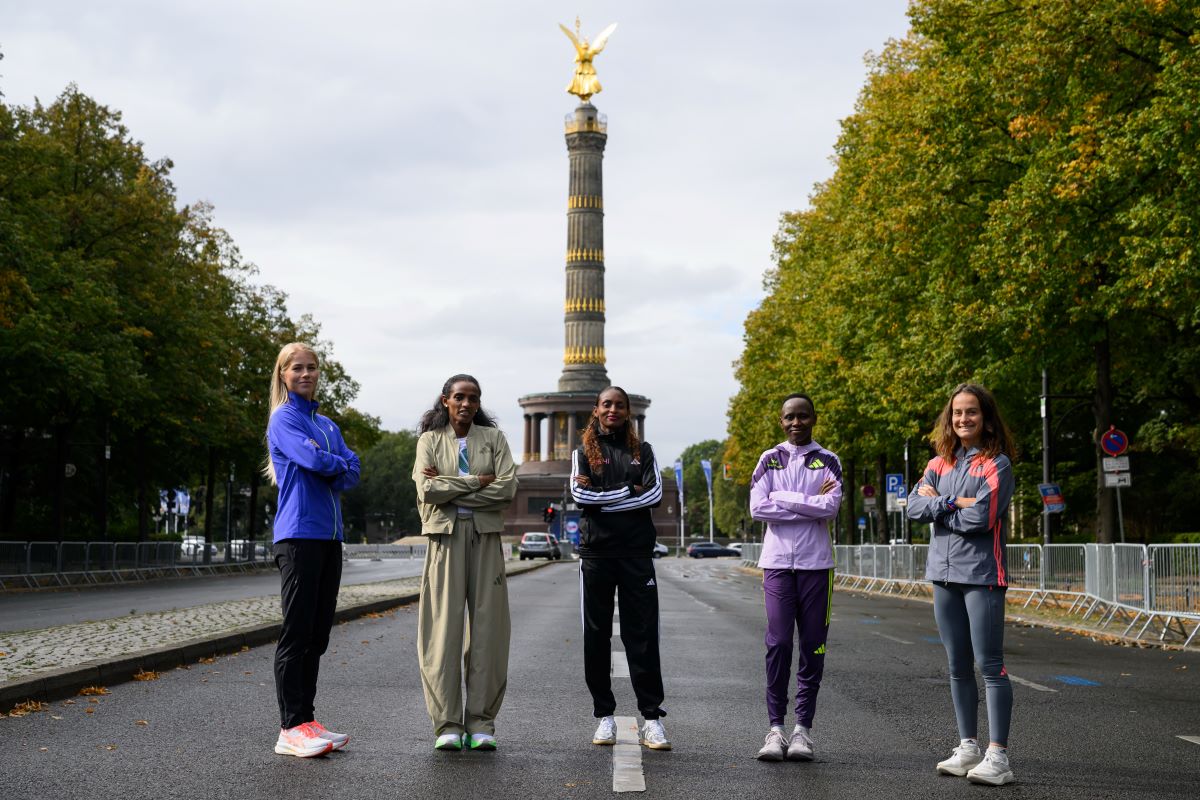
(L to R) Alisa Vainio, Dera Dida, Tigst Assefa, Rosemary Wanjiru and Manon Trapp are among the top ranked female runners at the 2026 Berlin Marathon. Photo courtesy of SCC EVENTS / Petko Beier
Finally, for residents in Berlin, there are a few practical things worth knowing.
Large sections of the city centre are already closed and further road closures will follow the marathon route throughout the weekend. Bus and tram services will be affected on dozens of routes, although the U-Bahn and S-Bahn are expected to operate normally.
Police have also established a weapons and knife-free zone around the Tiergarten area on both Saturday and Sunday.
READ ALSO: How to talk about working out like a German
Disclaimer : This story is auto aggregated by a computer programme and has not been created or edited by DOWNTHENEWS. Publisher: thelocal.de