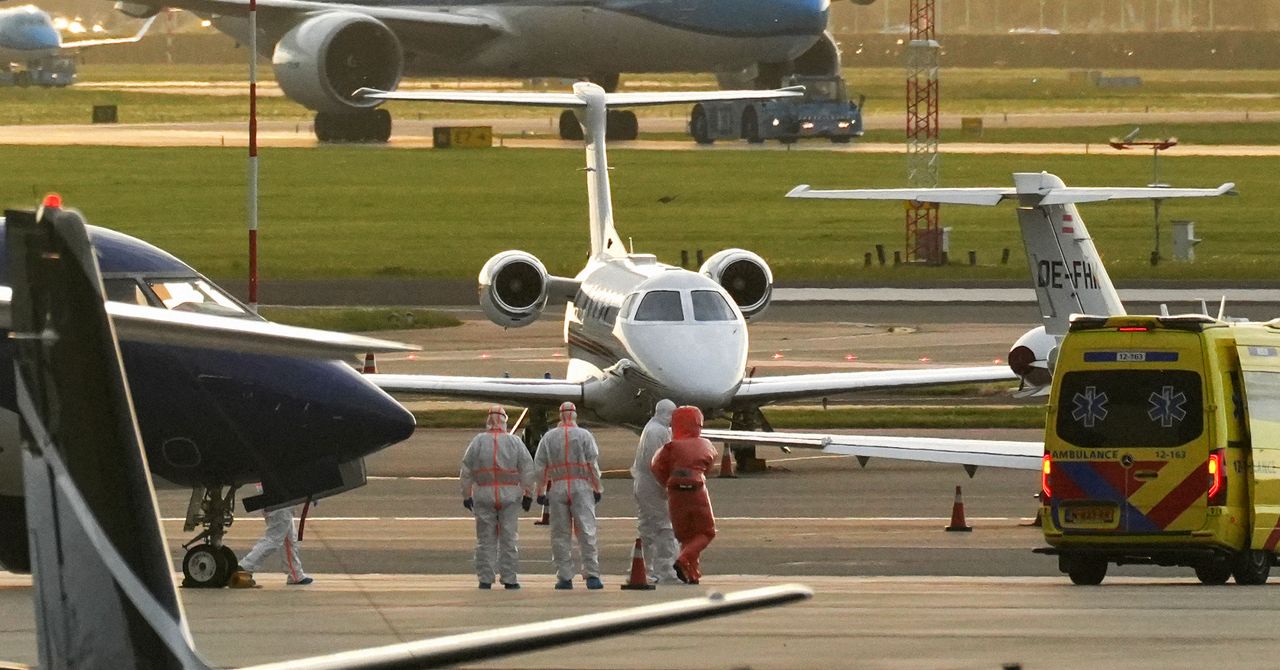
As passengers return to the US from the cruise that saw a rare hantavirus outbreak, much of the country is lacking a basic public health tool: a test to diagnose the illness in the earliest stages of infection. Nebraska may be the first state with the ability to do so.
In just a few days, a lab at the University of Nebraska Medical Center in Omaha developed its own diagnostic test for the Andes virus in anticipation of receiving 16 American passengers from the ship.
“I believe we might be the only lab in the nation that has this test available at the moment,” Peter Iwen, director of the Nebraska Public Health Laboratory tells WIRED, referring to polymerase chain reaction (PCR) testing, which was important during the Covid-19 pandemic. Its ability to detect tiny quantities of the virus before patients have full-blown symptoms makes it crucial for identifying cases quickly, getting patients prompt medical treatment, and preventing the spread of disease.
The university’s medical center is home to a highly specialized biocontainment unit designed to care for patients with severe infectious diseases that lack vaccines or treatments. Staff members previously treated patients during the 2014 Ebola outbreak and cared for some of the first Americans diagnosed with Covid in 2020.
When Nebraska was notified that it would be receiving some of the passengers, Iwen contacted the US Centers for Disease Control and Prevention to see if it had tests on hand. He learned that the CDC has the ability to run a serological test, which looks for the presence of hantavirus antibodies. But people don’t develop antibodies until they are actively sick and their body has had time to mount an immune response.
Andrew Nixon, a spokesperson for the US Department of Health and Human Services, told WIRED that the CDC has a PCR test for the Andes virus but that it’s a research test that cannot be used for patient management. Research tests are used in scientific experiments, while diagnostic tests that are meant to confirm or rule out a disease in patients need to be rigorously tested, or validated, to make sure they are capable of producing consistent results. Nixon said the agency is working on validating its PCR test.
Iwen’s lab mobilized quickly to track down the materials needed to build and validate a PCR test from scratch. They called a lab in California—a state that has previously seen hantavirus cases—but their test was for a specific strain found in the US. Andes virus has previously only been detected in South America and isn’t found in rodents native to the US.
“Tests that we have available in the US will not detect that virus that’s found in South America,” he says, noting that the Andes virus is very different genetically from the primary hantavirus strain found in the US, known as the Sin Nombre virus.
The Nebraska team reached out to Steven Bradfute, a hantavirus scientist at the University of New Mexico. Frannie Twohig, a graduate student in Bradfute’s lab, had developed an Andes virus PCR test for research purposes as part of her PhD work. Bradfute’s lab also has genetic material of the Andes virus that’s not capable of causing disease which the Nebraska lab would need to validate its test.
On Friday, Bradfute shipped the genetic material and a box of chemical reagents needed to detect the virus in blood samples overnight to Nebraska. By Saturday morning, Iwen’s team had what it needed to start assembling and validating its test.
It was enough to run about 300 tests, which took all day Saturday and Sunday, Iwen says. His team added Andes genetic material in various concentrations to samples of healthy human blood to see if their test could detect it. Then, they compared the results to control samples. The team used up about a third of its tests on the validation process and now has the capacity to conduct a few hundred tests on patient samples.
The lab has not yet tested the 16 people in the Nebraska biocontainment unit but Iwen expects to do so soon. He says the goal is to identify cases as early as possible and start treatment to prevent people from developing serious disease. The Andes virus has a fatality rate of around 35 percent.
“These folks are going to have a very low concentration of blood in their system once they are early on in the stages of their disease. That’s the rationale for a test. We want to be able to give an early indication that they’re positive,” Iwen says.
While there are no specific hantavirus drugs immediately available, early supportive care such as fluid management and breathing support can significantly improve survival rates. The Andes virus infects the small blood vessels of the lungs and causes the buildup of fluid. This leads to breathing difficulties and can result in respiratory failure.
Kelly Wroblewski, senior director of infectious diseases at the Association for Public Health Laboratories, says state-level capacity for hantavirus antibody testing is limited. A handful of states—primarily those in the Southwestern part of the country—have the ability to run this type of test. She says several state labs are working to get PCR testing online, but she doesn’t expect needing the kind of testing infrastructure that was required during the height of the Covid-19 pandemic, when millions of tests were being done a day in the US alone.
“We’re right now globally talking about a very different virus and a limited number of people being exposed,” she says.
In early 2020, the CDC was the only lab that could initially run Covid tests. The agency developed test kits to distribute to public health labs across the country but the rollout was hampered by faulty kits, which hindered early efforts to track the spread of the virus.
“What Nebraska did to stand up a test is one of those lessons learned—get ready before you even need to test,” Wroblewski says.
Disclaimer : This story is auto aggregated by a computer programme and has not been created or edited by DOWNTHENEWS. Publisher: wired.com