TEHRAN – When a sparse memorandum of understanding (MOU) is all that remains for Washington after months of imperial aggression, the political theater in the home capital becomes far more instructive than the ink on the paper.
The mid-June de-escalation framework between Iran and the U.S. has brought a halt to hostilities that the joint American and Israeli campaign of aggression started earlier this year.
Structurally, the document remains a modest, transitional framework rather than a final peace. Yet, instead of delivering a triumphant victory lap for the White House, the MOU has ignited a political civil war in Washington.
A remarkably broad domestic coalition has converged on a raw conclusion: the war of choice against Iran was an expensive failure, forcing the United States to openly concede the limits of its conventional power.
The chorus and the fallout
The defining feature of this domestic fallout is the sheer breadth of the admission that the military campaign collapsed without achieving its maximalist objectives.
Across ideological lines, the unifying phrase reverberating through the American capital is that Iran won and the United States lost.
Former Vice President Kamala Harris delivered a mathematically precise indictment of the war, framing it as a self-indulgent war of choice that directly penalized working-class families.
During an interview on June 16 in Vienna, Harris illustrated this structural failure by contrasting the $500 war tax levied at the gas pump against a well-known economic baseline: the reality that the average American household sits a mere $400 away from bankruptcy when faced with an unexpected emergency.
By pushing millions of financially insecure citizens over the economic edge for a campaign that yielded no strategic victory, the White House converted military escalation into direct domestic trauma.
“We will end up where we were after the JCPOA and [Trump] will call that a victory; the JCPOA he withdrew from,” Harris explained.
This sense of self-inflicted damage has been echoed sharply by anti-war realists who have dismantled the circular logic of the administration’s victory narrative.
The popular nationalist streamer Nick Fuentes said that the U.S. “has officially lost the Iran war; ask yourself, what are we getting? Nothing.”
Anti-war journalist Mark Ames captured the dynamic: the Israel lobby and its proxies were in meltdown, not because the deal was terrible, but because it threatened their war project.
Former Obama administration spokesman and Pod Save America host Tommy Vietor pointed out the fundamental absurdity of celebrating the reopening of the Strait of Hormuz, observing that returning to the pre-war baseline after absorbing immense military costs represents a monumental failure of strategy.
Reopening a shipping lane is hardly a conquest when Washington’s own aggression caused the closure in the first place.
From the academic establishment, intellectual Francis Fukuyama wrote in an article on June 15 that “Trump has capitulated to Iran” and the MOU “places no limits on Iran’s nuclear capabilities,” and makes no commitments about Iran’s regional allies.
Fukuyama also pointed out that the “feckless and ignorant” U.S. president “has had few cards to play to get further Iranian concessions.”
Democratic critics, including Senator Richard Blumenthal and other party figures, have lambasted the entire conflict as a reckless, unauthorized “war of choice,” framing the administration’s subsequent diplomatic maneuvering as the byproduct of a fundamentally incoherent and chaotic strategy.
The ultra-Zionist Democratic Senator John Fetterman continued his obsession with Israel and stated that, regardless of the deal’s final text, he disagrees with “the public criticism of Netanyahu.”
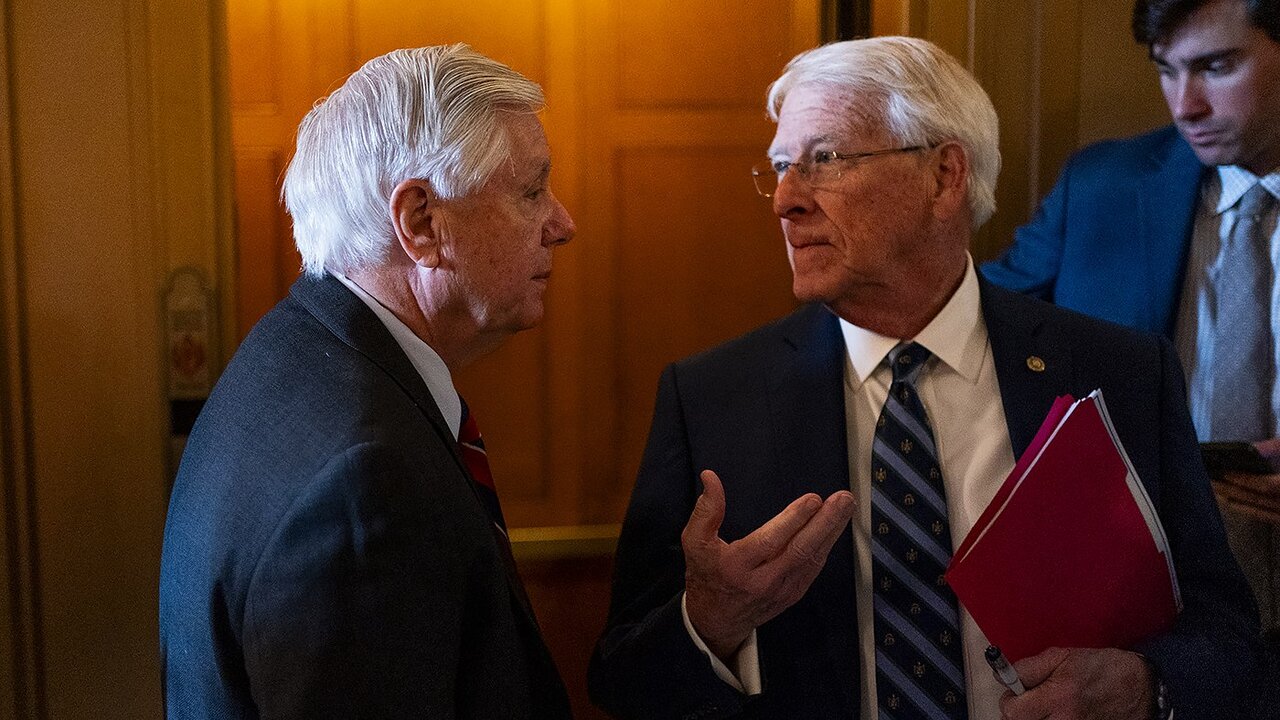
Concurrently, hardline hawks such as Senate Armed Services Committee Chairman Roger Wicker denounced the framework as a “disaster,” warning that a ceasefire would mean “everything accomplished by Operation Epic Fury would be for naught.”
Senator Lindsey Graham expressed deep unease over the terms, arguing that ending the war under these conditions amounts to conceding that there is no military solution to defeating Iran.
A range of hawkish lawmakers, former administration officials, and conservative analysts have separately warned that the emerging terms represent a major concession, expressing fierce opposition out of fear that Washington’s premature diplomatic pivot will leave Iran’s long-term position entirely intact.
Ultra-Zionist commentator John Podhoretz targeted the administration’s abrupt shift from hardline military rhetoric to frantic diplomacy, questioning why Washington was actively seeking a diplomatic “escape route” from its own military path instead of forcing a total defeat.
The secrecy crisis and the lobby’s sabotage
This pervasive failure is webbed with an acute transparency crisis. By hiding the memorandum text, the executive branch has fueled deep institutional suspicion.
Senior Republicans have broken ranks, with Leader John Thune admitting a lack of clarity and Senator Thom Tillis questioning how a secret deal can be taken seriously without formal review.
This resistance follows a prior bipartisan House vote of 215–208 to halt the funding of the war. Lawmakers view this opacity as a desperate cover-up to hide just how few concessions were secured after months of intense brinkmanship.
A central pillar of the current geopolitical landscape is the reported rift between Washington and the Israeli apparatus.
Prime Minister Benjamin Netanyahu was reportedly locked out of the final phases of the negotiations. This reported isolation provoked an immediate political convulsion within Israel, where opposition leaders weaponized the deal as a historic failure that left Tel Aviv completely stranded while its primary superpower patron negotiated over its head.
To back this defiance, the Israel lobby and Zionist networks in the U.S. have launched a two-pronged strategy of military friction and political warfare to sabotage the implementation phase.
On the ground, Netanyahu has reportedly ordered forces to maintain their occupation of southern Lebanon, keeping the northern front hot to provoke an asymmetric response that could shatter the truce.
Iranian officials have reiterated that the Lebanon front and the halting of Israeli aggression in South Lebanon are undeniable parts of the MOU.
Groups and voices aligned with the pro-Israel hard right are already pushing Congress to tighten review, with legal pressure campaigns aimed at slowing implementation or making sanctions relief politically toxic.
Despite these desperate attempts at political warfare, the MOU stands as a stark monument to the limits of Western aggression, proving that the U.S.-Israeli war project failed to break the spine of Iranian resistance.
Disclaimer : This story is auto aggregated by a computer programme and has not been created or edited by DOWNTHENEWS. Publisher: tehrantimes.com