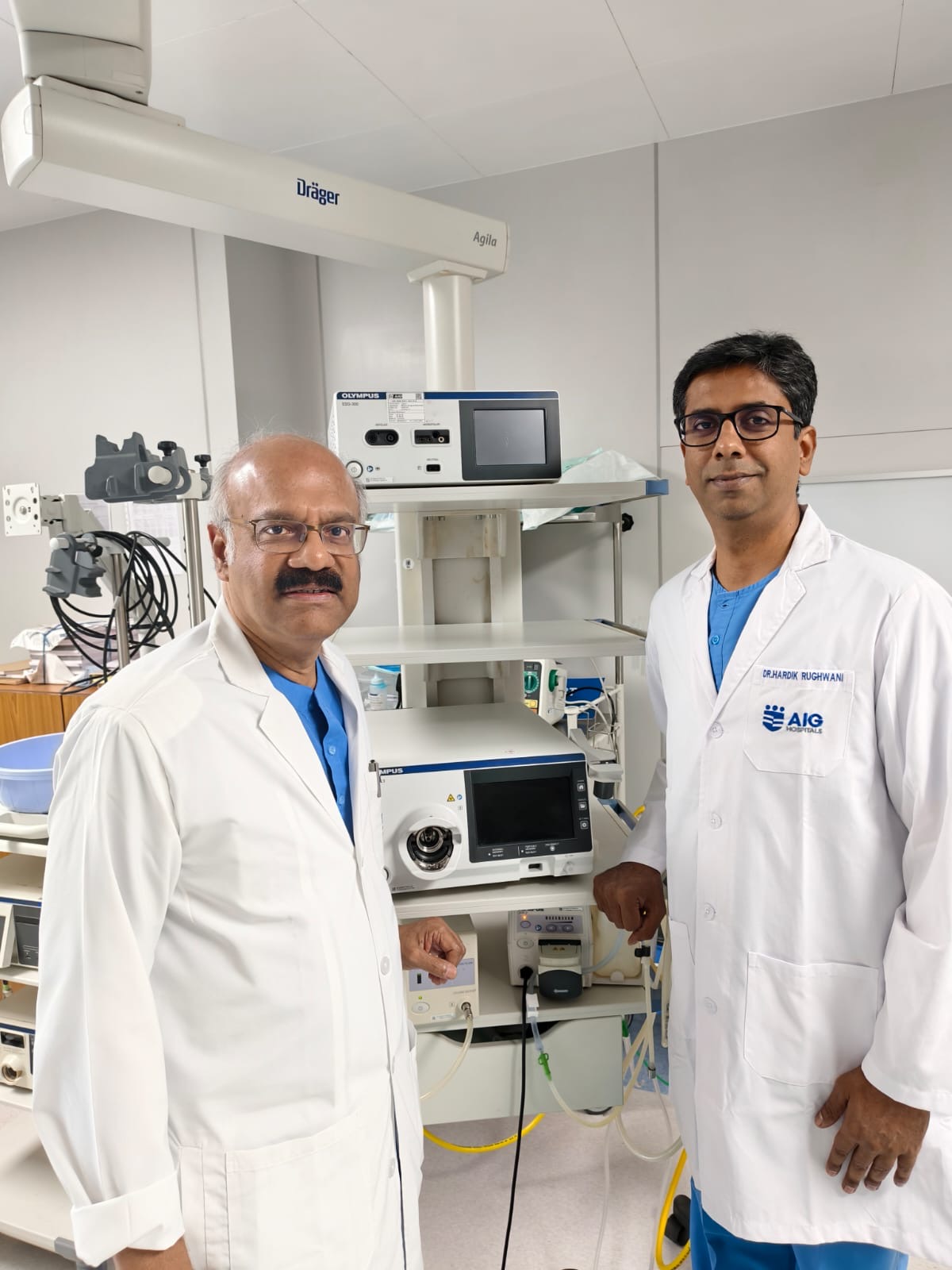
HYDERABAD: Intestinal ultrasound could help reduce the cost and environmental impact of long-term care for patients with inflammatory bowel disease (IBD), according to a study by AIG Hospitals, which found it had the lowest carbon emissions and hospital cost among the imaging tests assessed.
Led by Dr Hardik Rughwani, the Evergreen-IBD study, published in ‘Alimentary Pharmacology & Therapeutics’, a peer-reviewed medical journal, compared the carbon footprint and hospital costs of investigations used in IBD care, including colonoscopy, CT, MRI and intestinal ultrasound.
IBD, which includes Crohn’s disease and ulcerative colitis, often requires repeated investigations over several years. The study said choosing tests that used fewer resources could help reduce both healthcare costs and environmental impact.
Conducted at AIG Hospitals in December 2025, the study estimated emissions from intestinal ultrasound at 0.85 kg of carbon dioxide equivalent per procedure. This was lower than colonoscopy and enteroscopy at 3.87 kg, CT at 5.82 kg and MRI at 21.25 kg. Its estimated carbon footprint was about 96 per cent lower than that of MRI.
The cost comparison also favoured ultrasound. At AIG Hospital, its cost was about half that of colonoscopy and one-sixth that of MR enterography, a specialised MRI scan of the bowel.
Dr D, Nageshwar Reddy, Chairman of AIG Hospitals, said healthcare needed to balance clinical quality, affordability and environmental responsibility. “For chronic diseases, patients need care over many years, the choices we make repeatedly can have a substantial cumulative impact. When a less resource-intensive investigation can reliably answer the clinical question, its use deserves serious consideration,” he said.
Intestinal ultrasound uses a probe moved over the abdomen to assess inflammation in the bowel. It does not involve ionising radiation and ordinarily requires neither sedation nor bowel preparation. It can also be performed during a clinic visit.
Dr Rughwani, consultant gastroenterologist at AIG Hospitals and lead author, said the team compared electricity, water, consumables and waste associated with the procedures. “IBD management continues for years, sometimes decades, making it important to examine both the cost and the resources used by each investigation,” he said.
He said wider access to appropriately performed ultrasound could help make follow-up care more affordable and sustainable. However, the researchers clarified that it cannot replace every investigation. Colonoscopy with biopsy remains essential for diagnosis and cancer surveillance, while CT and MRI are important for assessing disease extent and complications. The findings support wider use of ultrasound in follow-up assessments where clinically appropriate.
Disclaimer : This story is auto aggregated by a computer programme and has not been created or edited by DOWNTHENEWS. Publisher: deccanchronicle.com