Iran has agreed to allow UN nuclear inspectors back into the country as part of an agreement under which Washington will lift sanctions on Tehran’s oil exports and the strait of Hormuz will reopen.
Long-term independent monitoring of Iran’s nuclear programme, which it says is for energy purposes only, was in effect halted last summer after Israel and the US attacked the country. Tehran suspended cooperation with International Atomic Energy Agency (IAEA) in response to strikes on its nuclear facilities.
A “deconfliction” mechanism has also been set up involving Washington, Tehran and Beirut to try to bring about a working ceasefire in Lebanon, which Israel has continued to bomb and where the Iran-aligned militant group Hezbollah is based. A Lebanon ceasefire is one of Iran’s key demands.
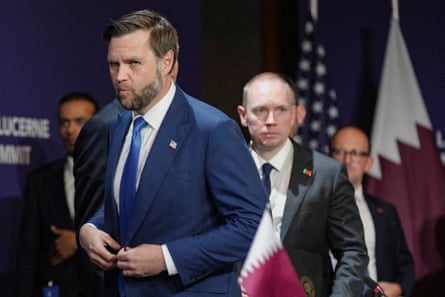
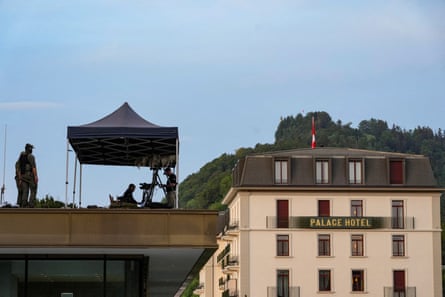
Iran’s foreign minister, Abbas Araghchi, and the US vice-president, JD Vance, hailed the progress made during nearly 18 hours of talks in Bürgenstock, Switzerland.
Technical experts from the two sides and mediators from Qatar and Pakistan are to stay behind at the Doha-owned Lake Lucerne resort to work on the detailed implementation of the plan, including working parties on Iran’s nuclear programme and the establishment of a high-level political committee to oversee the process intended to seal a comprehensive deal between the two sides in under two months.
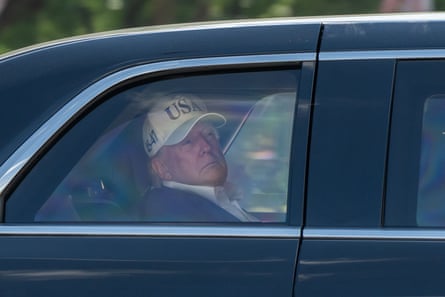
The talks nearly broke down on Sunday when a stream of violent threats from Donald Trump infuriated the Iranian delegation.
Vance told a press conference: “What we told the Iranians yesterday is that when you guys engage in what us millennials might call trash talk, you can’t expect the president of the United States not to respond and not to correct the record.
“Yes there was a little bit of threatening and a little bit of whining but at the end of the day the talks continued and we made great progress.”
He hailed Tehran’s decision to let UN nuclear inspectors back into Iran for the first time since Israel attacked the country last year. “That is a major milestone for the American people, and the first step in permanently denuclearising or permanently ending a nuclear weapons programme in Iran,” he said.
In practice, lengthy talks lie ahead on the intrusiveness and scale of the IAEA inspectors’ mandate, including their access to Iran’s bombed nuclear sites.
In a development vital to unlocking progress, the US treasury is preparing to issue a 60-day waiver that will lift sanctions on Iran’s oil, petrochemicals and derivatives. Tehran said this meant its central bank would be able to sell oil to customers, principally China, and receive payments without the threat of repercussions.
Qatar and Iran also signed a memorandum about the release of Iranian assets frozen in Qatari bank accounts as a result of secondary US sanctions. Vance said the deal required Iran to spend its unfrozen assets on food such as soya produced by US farmers.
The economic measures may help lift some of the pressure on Iran’s exchange markets and gradually slow runaway inflation, the country’s biggest domestic concern at present.
The joint statement by the mediators focused on new implementation mechanisms to turn the memorandum of understanding (MoU) signed last week into reality over the next 60 days – the timeline set out to reach an comprehensive agreement on the future of Iran’s nuclear programme and the lifting of sanctions on its economy.
Araghchi said in a statement that the first real test of the understandings would be the cessation of Israeli attacks on Lebanon, which has emerged as the biggest threat to the MoU between Washington and Tehran.
Explaining the thinking behind the deconfliction body on which neither Israel or Hezbollah will sit, Vance said: “Sometimes a junior guy fires a drone that didn’t have approval from the high command. Of course, Israel has to respond to that, but then sometimes we could have a more peaceful situation if Israel responds in the context of a conversation that is ongoing between Hezbollah, Lebanon, Israel and other partners in the region.
“There has not been a mechanism to have those conversations.”
He said the US wanted Israel’s security and Lebanon’s sovereignty to be protected.
Iran had said over the weekend that it had reinstated its blockade of the strait of Hormuz in protest at the continued Israeli strikes on Lebanon, and that Trump was allowing Israel to breach the MoU, which calls for a ceasefire on all fronts. Israel killed more than 30 people in attacks in central and southern Lebanon on Saturday.
The US military denied the strait had been closed again, but Trump responded strongly on Sunday. “You close it and you won’t have a country,” he wrote on social media. “You won’t even make it back to your fucking country,” he added in a threat to the Iranian negotiators.
Iran had sought to hold back the nuclear element of the talks until the US blockade of its oil ports was lifted, a clear sanctions waiver on oil sales was in place and half of its estimated $24bn (£18bn) in overseas assets were unfrozen and returned to Tehran. Most of those goals have been achieved although the US treasury did not issued a formal sanctions waiver on Sunday.
Disclaimer : This story is auto aggregated by a computer programme and has not been created or edited by DOWNTHENEWS. Publisher: theguardian.com