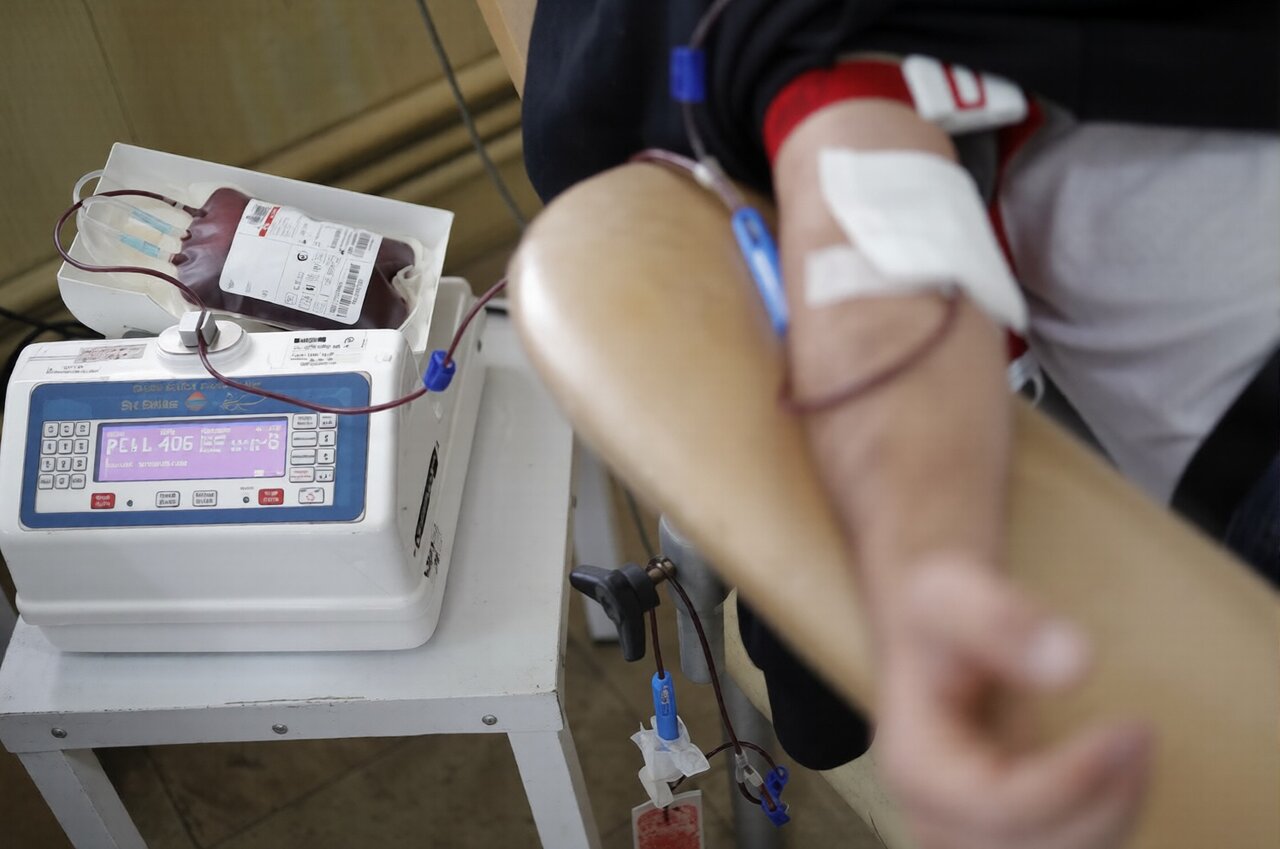
TEHRAN – Iran is among only 30 countries worldwide with the technology to preserve rare blood types for 10 to 30 years through glycerol-based cryopreservation, and is the only country in the region with this capability, according to the head of the Iran Blood Transfusion Organization (IBTO).
Rare blood types refer to blood groups that have a very low prevalence in society and are classified into three categories: rare, very rare, and extremely rare. A rare blood type is defined as one occurring in only 1 out of every 1,000 or one million people, Ahmad Qarah-Baghian, IBTO’s chief executive, told Mehr News Agency.
Once a rare blood type is identified, the IBTO collects required samples and freezes them for long-term storage. According to published scientific articles, rare blood type storage spans from 10 to 30 years. Based on some documentation, blood frozen for 20 years still remains usable.
People with rare blood types are identified in different ways, and they are invited to donate blood. Like others, these individuals can donate blood four times a year if they meet the requirements, he added.
According to Mehdi Karbadizadeh, an official with the IBTO, a total of 350 rare blood units are frozen and stored in the rare blood bank. Some 1,500 individuals with rare blood types are identified in the country. However, not all of them are eligible to donate blood.
‘Iran the only Islamic country in Eastern Mediterranean with rare blood program’
Iran is the only Islamic nation in the Eastern Mediterranean region that has a rare blood program, an official with the Iranian Blood Transfusion Organization (IBTO) has said.
In the Iranian year 1389 (2010-2011), the country joined the International Rare Blood Association, which currently has 30 member states, IRNA quoted Mehdi Karbasizadeh as saying.
The official went on to say that Iran, China, and Japan are the only member states of the association in Asia that have rare blood management programs.
One out of 5,000 to 10,000 individuals in Iran has a rare blood type. The frequency of rare blood types in each country depends on its population and the blood type. Bombay blood type is among the rarest blood groups known in the country, the official added.
There are currently fewer than 10 of the rarest blood types and 30 rare blood types in the country. About 150 out of 376 solidified units of blood stored at a rare blood bank are the rarest, Karbasizadeh said.
Presently, 262 individuals with a really rare blood type are identified in the country, but not all of them can donate blood.
The official urged those with (really) rare blood types to donate blood at least once a year, saying that blood units solidified at minus 65 to 85 degrees centigrade can be stored for 10 years.
In 2025, Jaffar Hussain, the former World Health Organization (WHO) Representative to Iran, highlighted Iran’s capacity to serve as a model for other nations in the realm of blood transfusion and rare blood management.
Addressing National Rare Blood Day on January 22, the official praised the country’s steadfast commitment to equitable health care access, ensuring that no one is left behind, regardless of their blood type.
National Rare Blood Day is a day dedicated to celebrating the lives saved, challenges overcome, and unwavering commitment to ensuring every individual, regardless of their blood type, has a fighting chance at life.
The official commended the country’s unwavering dedication to tackling the unique challenges surrounding rare blood, emphasizing the critical importance of collaboration, innovation, and unwavering determination in this global endeavour, the WHO website announced in a press release on January 27.
Hussain painted a vivid picture of the struggles faced by those with rare blood types, individuals who often find themselves in desperate need, their lives hanging in the balance as they search for that elusive, compatible match.
He paid tribute to these unsung heroes, recognizing their generosity and unwavering commitment to the well-being of others. “Blood donors,” he declared, “represent the epitome of human solidarity, offering a lifeline to those in need without expecting anything in return.”
WHO, Hussain emphasized, believes that universal health coverage must encompass access to safe blood and blood products. He lauded IBTO’s leadership in blood safety and transfusion services, highlighting their remarkable achievement of a 100 percent voluntary, non-remunerated blood donation system, a testament to the principles of universal health coverage in action.
In closing, the official extended his deepest gratitude to the IBTO for their unwavering dedication to advancing blood transfusion services and ensuring equitable access to rare blood. He thanked the blood donors, whose selflessness serves as an inspiration to all.
The event concluded with a renewed commitment to innovation, partnership and universal health coverage, leaving attendees with a sense of determination to continue the fight for rare blood access, ensuring that every drop counts, every donation matters and every life is valued.
In July 1979, the IBTO was established to organize blood transfusion activities, promote blood donation, and supply safe blood and its products free of charge for patients suffering from diseases like hemophilia, thalassemia, and leukemia.
Iran is the only Islamic country that is a member of the International Society of Blood Transfusion’s rare blood donor working party (ISBT WP).
Thanks to a rich culture of selflessness, the country maintains a six-month blood reserve ensuring preparedness for crises.
Blood reserves and their products are considered strategic and vital resources for the country, and voluntary donations help to meet the needs of the country, particularly during crisis.
MT/MG
Disclaimer : This story is auto aggregated by a computer programme and has not been created or edited by DOWNTHENEWS. Publisher: tehrantimes.com