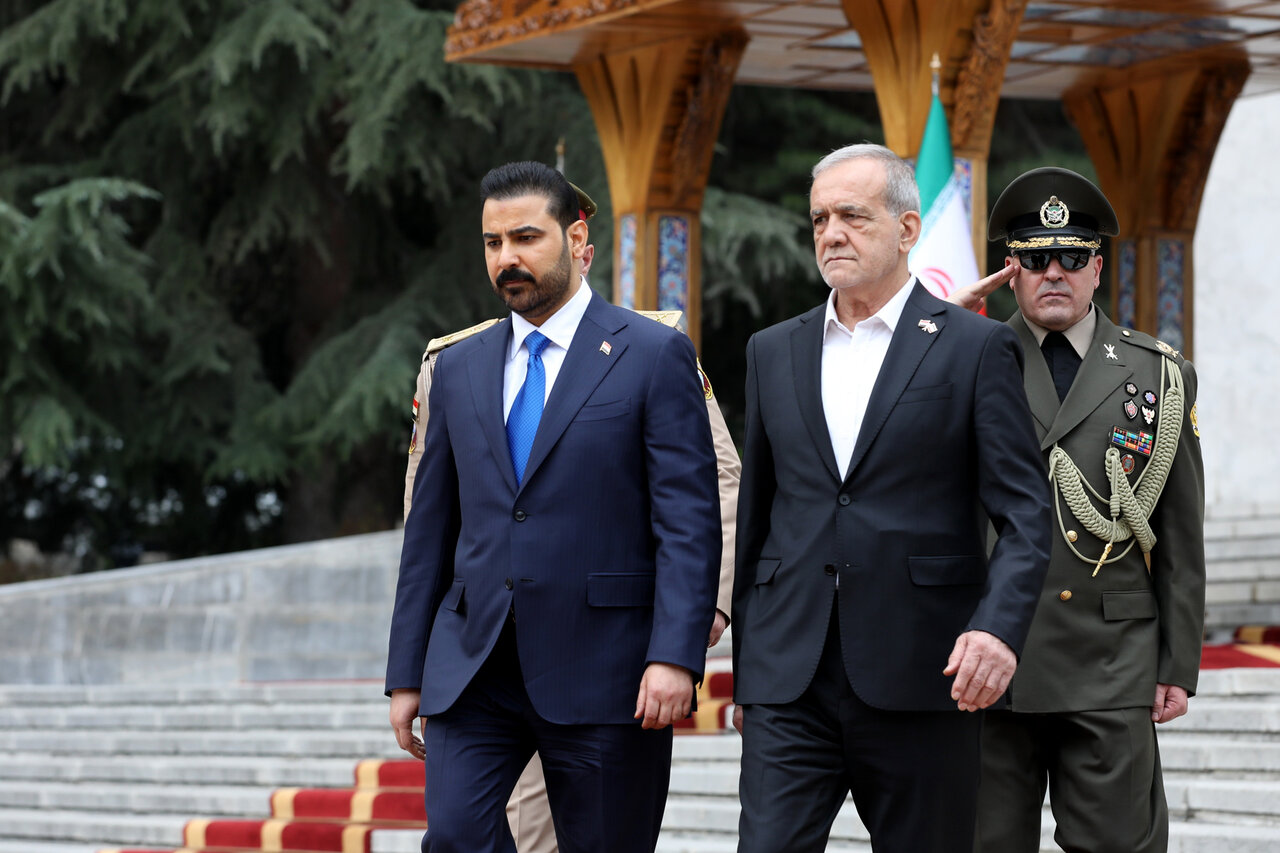
TEHRAN – Iran and Iraq moved to elevate their strategic partnership during Iraqi Prime Minister Ali Faleh Al-Zaidi’s first official visit to Tehran, signing a series of cooperation agreements while reaffirming their commitment to expanding economic integration, political coordination and regional cooperation.
Al-Zaidi arrived in Tehran on Thursday at the head of a high-level delegation at the invitation of the Iranian government. He was welcomed at the airport by Iran’s Minister of Economic Affairs and Finance, Ali Madanizadeh—a protocol decision widely viewed as highlighting the visit’s strong economic focus.
The reception by Iran’s economy minister, rather than a senior security or diplomatic official, underscored the visit’s primary objective. Contrary to speculation in some media outlets that the Iraqi premier was carrying a message from Washington to Tehran, the visit centered overwhelmingly on expanding bilateral economic cooperation. The signing of multiple agreements during the trip further reinforced that assessment.
Nevertheless, the economic agenda formed only one pillar of the visit. Talks between senior officials also covered regional developments, bilateral political relations and security cooperation, reflecting the increasingly comprehensive nature of the Tehran-Baghdad partnership.
President Masoud Pezeshkian formally welcomed Al-Zaidi at Tehran’s Saadabad Cultural-Historical Complex, where the two leaders held private talks followed by a meeting between their respective high-level delegations.
During the discussions, the two sides reaffirmed the deep historical, cultural and religious ties binding the neighboring countries and described those longstanding connections as the foundation for expanding strategic cooperation across multiple sectors.
Pezeshkian and Al-Zaidi stressed the importance of accelerating the implementation of existing bilateral agreements while calling for greater coordination in political affairs, trade, investment, energy, transportation, transit and regional diplomacy. They agreed that opening new avenues of cooperation represents a strategic necessity capable of promoting stability, security and economic prosperity for both countries and the wider region.
Al-Zaidi’s visit also included meetings with senior Iranian officials beyond the executive branch, underscoring the multidimensional nature of bilateral relations.
During talks with Parliament Speaker Mohammad Baqer Qalibaf, both sides emphasized that stronger cooperation between Tehran and Baghdad could contribute significantly to addressing regional challenges and reinforcing stability across the Islamic world.
Qalibaf thanked the Iraqi government and people for hosting funeral ceremonies for the late Leader of the Islamic Revolution, Ayatollah Seyyed Ali Khamenei, in several Iraqi cities and expressed appreciation for Iraq’s preparations to host millions of Iranian pilgrims during the upcoming Arbaeen pilgrimage.
He also described Israel as a common threat facing Muslim nations, saying closer strategic coordination between Iran and Iraq would help preserve unity within the Islamic world.
For his part, Al-Zaidi described Iran and Iraq as “strategic partners with a shared destiny,” saying participation by Iraqi officials and citizens in the funeral ceremonies reflected a sense of religious and historical responsibility rather than political symbolism.
The Iraqi prime minister also met Judiciary Chief Gholamhossein Mohseni Ejei, who reaffirmed that Iran’s relations with neighboring countries are based on friendship, cooperation and mutual respect.
Ejei called for expanding judicial and legal cooperation between Tehran and Baghdad, including implementing existing agreements, strengthening legal exchanges, sharing anti-corruption expertise and enhancing cooperation on extradition and judicial affairs.
While emphasizing that Iran harbors no hostility toward its neighbors, the judiciary chief also reiterated Tehran’s position that it reserves the right to respond to military attacks launched from territories hosting foreign forces.
Al-Zaidi welcomed closer judicial cooperation and discussed broader bilateral and regional issues during the meeting.
The Iraqi prime minister’s first official visit to Tehran highlighted the steady expansion of Iran-Iraq relations beyond their traditional political and security dimensions. While economic cooperation emerged as the centerpiece of the visit, the extensive discussions on regional diplomacy, parliamentary coordination, judicial cooperation and strategic affairs reflected the two governments’ shared determination to build a broader, long-term partnership spanning virtually every major area of bilateral engagement.
Disclaimer : This story is auto aggregated by a computer programme and has not been created or edited by DOWNTHENEWS. Publisher: tehrantimes.com