TEHRAN- Developing access for Central Asian countries to open waters, activating the eastern branch of the North–South Corridor, and advancing Iran’s rail routes to Afghanistan and beyond were among the most important axes of the Iranian Minister of Transport and Urban Development’s negotiations during his visit to Kazakhstan.
According to the news portal of the Ministry of Transport and Urban Development, the three-day visit of Farzaneh Sadegh, Minister of Transport and Urban Development, to Kazakhstan (October 14-16) included a series of bilateral consultations, participation in the Transport Ministers’ Meeting of the Economic Cooperation Organization (ECO), presentation of Iran’s proposals for developing regional corridors, and follow-up on rail and road cooperation.
During this trip, in addition to introducing Iran’s infrastructure capacities, issues such as drafting a comprehensive document on transport cooperation with Kazakhstan, removing obstacles to road fleet movement, developing international rail routes, connecting Central Asian countries to open waters, and using digital technologies in logistics were considered.
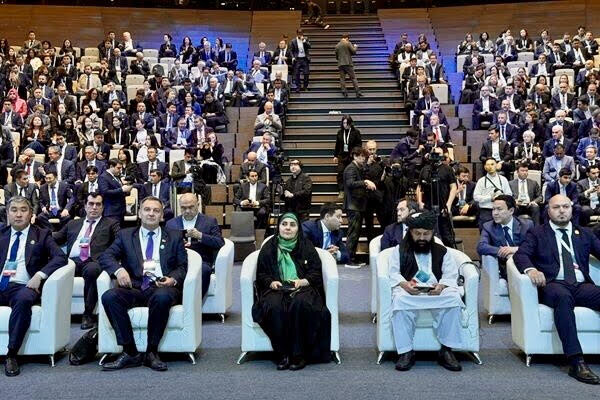
Farzaneh Sadegh arrived in Astana, the capital of Kazakhstan, on October 14, at the head of a delegation to hold consultations with officials of that country and to participate in the 14th ECO Transport Ministers’ Meeting and the 8th International Transport and Logistics Business Forum “New Silk Road.”
Participation in specialized sessions, a visit to the 29th Kazakhstan International Transport and Logistics Exhibition, and talks with transport ministers of regional countries were among the programs pursued during the rest of the trip.
The common thread of these programs was the effort to turn Iran’s geographical capacity into a practical advantage in regional trade—an advantage whose realization depends on completing infrastructure, coordination among countries along the route, facilitating border procedures, and establishing effective connections among rail, road, and sea networks.
——————–From ECO meeting to Iran’s proposals for security and development of regional corridors
One of the most important parts of the Minister of Transport and Urban Development’s trip was participation in the 14th Transport Ministers’ Meeting of ECO member states—a meeting where developing regional cooperation, removing transport obstacles, and increasing the efficiency of international corridors were on the agenda.
At this meeting, Sadegh described the ECO region as having the capacity to become an integrated network of road, rail, and sea routes that can connect Central Asia, West Asia, the Caucasus, and open waters.
Referring to the resolutions of the 13th ECO Transport Ministers’ Meeting in Tehran, she called for assessing the implementation of past agreements and identifying remaining obstacles, and emphasized that regional cooperation must lead to operational, time-bound, and measurable plans.
Protection of civilian infrastructure and continuity of transport flows were also among the important points in the Minister of Roads and Urban Development’s remarks.
Referring to the damage inflicted on Iran’s transport infrastructure during attacks by the United States and the Israeli regime, Sadegh emphasized that disruption in any part of the region’s communication network can increase the cost and time of goods movement and also affect the supply chains of other countries.
She asked the ECO Secretariat to examine the effects of security disruptions on regional corridors and to offer solutions for increasing the resilience of the transport network. From Iran’s perspective, the security of routes and the protection of civilian infrastructure are not merely a national issue but a common interest for all member states, whose trade and economic connectivity depend on the continued operation of these networks.
Facilitating truck movement, reducing waiting time at borders, simplifying customs procedures, and harmonizing transport documents were among Iran’s other proposals. In the rail sector, the Minister of Roads and Urban Development, referring to the revival of the ECO train on the Turkey–Iran–Turkmenistan route, considered this experience a basis for expanding rail services among member states.
She also proposed that tariff, customs, technical, and operational obstacles on the Almaty–Tehran–Istanbul rail route be examined and that a specific mechanism be created for coordinating train movements.
Sadegh emphasized drafting a joint action plan, determining the responsibilities of countries, and presenting a progress report at the next meeting—an approach aimed at moving from general agreements toward decisions that can be followed up and whose implementation can be measured.
———————-Kazakhstan and Iran: drafting a comprehensive transport cooperation document and developing investment
Farzaneh Sadegh’s meeting with Nurlan Sauranbayev, Kazakhstan’s Minister of Transport, was the most important bilateral axis of the trip. In this meeting, the two sides discussed the development of rail and road routes, increasing transit capacity, using the capacities of the Caspian Sea, and expanding logistics cooperation.
The Minister of Transport and Urban Development, referring to the roadmap for the eastern route of the International North–South Corridor, which has been drafted with the participation of Iran, Kazakhstan, Russia, and Turkmenistan, considered follow-up on existing agreements and removal of implementation obstacles to be among the priorities of cooperation between the two countries.
She also announced that Iran’s proposed roadmap, emphasizing the corridors of interest to the country, had been sent to the Kazakh side and expressed hope that the ground would be prepared for its signing at the earliest opportunity.
Activating the eastern branch of the North–South Corridor, developing the China–Kazakhstan–Iran–Europe route, and increasing transit capacity were among the other proposals raised in this meeting. Referring to the importance of road and rail transport, Sadegh called for implementation of the amended protocol on international transport of goods and passengers and described the connection of Chabahar to Zahedan and Sarakhs as an opportunity to facilitate access for Afghanistan and the northern Caspian countries to southern routes.
In the area of infrastructure and investment, emphasis was also placed on drafting a comprehensive document on transport and logistics cooperation between the two countries. This document can provide a framework for coordinating joint programs in various transport sectors. Kazakhstan’s Minister of Transport had announced that Iran’s proposed roadmap was being finalized.
Removing obstacles to road transport was another result of the negotiations. Reza Akbari, Deputy Minister of Transport and Urban Development and Head of the Road Maintenance and Transportation Organization, stated in explaining the results of the trip that in the meeting with Kazakh officials, the issue of increasing the number of fleet transit permits and the duration of drivers’ stay had been discussed.
These issues are operationally important for transport companies and drivers, because transit and stay restrictions can affect cargo transport schedules and movement costs.
According to the announced summary, it was decided that specialized road transport working groups would be formed with the countries involved in the negotiations so that the issues raised could be examined in detail and practical solutions identified. It was also agreed that the results of these working groups would be presented to the ministers for review and support.
Overall, the most important announced achievement in Iran–Kazakhstan relations was advancing the process of drafting a roadmap for transport cooperation, agreeing on the need to prepare a comprehensive cooperation document, and following up on the removal of transit obstacles—issues whose implementation depends on finalization of documents and subsequent follow-up.
——————-Chabahar–Zahedan and trans-Afghan corridor; linking Central Asia to open waters
Later in the trip’s programs, the specialized meeting on the Trans-Afghan Corridor in Astana was an opportunity to present Iran’s capacities in connecting landlocked countries to global markets.
At this meeting, the Minister of Transport and Urban Development considered the completion of Iran’s rail routes and the development of connections with Afghanistan and Central Asian countries to be among the factors influencing the increase in regional trade.
Referring to Iran’s plans to develop the railway from the country’s border to Herat and its extension in Afghanistan, Sadegh emphasized the need to accelerate the completion of rail routes and their connection to the Central Asian and Chinese networks.
She also proposed that a meeting of the countries located along the Iran–Afghanistan–Tajikistan–Kyrgyzstan–China corridor be held within the ECO framework as soon as possible so that executive mechanisms for advancing this route could be examined.
The Chabahar–Zahedan railway, 628 kilometers long, was at the center of these discussions. By connecting Chabahar Port to Iran’s nationwide rail network, this railway can provide the basis for transferring goods between open waters and eastern and northern countries. From this perspective, the importance of the project is not limited to domestic transport development; rather, completing the rail chain and connecting it to cross-border routes can facilitate access for Afghanistan and other Central Asian countries to international markets.
The Minister of Transport and Urban Development also referred to the Chabahar transit agreement among Iran, Afghanistan, and India and emphasized the port’s capacity for developing goods movement. Connecting Afghanistan to Turkey and Europe via the Sarakhs–Razi route and access to the Caucasus and the Black Sea via the Sarakhs–Jolfa route were among other routes she mentioned as capacities that could be pursued.
This issue also had a special place in the bilateral negotiations between Iran and Kazakhstan. Sadegh invited her Kazakh counterpart to attend the opening ceremony of the Chabahar–Zahedan railway and considered the connection of Chabahar to Zahedan and Sarakhs effective in providing regional countries with access to southern routes.
Alongside the Trans-Afghan Corridor, Iran’s rail connection to Afghanistan via Uzbekistan was also considered in negotiations related to the development of the regional rail network. Jabbarali Zakeri, CEO of the Islamic Republic of Iran Railways, reported on the examination of obstacles to Iran–Kazakhstan rail cooperation and the issue of rail connectivity between Iran and Afghanistan via Uzbekistan.
Taken together, these proposals outline a vision of a multi-route network in which Chabahar acts as the southern gateway, Iran’s rail lines as the connecting link, and Central Asian countries and Afghanistan as parts of the regional chain. Realization of this vision depends on completing infrastructure and reaching agreement among countries along the route on regulations, tariffs, and operating methods.
—————-Cooperation with Uzbekistan, TransLogistica Exhibition, need to turn agreements into implementation
Meeting with Ilhom Mahkamov, Minister of Transport and Communications of Uzbekistan, was another important program of the trip. In this meeting, the two sides discussed issues and challenges in road and rail transport and ways to expand transit cooperation.
Referring to the growth in fleet traffic between Iran and Uzbekistan, Sadegh emphasized follow-up on joint agreements and strengthening bilateral cooperation. The Uzbek side also announced its readiness to develop interactions, and the proposal to visit Iran’s port infrastructure with the aim of becoming familiar with the country’s transit capacities was considered.
According to the Head of the Transport Maintenance and Transportation Organization, in negotiations with Uzbek officials, the issue of the fuel price differential, border problems, and acceptance of road transport fleets were examined, and several issues that had been under negotiation for months approached the stage of conclusion. It was decided that specialized working groups would be formed to finalize details and specify practical solutions.
Alongside these meetings, the Minister of Transport and Urban Development’s visit to the 29th Kazakhstan International Transport and Logistics Exhibition, known as TransLogistica, was another part of the trip’s programs. The exhibition was held with the participation of about 230 companies from 20 countries and covered logistics services, rail and road transport, infrastructure, warehousing equipment, information technology, and customs systems. Holding this event alongside the 8th New Silk Road Business Forum provided an opportunity to examine technical and commercial capacities and become familiar with new trends in the transport industry.
Digitalization also had a central place in the Minister of Transport and Urban Development’s remarks at this forum. Sadegh emphasized that the development of physical infrastructure must be accompanied by the creation of regional digital platforms so that transit processes become simpler, border delays decrease, and operational costs are reduced. She mentioned the use of integrated customs systems, automatic cargo tracking, and predictive supply chain analytics as solutions for increasing transparency and productivity.
In this context, the CEO of the Railway Company also referred to Kazakhstan’s experience in digitalizing exchanges and eliminating paper documents and announced that the country had been able to reduce the time for railcars to cross the border to about 30 minutes. He emphasized the need to use the capacity of integrated digital systems to facilitate rail transport and regional trade.
Overall, the Minister of Transport and Urban Development’s visit to Kazakhstan placed a set of proposals and follow-up paths before the responsible agencies for developing Iran’s transport cooperation with regional countries. From drafting a comprehensive cooperation document with Kazakhstan and removing obstacles to fleet movement to developing the North–South Corridor, linking Chabahar with rail networks, and expanding cooperation with Uzbekistan, the common axis of these programs was increasing the efficiency of Iran’s transit network.
However, based on news published about the trip, the signing of a new contract or memorandum of understanding and the finalization of comprehensive cooperation documents were not definitively reported. The announced achievements mainly include agreement to follow up on the roadmap, finalize documents, form specialized working groups, and examine implementation obstacles. Therefore, measuring the final outcome of the trip will depend on the progress of these processes, the official signing of documents in later stages, and the conversion of agreements into a real increase in regional transit and trade capacity.
———————Developing regional rail connections paves way for expanding Iran’s transit / increasing freight movement between Iran and Kazakhstan
According to the news portal of the Ministry of Transport and Urban Development, Jabbarali Zakeri, Deputy Minister of Roads and Urban Development and CEO of the Islamic Republic of Iran Railways, at the two-day meeting of transport ministers of the Economic Cooperation Organization (ECO) member states in Kazakhstan, referring to the development of rail infrastructure and the increase in regional transit capacity, emphasized the need to expand transport cooperation among regional countries.
The CEO of the Islamic Republic of Iran Railways, referring to the annual holding of the “New Silk Road” forum by Kazakhstan Railways and the country’s Ministry of Transport, described the main goal of this event as developing transport in the region and strengthening international corridors.
Referring to the opening of the Dostyk route, the second border crossing between Kazakhstan and China, last year, Zakeri said: “Track-laying operations on the continuation of this route, with a length of 150 kilometers, are underway, and this project is expected to become operational next year. This measure can increase the capacity of the East–West corridor.”
The Deputy Minister of Transport and Urban Development, stating that Kazakhstan’s rail transit, despite existing restrictions in Russia’s and Belarus’s connections with Europe, has grown by 20 percent to about 30 million tons, considered this trend a sign of the high capacity of rail transport in the region.
He also listed the digitalization of processes and the elimination of paper documents from exchanges among executive bodies as important measures by Kazakhstan Railways and explained: “This transformation has reduced the time for railcars to cross the border to about 30 minutes.”
According to him, the move by member states of the Commonwealth of Independent States (CIS) toward using an integrated digital system can bring about facilitation of rail transport and regional trade.
Zakeri, emphasizing the importance of Iran’s use of these capacities, expressed hope that, given Iran’s border and transport connections with regional countries, the ground would be prepared for using integrated digital systems.
The CEO of the Islamic Republic of Iran Railways further recalled the long-standing rail relations between Iran and Kazakhstan and announced a noticeable increase in freight movement capacity between the two countries.
He added: “The obstacles and problems in bilateral cooperation, the development of the rail network, border connections, and especially the establishment of rail connectivity between Iran and Afghanistan via Uzbekistan were examined at this meeting.”
Zakeri expressed hope that part of the agreements and decisions made at this meeting would enter the implementation stage by next year and provide the basis for strengthening rail cooperation and developing regional transit.
EF/MA
Disclaimer : This story is auto aggregated by a computer programme and has not been created or edited by DOWNTHENEWS. Publisher: tehrantimes.com