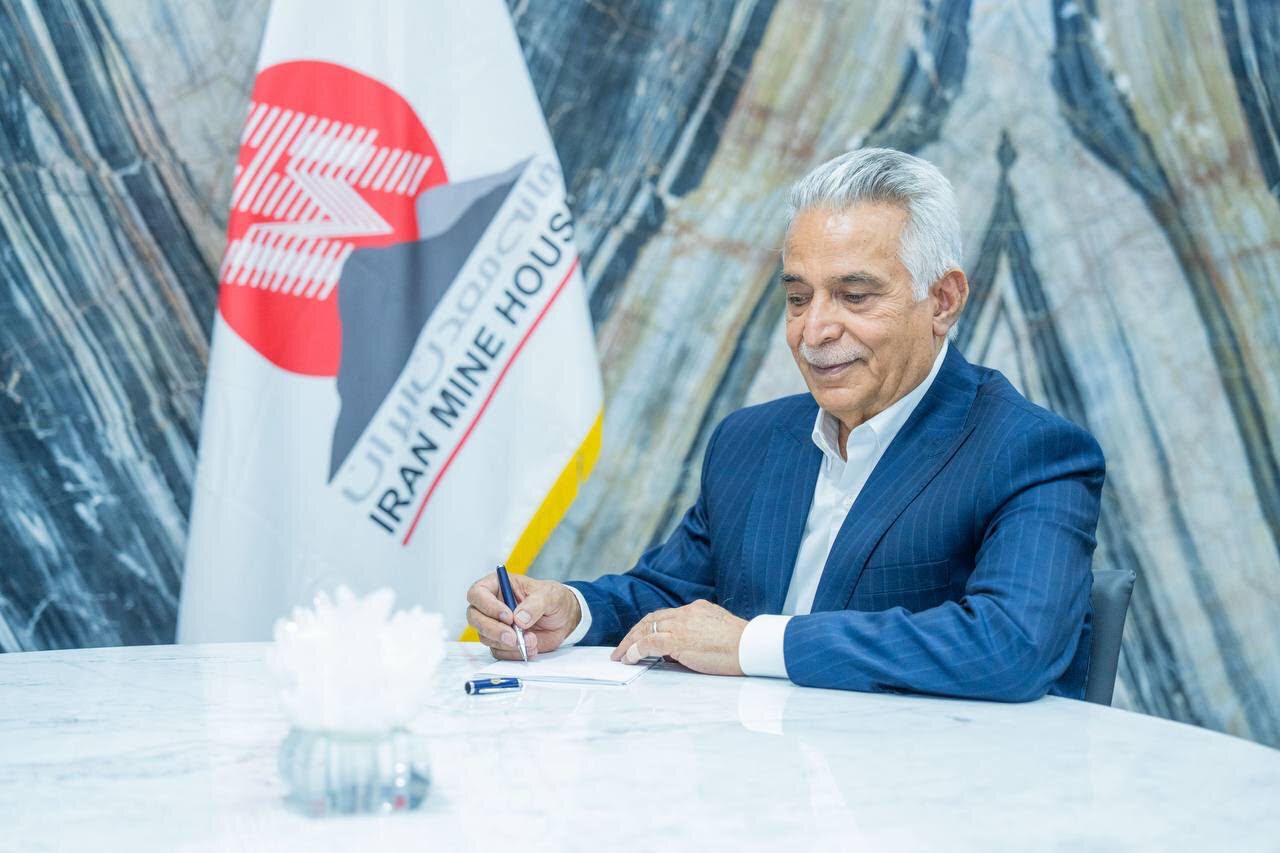
TEHRAN- Mohammad Reza Bahraman, Vice Chairman of the Iran Chamber of Commerce, Industries, Mines and Agriculture (ICCIMA), on the occasion of Iran-Made Innovation and Technology Day (November 28), proposed that large mining and industrial companies publish the real problems of their production lines in the form of competitive calls, and from the outset provide in the contract a phased purchase path for solutions that achieve the agreed performance in industrial testing.
In a note on the occasion of Iran-Made Innovation and Technology Day, Mohammad Reza Bahraman described the criterion of a technology’s success as its measurable effect on the firm’s performance. According to him, in a processing plant, the value of a new solution becomes clear when production line data show that electricity or water consumption per ton of feed has decreased, metal recovery has increased while concentrate grade is maintained, or unplanned downtime hours have fallen. Repetition of the same result in another unit, together with the manufacturer’s commitment to supply parts and services, will be the basis for subsequent buyers’ decisions and entry into the regional market.
Referring to the pressure of water and energy shortages, restrictions caused by sanctions, and macroeconomic instability on industrial investment, Bahraman emphasized that technology selection must begin with a specific production line problem. In one mine, reducing the electricity consumption of the grinding circuit while maintaining product particle size is a priority; in another mine, reducing fresh water withdrawal while maintaining processing quality may create greater economic value. Determining this priority depends on production data and cost estimates for each problem.
Four proposals from Iran Mine House to bring technology to an industrial contract
1. Competitive calls based on the real needs of the mine and plant
Large mining and industrial companies should annually publish part of their operational needs together with baseline data, test conditions, pilot duration, and acceptance criteria. For example, in testing a grinding control system, electricity consumption per ton of feed before and after implementation should be compared, taking into account feed hardness, operating capacity, and product particle size. Determining the measurement method before the test begins allows the operator and the manufacturer to decide on the result based on the same data.
2. Providing for the purchase path in the pilot contract
The contract should clarify from the outset how, upon verification of the agreed performance, phased purchase or installation on the second line will be carried out. The cost of the test should be divided among the operator, the manufacturer, and the financing institution, and payments should be tied to specified milestones, from installation and commissioning to performance verification. This mechanism makes it more possible for smaller technology companies to enter their first industrial contract and allows the buyer to increase its financial commitment in proportion to the test result.
3. Evaluating proposals based on total cost of ownership
In procurement documents, the weights for energy consumption, part life, spare parts lead time, value of production downtime, and after-sales service quality should be specified in advance. Equipment with a lower purchase price may create higher costs during operation due to more line downtime or delays in parts supply. In this evaluation, the value of Iran-made technology is measured by the Iranian team’s capability in design, integration, maintenance, and upgrading of the solution. Collaboration with foreign partners and use of globally competitive components can also strengthen this capability.
4. Recording industrial performance for domestic sales and export of engineering services
Bahraman referred to the operation of PERED direct reduction technology in Shadegan, Mianeh, and Neyriz and considered the publication of comparable data on specific energy consumption, line availability, sponge iron quality, and maintenance cost to be the next step. To offer the technology in the regional market, these records must be accompanied by test conditions, a performance guarantee, and a clear commitment regarding parts supply and service response time.
In this note, Chile’s Expande program and the experience of Fraunhofer institutes #Germany are also mentioned as two examples of firms’ participation in technology development. In Chile, the mining company’s operational need is the basis for engagement with technology suppliers. In Germany, research contracts with industry and pilot infrastructures help test solutions under near-operating conditions. Bahraman’s proposal for Iran is that the production line manager participate from the problem definition stage in setting acceptance criteria, testing, and the purchase decision.
Bahraman proposed that progress until November 28 next year be reported with three indicators: How many technologies have reached purchase contracts after industrial testing? How many solutions have repeated their performance in a second unit? And how much of production cost, water and energy consumption, or downtime hours has been reduced based on operating data?
MA
Disclaimer : This story is auto aggregated by a computer programme and has not been created or edited by DOWNTHENEWS. Publisher: tehrantimes.com