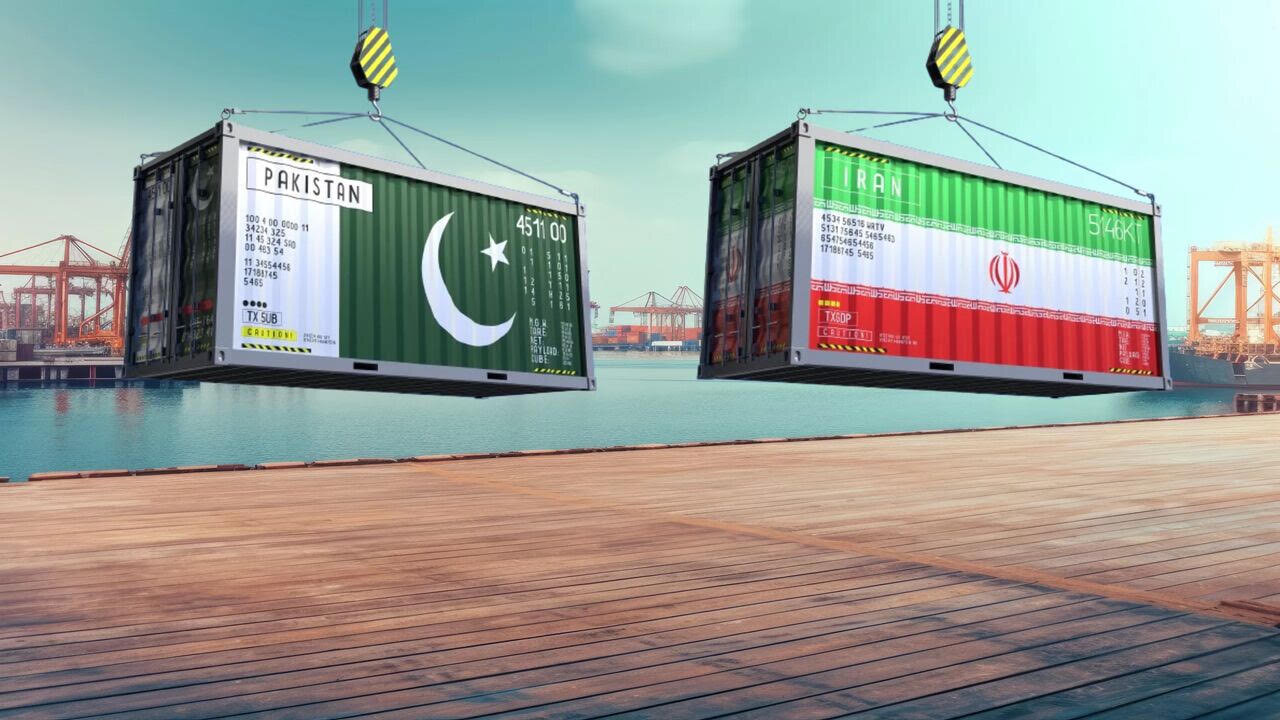
TEHRAN- The Deputy Director of the East Asia and Subcontinent Office at the Iran Trade Promotion Organization said: The volume of formal and informal trade between Iran and Pakistan is currently about $6 billion, and given the capacities and needs of both sides, it can be increased to more than $10 billion.
According to IRNA, Seyyed Mehrdad Siyadat-Nasab said on Thursday at a conference introducing the trade capacities of Iran and Pakistan in Bushehr: Despite the extensive economic and trade capacities of the two countries, the current level of exchanges is not proportionate to Iran’s production capacity and Pakistan’s market needs, and more effort must be made to actualize these capacities.
Referring to the volume of informal exchanges between the two countries, he added: Before the war, part of Iran’s imports from Pakistan took place through the UAE and Jebel Ali port, which was not recorded in official bilateral trade statistics.
The Deputy Director of the East Asia and Subcontinent Office at the Iran Trade Development Organization continued: Taking these exchanges into account, the volume of formal and informal trade between the two countries reaches about $6 billion, which is even beyond the initial target, but there is still a gap to the $16 billion capacity.
Siyadat-Nasab, referring to Iran’s export opportunities to Pakistan, stated: Agriculture, industry, mining, tourism, and technical and engineering services are among the areas where Iranian companies and economic actors can gain a larger share of the Pakistani market by using their capabilities.
Referring to the tourism capacity between the two countries, he said: Every year, several million Pakistani nationals travel to cities such as Mashhad and Qom to visit holy sites, and with proper planning, arrangements can also be made for them to visit Iran’s natural and historical attractions, including the northern cities, Isfahan, and Shiraz.
The official of the Iran Trade Promotion Organization considered the complementarity of the two countries’ economies to be one of the important advantages of expanding economic relations and added: A significant part of Iran’s exports to Pakistan includes energy-based products such as liquefied gas, petrochemical materials, tiles and ceramics, and steel, which, due to Iran’s energy advantage, are competitive in that country’s market.
He added: In return, Pakistan also has suitable capacity in the production and export of certain goods that Iran needs to import, and this economic complementarity can pave the way for the development of trade exchanges and meeting the needs of both countries.
Negotiations concluded for Iran-Pakistan FTA and list of covered goods has been exchanged between two sides
Siyadat-Nasab, referring to negotiations on the Iran-Pakistan Free Trade Agreement (FTA) stated: Negotiations for this agreement have been conducted and the list of covered goods has been exchanged between the two sides. This agreement is in its final stages, and we hope its first phase will be implemented before the end of the year.
He continued: With the implementation of this agreement, customs tariffs on a major part of Iran’s export goods to Pakistan will reach zero, and in return, Iran will also consider tariff concessions for some of Pakistan’s export goods, which will help develop bilateral trade.
The Deputy Director of the East Asia and Subcontinent Office at the Iran Trade Promotion Organization, referring to the capacity of Pakistan’s ports for developing the country’s trade exchanges, said: Pakistan’s ports can take over part of the logistical and commercial role of the UAE’s Jebel Ali port and become a platform for re-exporting Iranian goods to global markets and supplying Iran’s import needs from third countries.
Noting that creating Pakistan’s trade and logistics infrastructure requires time, he added: The infrastructure that was formed in the UAE over about 20 years will not be created in Pakistan overnight, but given the current conditions, this country can be one of the alternative routes for expanding Iran’s trade relations with the world.
Siyadat-Nasab, emphasizing Iran’s strategic view of developing relations with Pakistan, stated: Pakistan can become a strategic partner in the field of food security, reduce Iran’s dependence on high-risk trade routes, and provide the ground for the formation of a new economic corridor between Iran and East Asia.
Possibility of developing Iran’s land connection with China through Pakistan
Referring to the capacities of the China-Pakistan Economic Corridor, he said: The Belt and Road project extends from eastern China to Pakistan’s Gwadar port, and this port is located about 70 kilometers from the Iranian border; therefore, it is possible to develop Iran’s land connection with China through Pakistan.
The official of the Iran Trade Promotion Organization noted: The development of such routes can, while increasing the resilience of the country’s economy in critical conditions, create new opportunities for access to regional and international markets.
He also, referring to the supporting infrastructure for Iran-Pakistan trade, said: The Iran-Pakistan Joint Chamber of Commerce, located in Zahedan and with an office in Tehran, the two countries’ Trade and Investment Council, and also two licensed trade centers in Pakistan are among the capacities that can help traders and economic actors in developing exchanges.
Siyadat-Nasab, referring to the economic capabilities of Bushehr province and the capacities of the Pakistani market, expressed hope that with the cooperation of the Trade Promotion Organization, provincial officials, and economic actors, the volume of Bushehr province’s trade relations with Pakistan, as well as the economic exchanges between the two countries, will increase.
Pakistan is a 260-million market for developing Iran’s exports
The Deputy Director of the East Asia and Subcontinent Office at the Iran Trade Promotion Organization said: Pakistan, with a population of about 260 million and extensive need for imports of goods and raw materials, is a suitable capacity for developing Iran’s exports, and economic actors must have a precise understanding of the needs and competitive advantages of their products to succeed in this market.
Siyadat-Nasab stated: Pakistan is the fifth most populous country in the world, and due to its large consumer market and the need of various industries for imported raw materials, it has significant opportunities for developing trade exchanges with Iran.
He added: With about $35 billion in exports and nearly $65 billion in annual imports, this country is considered an important market in the region, and industry, mining, agriculture, and livestock are among the main axes of its economy.
The Deputy Director of the East Asia and Subcontinent Office at the Iran Trade Promotion Organization considered the textile and agricultural industries to be among the important economic sectors of Pakistan and said: This country has capabilities in producing certain agricultural products and basic goods needed by Iran and can supply part of the country’s import needs.
Siyadat-Nasab, referring to the location of Gwadar port, stated: This port is located about 75 kilometers from Chabahar port, but its port infrastructure has not yet been completed.
Emphasizing the necessity of understanding the Pakistani market, he stated: Before entering this market, exporters must examine the competitiveness of their products in terms of quality and price, and then take action for marketing and finding customers.
This official of the Iran Trade Promotion Organization considered the use of international trade information systems as a solution for reducing marketing costs and added: Economic actors can register for free in the Trade Map system and use information related to countries’ imported and exported goods and important trading companies.
EF/MA
Disclaimer : This story is auto aggregated by a computer programme and has not been created or edited by DOWNTHENEWS. Publisher: tehrantimes.com