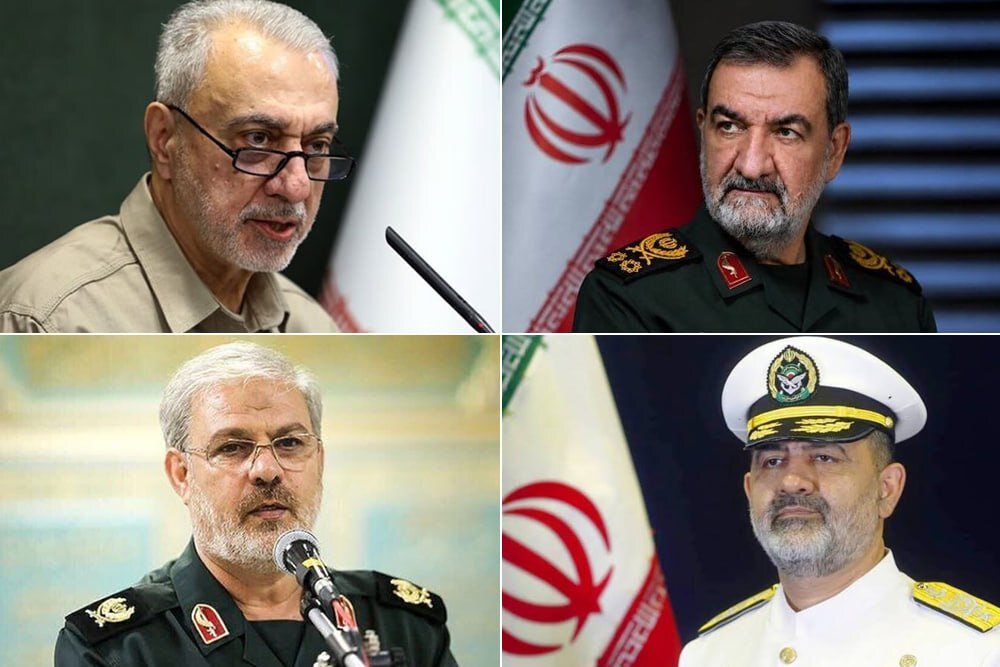
TEHRAN – Iran’s military and political leadership has outlined a broader strategy for confronting potential threats, combining expanded military preparedness, a wider operational theater, stronger deterrence capabilities, and diplomatic efforts to establish a regional security framework independent of outside powers.
The strategy follows a series of directives issued by Leader of the Islamic Revolution Ayatollah Seyyed Mojtaba Khamenei during a meeting with senior Armed Forces commanders. The instructions emphasize intelligent combat readiness, an immediate and effective response to threats without geographical restrictions, stronger military intelligence and the development of indigenous defense capabilities.
Senior Iranian officials have subsequently elaborated on different dimensions of the strategy, addressing military preparedness, the future of Iran’s nuclear doctrine, the Strait of Hormuz, regional security cooperation and the international economic consequences of the conflict.
Expanded operational theater and new military targets
Brigadier General Hossein Mohebbi, spokesperson for Iran’s Islamic Revolution Guard Corps (IRGC), announced that identifying new targets and planning operations across additional geographical areas had been placed on the Corps’ agenda.
Speaking in Kerman, Mohebbi said the process of identifying new targets and preparing operational plans for a broader geographical theater had begun two days earlier.
He described the Leader’s latest directives as opening a new chapter in the confrontation, adding that Iran’s Armed Forces were now better prepared to deliver an effective response to potential threats.
Mohebbi said the removal of geographical restrictions would provide Iran with a wider operational field to confront hostile actions and establish comprehensive deterrence.
He also recalled that the late Leader had previously emphasized the regionalization of any war against Iran, adding that the latest instructions had further expanded the geographical scope of the country’s defensive planning.
The IRGC spokesperson said the ultimate objective was to establish maximum deterrence, making any attempt to threaten Iran’s territorial integrity, national security, and interests prohibitively costly.
Armed forces enhancing readiness to counter complex threats
The Iranian Armed Forces are further strengthening their expertise and operational readiness to confront complex threats and hybrid warfare, the commander of the Iranian Navy has said.
Rear Admiral Shahram Irani made the remarks during a session of the War Studies course at Shahid Sattari University, according to Mehr News Agency.
He highlighted the 86th Naval Flotilla’s round-the-world voyage, describing it as the outcome of months of planning and specialized efforts by Navy personnel. Despite challenging oceanic conditions, he said, the mission was successfully completed, securing Iran’s place in the history of the country’s maritime navigation.
Irani also praised the capabilities and commitment of Navy personnel, saying the flotilla’s visits to ports in various countries provided an opportunity to showcase Iran’s Islamic and national identity.
He added that the crew’s professional conduct and adherence to religious and ethical values had demonstrated an aspect of the Islamic Republic of Iran’s capabilities and standing.
Emphasizing the importance of self-confidence, faith and hope in confronting threats, the naval commander said determination and perseverance, alongside faith and hope, were essential factors for success.
He stressed that the Armed Forces were drawing on these qualities to further enhance their knowledge and preparedness to deal with increasingly complex threats and hybrid warfare.
Five strategic setbacks for the United States
In assessing the consequences of the conflict, Mohebbi outlined five areas in which the United States had suffered strategic setbacks.
The first, he argued, concerned about Washington’s failure to achieve its initial political and territorial objectives. According to the IRGC spokesperson, the United States had initially sought to change Iran’s political system and fragment the country. After failing to achieve these objectives, it gradually shifted to demands involving Iran’s missile capabilities, nuclear activities, enriched uranium, and control over strategic assets, including oil wells and islands.
Mohebbi maintained that none of these objectives had been achieved, arguing that the failure to accomplish the original goals had compelled Washington to reconsider its approach and seek negotiations and mediation.
The second setback concerned the credibility of the US security strategy in West Asia. He said Washington had justified its extensive military presence in the region by promising to protect energy supplies and freedom of navigation through major international waterways.
However, despite possessing what Mohebbi described as the world’s largest navy, seven fleets, 12 aircraft carriers and a regional Fifth Fleet presence, the United States had been unable to reopen the Strait of Hormuz during the conflict.
He argued that this had raised fundamental questions about Washington’s ability to guarantee maritime security and protect international energy flows.
The third setback concerned US intelligence capabilities. Mohebbi said the identification and targeting of American intelligence facilities had challenged the perception that US intelligence infrastructure and methods were beyond detection.
The fourth involved the perceived superiority of American military technology. He cited Iran’s ability to counter advanced US military systems, including the F-35 fighter aircraft, Patriot missile systems, and other equipment operating in the air, underwater, and on land.
The fifth setback, he said, involved the economic costs of the conflict and the weakening of American global influence. Mohebbi argued that Washington, which had traditionally sought to transfer the financial burden of military campaigns to other countries, had itself sustained significant economic damage.
He also described the conflict as a challenge to the perception of US military invincibility and its ability to protect its allies.
Armed forces prepare for immediate and unrestricted responses
The military dimension of the new strategy was further emphasized by Major General Ali Abdollahi, chief of staff of the Iranian Armed Forces.
In a message published on his X account, Abdollahi said the Armed Forces were employing their full intelligence capabilities to monitor enemy movements and preparations while continuously updating their target database.
He stressed that Iran would not necessarily wait for an adversary to launch an attack before determining the timing and manner of its response.
“Our response will be immediate, impactful, and without geographical restrictions,” he warned.
In a separate message addressed to the Iranian nation, Abdollahi praised the Leader’s directives, describing them as a guiding framework for military commanders and all members of the Armed Forces.
He pledged that the military would stand firm against any aggression, regardless of its scale or nature, and defend the country and its people.
Abdollahi also said the Armed Forces were developing a new database of enemy targets and assets across a wider geographical area, adding that Iran would confront its adversaries with new operational capabilities.
Meanwhile, Defense Minister Mehrdad Akhlaqi pledged the Defense Ministry’s full support for implementing the Leader’s instructions.
He said the ministry would mobilize its organizational, industrial, scientific, and technological capacities to translate the directives into practical defense achievements, with particular emphasis on strengthening indigenous capabilities and meeting the requirements of the Armed Forces.
Nuclear doctrine remains unchanged amid growing debate
Iran’s nuclear policy was another major issue addressed by Mohsen Rezaei, secretary of the Supreme National Security Council.
Rezaei said no official decision had been taken to change the country’s nuclear doctrine, stating that the issue could be discussed if military hostilities resumed.
Rezaei pointed out that Iran had accepted inspections by the International Atomic Energy Agency (IAEA) and maintained surveillance cameras at its nuclear facilities, with monitoring information transmitted to the agency.
He said the Iranian public was questioning why the country should continue with the same arrangements when its nuclear facilities had come under attack despite the existing inspection and monitoring framework.
The SNSC secretary added that some members of Parliament had apparently begun preliminary steps concerning the issue, but emphasized that no formal government or state-level decision had been adopted.
Rezaei also criticized IAEA Director General Rafael Grossi, arguing that problems surrounding Iran’s nuclear file had emerged during his tenure.
On the diplomatic front, he said Tehran was awaiting the latest response from Washington in the ongoing indirect exchanges. He added that he had read a letter from US Vice President JD Vance but had not yet sent a reply.
Describing the change in the American side’s tone as a positive indication, Rezaei said it reflected Iran’s strengthened position.
He reiterated that diplomacy remained an option, provided that the seven conditions previously announced by Iran were fulfilled. However, he warned that any renewed hostile action would be met with devastating strikes using new weapons.
Four-country consultations seek regional security without outside interference
Alongside its military preparations, Tehran has emphasized the importance of developing a regional security framework based on cooperation among West Asian countries.
Rezaei discussed the outcome of the four-country consultations in Tehran involving Iran, Saudi Arabia, Pakistan and Türkiye, saying the participants had reached a constructive understanding of several shared regional priorities.
He said the discussions addressed the future security architecture of the region, the situation in Yemen, the proposed Mecca agreement and the need to defend Muslim populations against Israeli aggression.
The withdrawal of Israeli forces from southern Lebanon and southern Syria, as well as developments in Gaza and the occupied West Bank, were also among the subjects discussed.
Rezaei argued that developments over the past one or two years had demonstrated that no sustainable regional security arrangement could be established without taking Iran’s position and interests into account.
He said the resistance demonstrated by the Iranian nation had encouraged regional countries to reconsider their security policies and explore arrangements based on cooperation among countries of the region.
According to the SNSC secretary, the emerging framework should enable regional states to take responsibility for their own security without interference from powers outside the region.
He added that some regional officials who had visited Tehran to discuss future security arrangements had themselves requested meetings with Iranian officials.
Rezaei maintained that Iran’s ability to withstand the military power of the United States and Israel demonstrated the potential of cooperation among regional countries to establish lasting security.
He stressed that Iran should have an effective role in any future regional security arrangement, arguing that sustainable stability could not be achieved without its participation.
Strait of Hormuz and national interests remain non-negotiable
The strategic importance of the Strait of Hormuz also featured prominently in Rezaei’s remarks.
He said reopening the waterway was conditional on the full implementation of Iran’s requirements and that no change in its status would take place until those conditions were fulfilled.
The SNSC secretary stressed that Iran would not retreat from its rights and national interests during negotiations.
He added that any eventual conclusion to the conflict should ensure that no country would contemplate aggression against Iran in the future.
Economic consequences extend beyond the battlefield
Rezaei also addressed the wider economic consequences of the conflict, arguing that its impact had extended beyond West Asia and affected households and businesses in different parts of the world.
He cited rising energy, fuel, gasoline, and heating costs in the United States, saying that even relatively affluent households had experienced financial pressure.
According to Rezaei, the economic consequences of the conflict had not been limited to the United States or the immediate region but had affected living costs internationally.
Comparing the confrontation with the Vietnam War, he argued that the latest conflict had produced broader global economic repercussions.
He also referred to growing criticism of US President Donald Trump, attributing the dissatisfaction in part to the economic consequences of the military campaign.
Rezaei further pointed to a ‘shift in the positions of European leaders,’ saying that French President Emmanuel Macron and German Chancellor Friedrich Merz had initially welcomed the US military campaign but were now expressing concern about its economic repercussions.
He maintained that national security remained a non-negotiable priority for Iran and that the economic difficulties experienced by the Iranian people should be considered alongside the country’s longer-term strategic objectives.
Acknowledging the hardships imposed on households, Rezaei said the achievements of national resistance and the prospects it offered future generations outweighed the economic difficulties.
He also warned that any further hostile action would be met with a powerful response, expressing confidence that Iran would emerge from the current period with its national dignity and security preserved.
A strategy combining defense, diplomacy and regional cooperation
The statements by Iran’s military and political leadership indicate an approach that combines expanded defense preparedness with diplomatic engagement and efforts to strengthen regional cooperation.
The central element of the strategy is the establishment of ‘maximum deterrence: strengthening military and intelligence capabilities, broadening operational preparedness and ensuring that any potential aggression carries consequences sufficient to discourage its repetition.’
At the diplomatic level, Tehran continues to emphasize the fulfillment of its conditions, the protection of national interests, and the need for a regional security framework based on the participation of neighboring countries.
Together, these positions reflect Iran’s stated determination to strengthen its defensive capabilities while pursuing a regional order in which security is primarily the responsibility of the countries of the region.
Disclaimer : This story is auto aggregated by a computer programme and has not been created or edited by DOWNTHENEWS. Publisher: tehrantimes.com