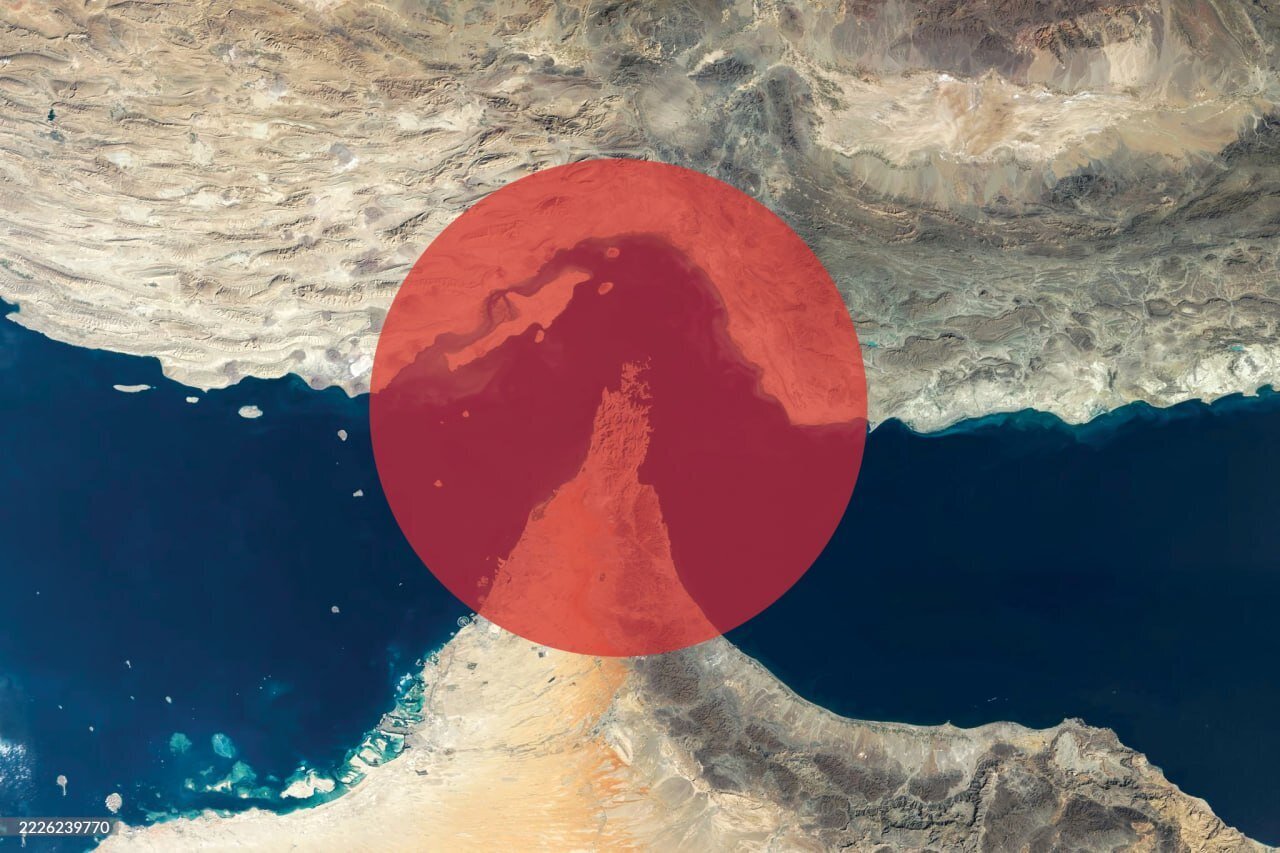
TEHRAN — Iranian military officials have reiterated that the Strait of Hormuz remains closed to uncoordinated maritime traffic, linking any easing of restrictions to ‘respect for Iran’s rights’ and warning that continued US military presence in the region will deepen insecurity.
Rear Admiral Habibollah Sayyari, deputy coordinator of the Iranian Army, said on Thursday that any vessel seeking to transit the strategic waterway must coordinate its passage with the Iranian authorities who are in charge. His remarks came as Army Chief Commander Major General Amir Hatami and Army Spokesman Brigadier General Mohammad Akraminia issued separate statements emphasizing Iran’s military readiness and its determination to maintain control over the security environment around the strait.
Speaking to reporters on the sidelines of a ceremony honoring Army nurses, Sayyari argued that the impact of restrictions on maritime traffic was evident in international fuel markets.
“The Strait of Hormuz is closed. If it were open and oil were passing through it, gasoline prices in the United States would not have risen,” he said.
Sayyari outlined the deployment of Iran’s armed forces around the waterway, saying the naval forces of Iran’s Islamic Revolution Guard Corps (IRGC) maintained a firm presence to the west of the strait, while the Iranian Army operated to its east and extended its presence northward into the Sea of Oman.
He stressed that any passage through the waterway must be coordinated, warning that vessels attempting to transit without such coordination could face consequences.
Hatami links reopening to respect for Iran’s rights
Army Chief Commander Major General Amir Hatami has also made clear that, in Iran’s view, the future of the strait is directly linked to the treatment of the country and its rights.
Speaking at Imam Ali Officers’ University in Tehran on Thursday, Hatami said the Strait of Hormuz had been closed following the outbreak of the war and would remain closed until Iran’s rights were respected.
He attributed the conflict to a ‘fundamental miscalculation by Iran’s adversaries,’ who had underestimated the country’s military capabilities and assumed that it was in a weakened position.
According to Hatami, the Iranian Army and the IRGC responded from the earliest hours of the conflict with extensive strikes against hostile targets. He argued that the adversaries had failed to achieve their military and strategic objectives.
Rejecting US assertions that Iran’s military capabilities had been weakened, the Army chief pointed to continued missile and drone operations and the functioning of the country’s air-defense systems as evidence of its sustained operational capacity.
Hatami also said Iran had taken firm action against vessels that violated its regulations, leaving maritime traffic through the strait severely restricted.
He added that Iran’s armed forces had used the pause in hostilities to repair damage and strengthen their readiness. Iranian ground, naval, air-defense and missile units, he said, remained equipped and prepared to defend the country’s territorial integrity.
Hatami further warned that any attack on Iran’s infrastructure would prompt a response inflicting substantially greater damage on the infrastructure and interests of its adversaries, including Israel and those cooperating with it.
Army says US military presence fuels regional insecurity
In separate remarks on Friday, Army spokesman Brigadier General Mohammad Akraminia said Iran was developing new operational plans that would force hostile US naval vessels to withdraw even farther from the country’s coastline.
Akraminia said Iran’s air-defense capabilities had advanced beyond their prewar and wartime levels, adding that Iranian air-defense units had intercepted several US drones in the country’s airspace in recent weeks. He also said US military vessels had been pushed to distances exceeding 500 kilometers from the coasts of the Persian Gulf.
The spokesman described the US military presence as a central source of insecurity in the region and called on regional countries and the international community to recognize ‘Washington’s role in fueling instability.’
“If America leaves the region, the Strait of Hormuz will reopen, and collective security will be established with the participation of the region’s countries, and the global economy will improve. If it doesn’t leave, we’ll expel it,” Akraminia said.
He added that Iranian forces had rehearsed advanced, coordinated and innovative military operations, while nationwide air-defense coverage had been significantly strengthened.
A strategic waterway with global economic consequences
The Strait of Hormuz is one of the world’s most strategically important energy corridors, connecting the Persian Gulf to the Gulf of Oman and the wider Arabian Sea. A substantial share of global oil shipments and significant volumes of liquefied natural gas pass through the waterway, making disruptions a concern for energy-importing countries, shipping operators and financial markets.
Restrictions on traffic through the strait can raise shipping and insurance costs, disrupt energy supplies and add volatility to oil and fuel prices. The effects depend on the scale and duration of the disruption, the availability of alternative supplies and routes, and market expectations about the conflict.
Iran’s latest statements place the waterway at the center of its broader security position: Tehran says passage must be coordinated, its armed forces remain prepared, and any change in the current situation depends on respect for Iran’s rights and the future of foreign military deployments in the region.
The statements also underscore the competing approaches to security in the Persian Gulf. While Washington has emphasized maritime security and freedom of navigation, Iranian officials argue that lasting stability requires regional cooperation and an end to ‘destabilizing foreign military intervention.’
With energy markets and international shipping exposed to developments around the strait, any sustained change in maritime traffic is likely to have consequences well beyond West Asia. For Iran, however, the issue is not solely one of commercial passage: its military leadership has framed the waterway as a strategic lever tied to national security, sovereignty and the outcome of the wider confrontation.
Disclaimer : This story is auto aggregated by a computer programme and has not been created or edited by DOWNTHENEWS. Publisher: tehrantimes.com