
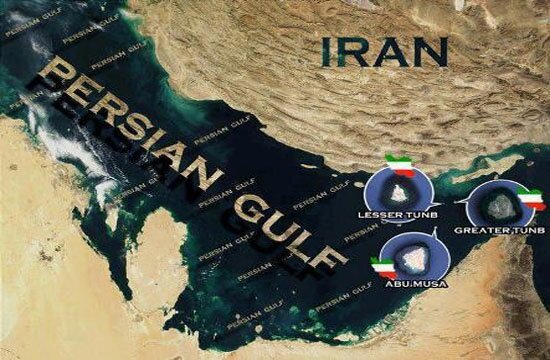
TEHRAN — Repeating unfounded claims from the United Nations rostrum “does not alter the reality” that Abu Musa, the Greater Tunb, and the Lesser Tunb remain “inseparable parts of Iran’s territory,” Kazem Gharibabadi, Iran’s Deputy Foreign Minister for Legal and International Affairs, stated on social media platform X.
Firmly rejecting statements recently delivered by Emirati officials at the United Nations General Assembly, Gharibabadi emphasized: “Emirati officials should, instead of repeating unfounded claims, adhere to the requirements of good neighborliness and the historical and legal realities of the region.”
The senior Iranian diplomat underscored that Tehran considers its territorial integrity and sovereignty over the three strategic Persian Gulf islands non-negotiable. He warned that instrumentalizing international podiums to advance baseless maritime claims serves only as a distraction from genuine regional concerns and undermines multilateral trust.
For decades, Iran has consistently dismissed periodic, orchestrated statements issued by the United Arab Emirates or regional bodies attempting to question Iranian jurisdiction. Iranian officials maintain that sovereignty over Abu Musa, Greater Tunb, and Lesser Tunb is rooted in established international law and an unbroken historical record.
Tehran has reiterated that while it remains committed to diplomacy, de-escalation, and fostering constructive neighborly relations with all littoral states of the Persian Gulf, matters concerning national borders and sovereign territories are absolute red lines. Iran considers any external interference, joint declarations with foreign powers, or calls to refer the domestic status of these islands to international arbitration as invalid, provocative, and contrary to regional security.
The historical facts underpinning Iran’s sovereignty span centuries, extensively documented in regional annals and maritime archives across Europe. During antiquity and through successive Iranian dynasties—including the Safavid, Afsharid, Zand, and Qajar eras—the three islands, alongside the broader maritime expanse of the Persian Gulf, fell under direct Iranian administrative and fiscal control through the ports of Bandar Lengeh and Bushehr.
During the late 19th and early 20th centuries, the British Empire imposed a maritime protectorate over the coastal sheikhdoms—then known as the Trucial States. In pursuit of colonial dominance over the vital sea lines of communication linking India to the West, British colonial authorities unilaterally stationed flags and proxies on the islands, over the continuous, formal objections and diplomatic protests of Tehran.
When Britain announced its withdrawal from east of Suez in 1971, Iran took decisive measures to re-establish and formalize its rightful administration before the formal declaration of the UAE federation. In November 1971, through bilateral arrangements—including the formal Memorandum of Understanding regarding Abu Musa—Iranian sovereign authority was restored. Historic British Admiralty charts, official correspondence from London’s Foreign and Commonwealth Office, and contemporary maritime registries consistently acknowledged Iran’s prior sovereign title, making modern Emirati claims anachronistic attempts to revise colonial history.
Strategic geography: Gatekeepers of the Strait of Hormuz
The three islands occupy an unparalleled geographic position at the western approach to the Strait of Hormuz, the world’s most critical maritime energy chokepoint through which roughly a fifth of global petroleum transit flows.
Greater Tunb and Lesser Tunb sit immediately adjacent to the deep-water shipping lanes utilized by heavy commercial tankers and maritime traffic traversing the Persian Gulf.
Abu Musa, situated slightly further south, commands vital naval surveillance lines and forms the linchpin of defensive depth in the southern waters.
Iran’s presence and defensive readiness across these islands have historically guaranteed freedom of navigation and maritime security against piracy, regional instability, and unilateral foreign adventurism. Tehran views its administration of the islands not merely as a matter of title, but as an essential responsibility for maintaining stability in vital international shipping corridors without reliance on extra-regional powers.
Israel’s shadow in regional waters
Political observers in Tehran point out that Abu Dhabi’s persistent diplomatic agitation over the islands must also be examined through the prism of its broader foreign policy alignments—most notably its normalization of ties with Israel under the so-called Abraham Accords.
By opening the Persian Gulf to intelligence, military, and diplomatic cooperation with Tel Aviv, the UAE has introduced a hostile entity into an inherently sensitive maritime theater. Iranian political and military officials have repeatedly warned against facilitating Israel’s presence in Persian Gulf waters, describing it as a direct threat to collective regional security.
Analysts note that Israel seeks to cultivate leverage on Iran’s immediate southern border, exploiting bilateral frictions to drive a wedge between Muslim-majority neighbors. In this context, recycling stale claims regarding the three Iranian islands is seen by many in Tehran as an attempt to construct artificial disputes, curry favor with Western and Israeli patrons, and justify the growing footprint of destabilizing foreign actors in the Persian Gulf.
Iran has made it clear that while its hand remains extended for genuine regional integration and security cooperation among Persian Gulf states, it will counter any moves that jeopardize its strategic interests, violate its territorial integrity, or pave the way for foreign footholds along its sovereign coastlines.
Disclaimer : This story is auto aggregated by a computer programme and has not been created or edited by DOWNTHENEWS. Publisher: tehrantimes.com




