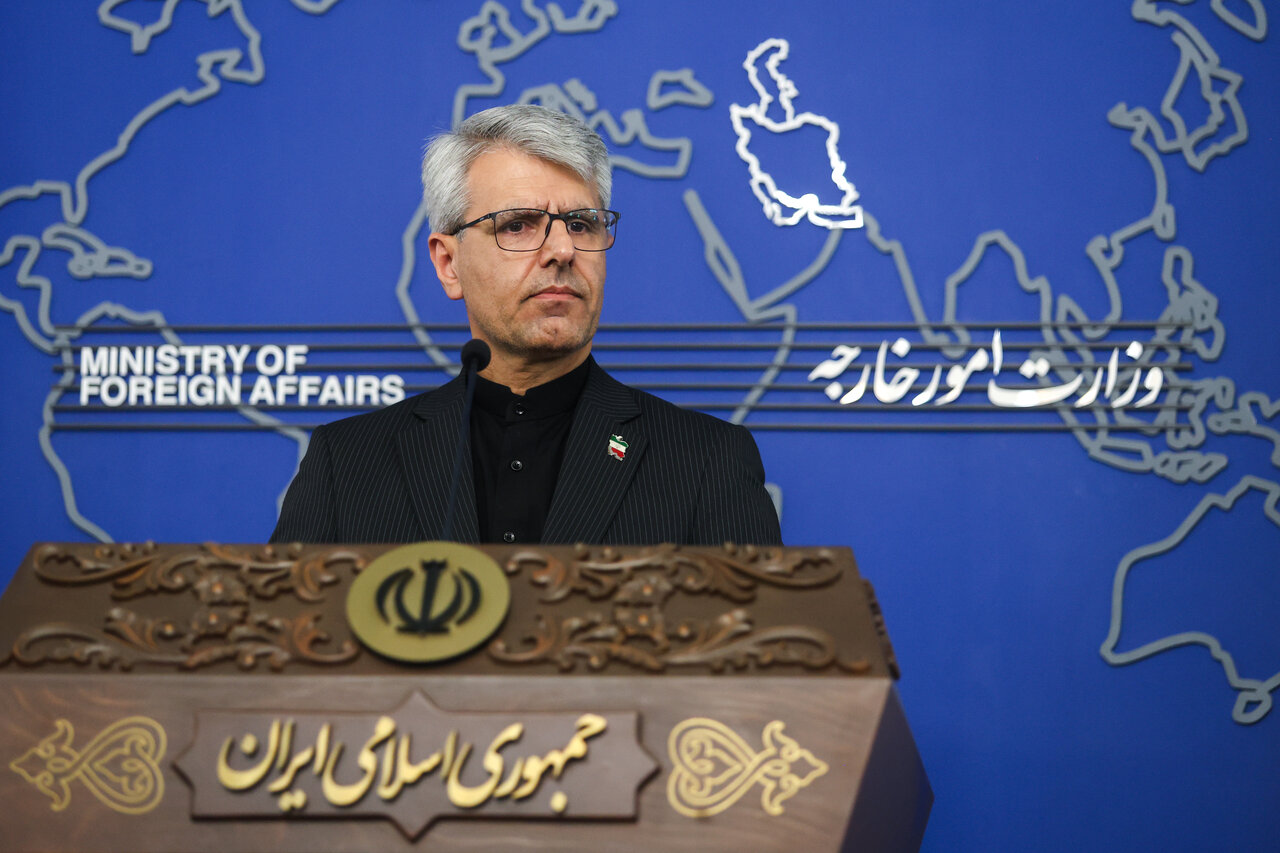
TEHRAN- Iran has firmly dismissed reports alleging that Tehran intends to impose transit fees or tolls on vessels passing through the Strait of Hormuz, emphasizing instead that the Islamic Republic is working closely with Oman to establish a reliable mechanism for ensuring safe maritime navigation through one of the world’s most strategically significant waterways.
“We are not seeking to impose transit tariffs,” speaking at his weekly press conference on Monday, Iranian Foreign Ministry spokesperson Esmaeil Baqaei said, stressing the importance of precise terminology when discussing maritime arrangements in the Persian Gulf.
According to the spokesperson, Iran and Oman are coordinating efforts to draft a comprehensive protocol aimed at guaranteeing secure and predictable navigation in both the Strait of Hormuz and the Sea of Oman. He explained that while technical services related to maritime safety, environmental protection, and navigation management naturally involve operational costs, such measures should not be misconstrued as transit tolls.
“The services provided during this process, including navigation assistance and environmental protection measures, require cost recovery. However, this should not be interpreted as the imposition of transit fees,” he stated.
Baqaei emphasized that Iran and Oman, as the two littoral states bordering the Strait of Hormuz, bear the principal responsibility for maintaining security and ensuring the safe passage of vessels through the waterway. He also dismissed reports suggesting possible European involvement in administering the strait, particularly proposals attributed to Britain and France.
“Is there any neighboring country around the Strait of Hormuz other than Iran and Oman?” he asked. “It is the sole responsibility of Iran and Oman to take the necessary measures, and we are currently fulfilling that responsibility.”
The Iranian spokesperson argued that external proposals lacking legal or geographical legitimacy risk further complicating an already sensitive regional situation.
Baqaei attributed recent instability in the strategic waterway to “unlawful actions” by the United States and the Israeli regime during and after their military aggression against Iran.
He stressed that Tehran and Muscat are seeking to establish a credible and internationally reliable navigation framework because they believe the Strait of Hormuz must remain open and operational for all nations engaged in lawful trade and maritime commerce.
“The reason Iran and Oman are working to establish a reliable and effective mechanism is our belief that this international waterway should remain open for free trade and safe navigation for all nations,” Baqaei noted.
While emphasizing that he was not issuing threats, the spokesperson warned that any future aggression against Iran could have broader regional repercussions.
“Our armed forces do not speak frequently, but they will demonstrate in practice that any future response will be carried out with greater intensity and scope,” he said.
Disclaimer : This story is auto aggregated by a computer programme and has not been created or edited by DOWNTHENEWS. Publisher: tehrantimes.com