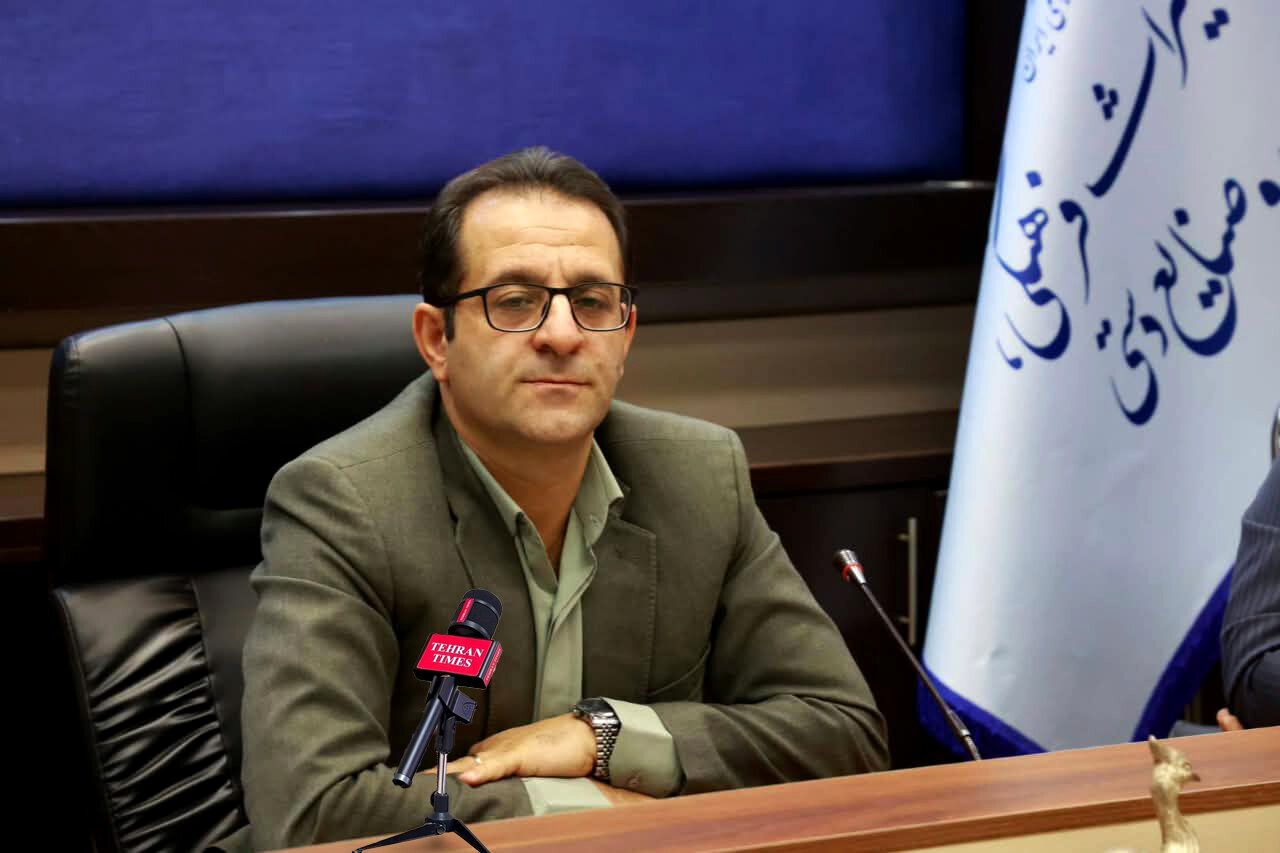
TEHRAN – Iran is seeking to make better use of its border provinces’ tourism potential by strengthening direct cooperation with neighboring countries, Moslem Shojaei, director general of marketing and foreign tourism development at the Ministry of Cultural Heritage, Tourism and Handicrafts, says.
In an interview with the Tehran Times, Shojaei outlined a fresh initiative, which aims to build tourism partnerships between Iranian border provinces and neighboring regions. The initiative seeks to give local tourism operators a greater role in international marketing, facilitate exchanges among tourism professionals and turn longstanding cultural, linguistic and commercial ties into new opportunities for attracting foreign visitors.
Iran is currently facing considerable regional uncertainty, with tensions and the possibility of renewed conflict affecting the broader tourism environment. Foreign Minister Abbas Araghchi has recently highlighted the importance of provincial diplomacy and closer cooperation between border provinces and neighboring countries. How does this approach translate into tourism policy, and what is the rationale behind the initiative known as Gozar-As-Marz, which literary means (“Beyond Borders”)?
When the broader environment of the tourism industry changes because of regional developments, tensions rise and uncertainty increases. In a situation that can be described as neither war nor peace, it becomes difficult to predict what may happen next. Naturally, existing policies and approaches must adapt to these changing circumstances.
One of the main reasons we launched the Beyond Borders initiative was to make our tourism sector more flexible and better equipped to respond to such conditions. We need an approach that allows us to adjust our plans and maintain tourism connections even when the wider regional environment becomes unpredictable.
The initiative also has a theoretical foundation in economics and geography, particularly in concepts related to decentralization and the importance of peripheral regions. Policies developed at the center cannot always be transferred effectively to border areas without considering their particular circumstances. Without sufficient coordination and cohesion, this top-down approach can lead to mistakes.
Border regions are often better positioned to identify and address their own challenges because they deeper understand local conditions and have direct relationships with communities across the borders. This is essentially a bottom-up approach to planning, rather than the top-down models that were more prominent in the 1980s and 1990s.
What does the Beyond Borders initiative involve in practical terms? How will Iranian provinces cooperate with their counterparts across national borders?
The basic idea is straightforward: each Iranian border province should establish closer working relations with the corresponding province or region in the neighboring country.
For example, provinces such as Ilam, Khuzestan, Kermanshah and South Khorasan can cross the border, engage with their counterparts and develop joint tourism activities.
We have often approached international tourism promotion through a centralized model, expecting provinces to attract foreign visitors by organizing promotional campaigns, inviting tourism professionals, hosting familiarization tours and bringing in influencers to introduce their destinations and products.
But border provinces have a particular advantage. Their tourism operators, tour organizers and hotel owners already know the neighboring regions and often maintain direct relationships with their counterparts there.
Take West Azarbaijan, for instance. Local tourism professionals in the province know the neighboring areas much better than officials working at the national level. They already have established contacts with tourism operators across the border.
An initiative that might take the Ministry of Foreign Affairs and other central institutions two or three months of coordination could sometimes be arranged by local operators in just a day or two even through a few WhatsApp messages, social media exchanges and meetings. This gives border provinces greater speed and flexibility in organizing joint activities.
What makes these local connections particularly effective in promoting tourism?
There are several factors. For examples, border communities often have long-standing commercial relations, cultural similarities and family connections across national boundaries. In many cases, people on both sides speak the same language or share closely related cultural traditions.
For instance, Kurdish communities in Kermanshah and Kurdistan provinces have close cultural and linguistic connections with the Kurdistan Region of Iraq. Similarly, Arab communities in Khuzestan have cultural and linguistic ties with Arab populations across the border in Iraq.
These connections make communication easier and help tourism professionals understand the preferences, expectations and interests of potential visitors.
As a result, tourism operators in border provinces are often better placed to identify suitable markets, promote local attractions and attract visitors from neighboring regions. They understand the language, culture and travel preferences of their potential customers.
Iran has several neighboring countries and a considerable number of border provinces. How broadly can this initiative be implemented?
Iran has 15 neighboring countries and 16 border provinces, creating considerable opportunities for cross-border tourism cooperation.
There are many potential connections. The province of Sistan-Baluchestan, for example, can develop tourism relations with Pakistan’s neighboring provinces. South Khorasan can strengthen cooperation with Afghanistan, while Khorasan Razavi can build on its existing geographical and cultural connections with Afghan regions, including Herat.
Sarakhs and other border areas can also develop closer tourism links with Turkmenistan. Similarly, Golestan has opportunities to cooperate with its Turkmen counterparts.
These are examples of how the initiative can be developed across different parts of the country. Each province can identify the most suitable neighboring regions and build cooperation based on its geographical position, cultural affinities and existing economic relations.
What practical tools will be used to turn these cross-border connections into actual tourist flows?
One of the main instruments will be familiarization tours. We will invite tourism professionals from neighboring countries, particularly those involved in sending travelers, to visit Iranian border provinces and become acquainted with their attractions and tourism infrastructure.
For example, tour operators and other tourism representatives from Iraq’s Kurdistan Region can visit Kermanshah, Sanandaj and Marivan to explore their tourism capacities. They can also visit West Azarbaijan through border crossings such as Tamarchin and become familiar with the province’s attractions and facilities.
These programs can involve tour operators, hotel owners, tourism service providers and social media influencers. The objective is to introduce Iranian destinations and tourism products directly to people who can promote them and organize trips.
Rather than relying solely on centralized promotional activities, we want local tourism stakeholders to establish direct and lasting working relationships with their counterparts across the border.
When provincial authorities are directly involved in these arrangements, problems can often be identified and resolved more quickly.
Ultimately, the initiative is intended not only to promote destinations but also to strengthen the resilience of tourism connections. By empowering border provinces and encouraging direct cooperation with neighboring regions, we can maintain channels for travel and economic exchange even under difficult circumstances.
AM
Disclaimer : This story is auto aggregated by a computer programme and has not been created or edited by DOWNTHENEWS. Publisher: tehrantimes.com