
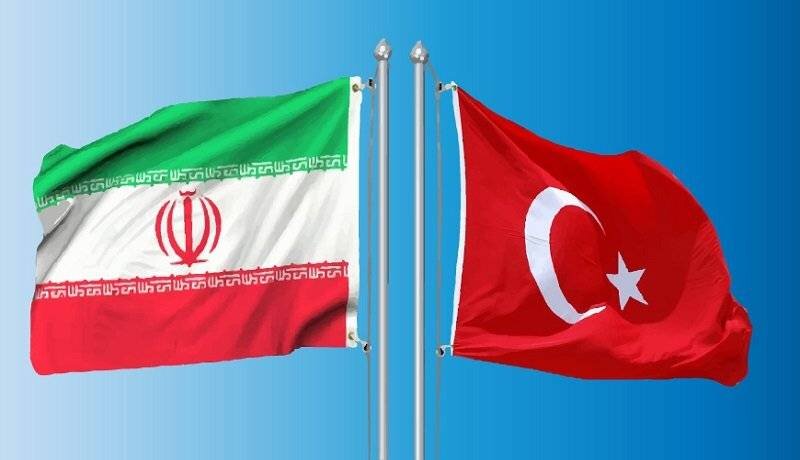
TEHRAN – Iran and Turkey are planning to establish a joint innovation center and define a sustainable business model, an official with the Ministry of Science has said.
In line with the implementation of mega-tech projects, the two countries have developed nine technology projects to implement collectively, IRNA quoted Mohammad-Nabi Shahiki as saying.
The official made the remarks in a meeting held on Monday to plan the Iran-Turkey Science and Technology Week.
Highlighting the role of science and technology parks in the expansion of international cooperation, Shahiki said the main objective is to transition from academic collaboration towards the development of a synergistic network comprising research institutes, technology parks, and universities to conduct joint projects in education, research, and technology fields and generate shared strategic outcomes for both parties.
According to the head of the Ministry of Science, Research and Technology’s center for international scientific cooperation, Ehsan Qaboul, Iran-Turkey Science and Technology Week is scheduled to be held in Urmia, West Azarbaijan province, and Tabriz, East Azarbaijan, in the second month of the fall, snn.ir reported.
In February, Qaboul and Turkish ambassador to Tehran, Hicabi Kirlangic, explored the capacities, challenges, and future perspectives for the expansion of scientific, research, and educational cooperation between Iran and Turkey, msrt.ir reported.
The two sides agreed to boost science diplomacy by organizing an Iran-Turkey science week, holding recurrent meetings of the best universities, developing joint scientific projects, and establishing science and technology parks, particularly in border areas.
During the meeting, Qaboul said, “Our main objective is to develop a joint scientific ecosystem that encompasses everything from higher education to applied research and modern technologies.”
Supervising joint dissertations was the other issue raised by the official, noting that Persian and Turkish students can help address common problems between the two countries, conduct collaborative research projects, and ultimately improve the scientific standing of Iranian and Turkish universities in international rankings.
The official also proposed exchanging students, granting scholarships, offering joint scientific calls on shared environmental, technological, and industrial issues, and developing joint curricula to strengthen cultural links and localize education.
Highlighting the capacities of medical universities in the country, Iranian officials announced their readiness to attract more Turkish students. Currently, more than 130 Turkish students are majoring in medical fields in Iran.
For his part, Kirlangic emphasized the need to address problems related to issuing visas and equivalent certificates, saying that establishing transparent mechanisms will increase confidence among students and their families.
Iran’s high scientific capacity
In June, Minister of Science, Research, and Technology, Hossein Simaei-Sarraf, delivered a speech at the 7th Turkey Educational Technologies Summit (known as TETZ 2026), highlighting the country’s high scientific and research capacities despite sanctions.
Despite illegal sanctions, Iran secures first place in cognitive sciences among Islamic nations and ranks ninth globally in advanced materials. Numerous prestigious Iranian universities and institutions are included in international rankings. These accomplishments underscore the country’s scientific capabilities, IRIB quoted Simaei-Sarraf as saying, addressing the TETZ, held in Istanbul from June 26 to 28.
Iran serves as a great opportunity to invest in higher education and modern technologies. The country has one of the largest higher education systems in the region, with more than three million students and over seventy thousand faculty members and researchers.
Highlighting that the rapid development of emerging technologies, including AI, is fundamentally transforming human relationships and higher education systems around the world at an unprecedented pace, Simaei-Sarraf said that effective use of smart technologies requires the establishment of a system based on algorithmic transparency, educational justice, accountability, protection of learners’ rights, and responsible data governance.
According to science minister, cultural and social requirements need to be institutionalized in the design and deployment of these technologies, which will help pave the way to promote social trust, facilitate the use of smart education, and its acceptance without posing data governance risks at national and international levels.
The official went on to say that the development of smart education requires the enhancement of synergy, the exchange of expertise, and the utilization of shared capacities of countries more than ever. He expressed hope that the summit would lay the basis for the expansion of academic ties, the exchange of knowledge, and the development of collaborative initiatives in the smart education sector, which would in turn expand higher education at national, regional, and global scales.
MT/MG
Disclaimer : This story is auto aggregated by a computer programme and has not been created or edited by DOWNTHENEWS. Publisher: tehrantimes.com




