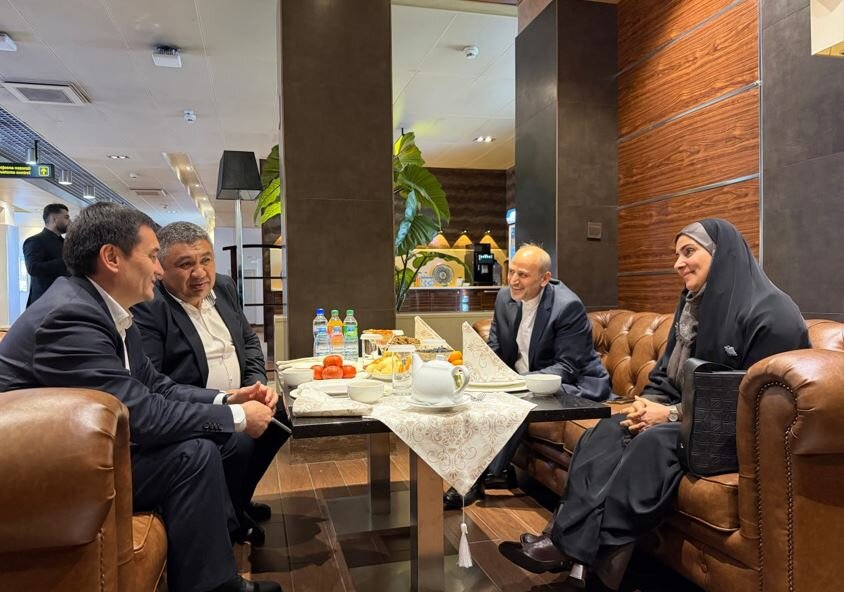
TEHRAN- In a significant diplomatic and economic engagement, Iran’s Minister of Transport and Urban Development, Farzaneh Sadegh, held a pivotal meeting with Ilhom Mahkamov, the Minister of Transport of Uzbekistan, during her official visit to Tashkent.
The high-level discussions centered on the imperative need to facilitate transit operations, develop comprehensive rail and road cooperation, and strengthen logistical and commercial relations between the two nations within the framework of regional corridors. This meeting, held with the explicit aim of examining solutions to expand transport and transit cooperation between the two countries, saw both parties emphasize the extensive capacities for bilateral cooperation while stressing the critical need to remove existing obstacles and facilitate the seamless flow of trade and transit exchanges along regional routes.
Minister Sadegh characterized her trip to Tashkent and her meetings with Uzbek officials as indicative of the strategic importance of political, economic, transport, and transit relations between the two countries. She referred to her previous negotiations with Minister Mahkamov on the sidelines of the 14th Meeting of Transport Ministers of the Economic Cooperation Organization (ECO) held in Astana, Kazakhstan, and emphasized the need for continuous follow-up and operationalization of the agreements reached during those discussions. This continuity in diplomatic engagement underscores the commitment of both nations to translating high-level agreements into tangible outcomes that benefit their respective economies and populations.
The Iranian Minister, assessing favorably the process of Iran-Uzbekistan cooperation in the road, air, and rail sectors, called for holding a trilateral rail meeting with the participation of Iran, Uzbekistan, and Turkmenistan. This proposed gathering would serve to strengthen coordination and accelerate the development of rail cooperation among the three countries, recognizing that regional connectivity requires multilateral approaches that address shared interests and mutual benefits. The initiative reflects Iran’s broader strategy of positioning itself as a vital transit hub connecting Central Asia to global markets through its extensive transportation infrastructure.
Iran’s port capacities and regional connectivity
Minister Sadegh, referring to the significant capacities of both countries in the fields of logistics and transit, described the capacity of Iran’s northern and southern ports as a valuable opportunity for the development of regional interactions. She announced the imminent connection of Chabahar Port to the country’s rail network, a development that she characterized as paving the way for enhancing transit capacities, expanding logistics cooperation, and facilitating regional countries’ access to open waters. This announcement holds particular significance given Chabahar’s strategic location on the Gulf of Oman, which positions it as a critical gateway for landlocked Central Asian nations seeking reliable access to international shipping routes.
Welcoming the development of corridor relations and multilateral cooperation, Sadegh emphasized utilizing the complementary capacities of the two countries to strengthen the position of Iran and Uzbekistan in the regional transport and transit network. The Iranian Minister’s vision encompasses a comprehensive approach to regional connectivity that leverages Iran’s geographic advantages as a bridge between Central Asia and the Persian Gulf, while simultaneously benefiting from Uzbekistan’s position as a major economic player in Central Asia with growing trade ambitions and infrastructure development goals.
Further in the meeting, Ilhom Mahkamov, Minister of Transport of Uzbekistan, emphasized the importance of comprehensive development of transport cooperation with Iran and announced his country’s readiness to expand interactions and implement joint programs in this area. Referring to the existing cooperation between the two countries in the road and rail transport sectors, he emphasized the need to continue consultations, follow up on agreements, and provide the necessary grounds for the further development of bilateral cooperation. The Uzbek Minister’s statements reflected his country’s recognition of Iran’s strategic importance as a transit partner and its willingness to deepen engagement across multiple transportation modalities.
Provincial diplomacy: Mazandaran’s economic engagement with Uzbekistan
The cooperation between Iran and Uzbekistan extends beyond the national level, as evidenced by provincial-level engagement and economic diplomacy. According to a Khabar Online report from Mazandaran, Fariddin Nasriyev, Ambassador of the Republic of Uzbekistan to Iran, met with Mehdi Younesi Rostami, Governor of Mazandaran province, on October 22, and while thanking the provincial officials for their warm hospitality, emphasized the broad capacities for economic and trade cooperation between Mazandaran and Uzbekistan. This meeting demonstrates the multifaceted nature of Iran-Uzbekistan relations, which increasingly involve provincial actors and private sector stakeholders in the pursuit of expanded economic ties.
Referring to the meeting held at the Mazandaran Chamber of Commerce, Ambassador Nasriyev stated that a very good meeting had been held with the participation of economic actors, which shows the high interest of Iranian traders in cooperating with Uzbekistan, as well as the desire of Uzbek traders to benefit from the capacities and manufactured products of Mazandaran. This mutual interest in commercial engagement suggests a growing appetite among private sector actors in both countries to explore new markets and business opportunities, driven by the recognition that regional trade integration can yield substantial economic dividends.
The Ambassador also expressed satisfaction over the presence of a Mazandarani in the co-presidency of the Iran-Uzbekistan Chamber of Commerce, describing this as an opportunity to strengthen economic ties and facilitate cooperation between the private sectors of the two countries. Referring to last year’s visit of a Mazandaran delegation to Uzbekistan, Nasriyev assessed that visit as positive and constructive and noted that the trend of trade cooperation between the two sides is increasingly expanding, with suitable grounds existing for further development of these relations. He announced intensive planning for visits by officials in the next two to three months, including a planned visit to Uzbekistan and an invitation for the Governor of Mazandaran to travel to the country, so that the ground can be further prepared for strengthening economic and trade cooperation.
The Ambassador also referred to interactions between Mazandaran Province and Uzbekistan’s Fergana Province, considering the exchange of trade delegations between the two regions an effective step toward developing economic relations. This sister-province relationship provides a framework for sustained cooperation and mutual understanding at the subnational level, facilitating the identification of investment opportunities and the expansion of trade exchanges in ways that complement national-level initiatives.
Growing trade and future prospects
The broader context of Iran-Uzbekistan economic relations is characterized by significant growth potential. In late September, Mehr News Agency reported that Uzbekistan’s $1.4 billion food market is open to Iranian exporters, with trade between the two countries reaching $305 million in the first half of 2026, and three cooperation documents recently signed. This data reveals both the progress achieved and the substantial opportunities that remain to be exploited in bilateral trade relations.
According to this report, Uzbekistan is becoming one of Central Asia’s growing markets, as its food imports in the first quarter of 2026 jumped by nearly 46% to $1.4 billion. Yet Iran’s share of this market remains limited, and economic actors believe that expanding Iran’s food industry exports to Tashkent requires resolving financial and transportation obstacles and gaining a more accurate understanding of the market dynamics. The recognition of these challenges indicates a pragmatic approach to trade expansion that acknowledges the need for targeted interventions to overcome existing barriers.
In recent years, Uzbekistan has pursued its foreign trade development path more rapidly, and growth in imports, increased foreign investment, and expanded ties with regional markets have made the country one of Central Asia’s notable markets. According to the latest statistics from Uzbekistan’s National Statistics Committee, the country’s imports in the first quarter of 2026 reached $12.2 billion, with food products and live animals accounting for approximately $1.4 billion and growing by 45.9% compared with the same period last year. These figures demonstrate that Uzbekistan’s food market is not merely a domestic consumer market but, given the country’s population of more than 37 million and its position as one of Central Asia’s trade hubs, could become increasingly important for regional food exporters.
Iran’s commercial attaché in Uzbekistan, Rahmatollah Khormali, referring to more than $280 million in trade between the two countries in the first five months of this year, cited agricultural exports, technological cooperation, and joint investment as key pillars for expanding Iran-Uzbekistan trade. He noted that follow-ups by the agriculture ministries of both countries paved the way for sending a 120-member delegation headed by the Minister of Agriculture and a group of activists and experts in agriculture, aquaculture, machinery, and processing industries to Uzbekistan. Uzbekistan ranks second among Iran’s export destinations among the Commonwealth of Independent States (CIS) and has considerable capacity for expanding trade relations, with agriculture being one of the priority areas in developing trade between the two countries.
Khormali described food security as another important area of cooperation and noted that in the Uzbek government structure, a Food Security Agency has been established to ensure and improve food security in areas such as livestock, poultry, quarantine, and food products, which can provide a basis for developing specialized and commercial cooperation. He also addressed the potential for technological cooperation, stating that about 30 projects worth $770 million in various fields, including agriculture, are being implemented in Uzbekistan by Iranian companies, indicating the considerable capacity of Iran’s private sector to enter the Uzbek market. These developments collectively suggest that Iran-Uzbekistan relations are entering a new phase of expanded engagement across multiple sectors, driven by shared economic interests and complementary capacities.
In conclusion, the meetings between high-level officials and provincial actors reflect a comprehensive approach to strengthening Iran-Uzbekistan relations. From the strategic discussions in Tashkent regarding transport corridors and port connectivity to the practical economic diplomacy in Mazandaran focused on trade and investment, both nations are actively pursuing avenues for deeper cooperation. The growing trade figures and planned delegations signal a positive trajectory, though challenges remain in fully realizing the potential of this bilateral relationship. With continued commitment from both governments and active participation from the private sector, Iran and Uzbekistan appear well-positioned to enhance their economic partnership and contribute to regional integration in Central Asia.
Disclaimer : This story is auto aggregated by a computer programme and has not been created or edited by DOWNTHENEWS. Publisher: tehrantimes.com