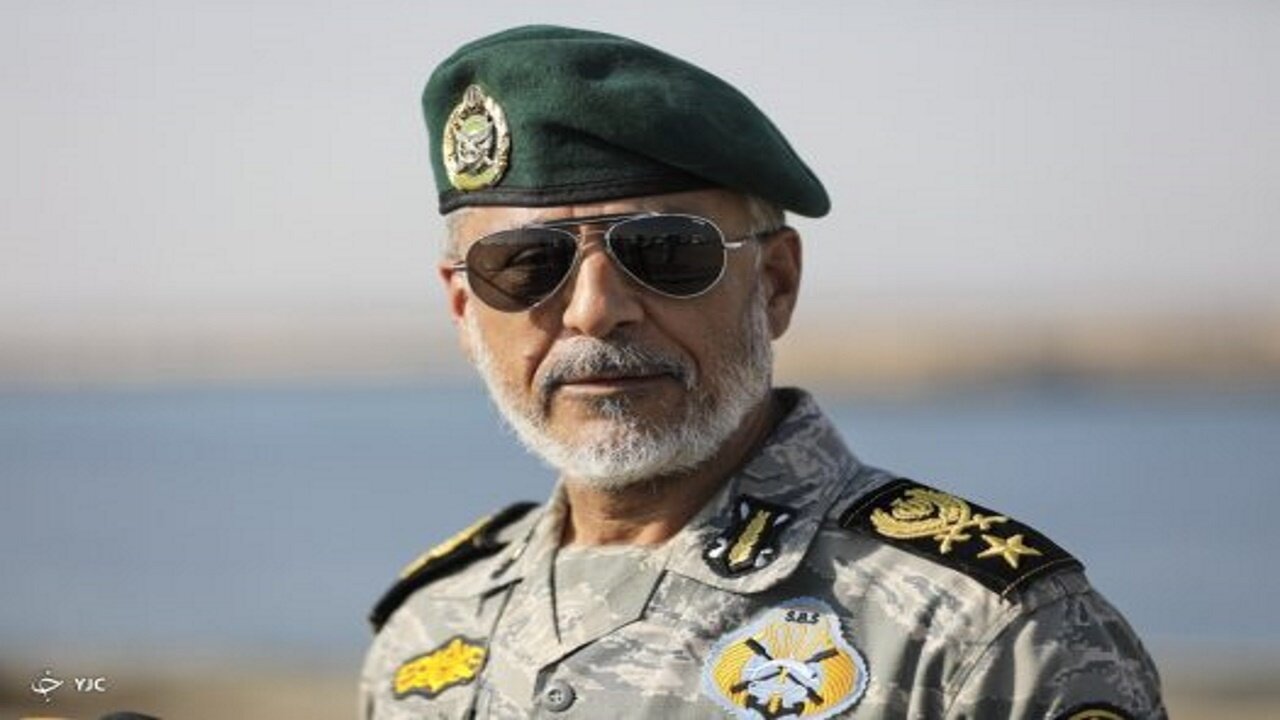
TEHRAN –Army Chief of Staff and Deputy Coordinator Rear Admiral Habibollah Sayyari has stressed the strategic importance of passive defense in safeguarding the country’s critical infrastructure, maintaining essential services and strengthening national resilience against emerging and increasingly complex threats.
In a message issued on October 30 to mark Iran’s National Passive Defense Day, Sayyari emphasized that sustainable security depends on anticipating threats, reducing vulnerabilities, and ensuring preparedness before crises emerge.
Sayyari said modern warfare and recent conflicts had shown that threats were no longer limited to conventional military confrontations but were increasingly extending to critical infrastructure, supply chains, communications networks, and the economic and social foundations of countries.
Under such circumstances, he said, passive defense should be regarded not merely as a defensive requirement but as a strategic component of national security, essential to preserving national capabilities, ensuring the continuity of vital services and strengthening the country’s ability to withstand multidimensional threats.
Sayyari emphasized that, in contemporary security calculations, national power is measured not only by conventional military capabilities but also by a country’s capacity to prevent threats, maintain essential functions, and remain resilient during crises.
He described passive defense as a proactive approach to national security, highlighting the importance of identifying potential vulnerabilities and taking preventive measures before adversaries can exploit them.
Referring to the growing complexity of security challenges, the senior military commander said the experience of recent wars had underscored the need for comprehensive preparedness across different sectors of society.
He noted that disruptions to infrastructure, supply networks and communications systems could have consequences extending well beyond the immediate security sphere, affecting economic activity, public services and social stability.
This, he indicated, makes coordination among relevant institutions and the strengthening of the country’s passive defense capabilities essential to maintaining national stability and ensuring the uninterrupted operation of vital systems.
Disclaimer : This story is auto aggregated by a computer programme and has not been created or edited by DOWNTHENEWS. Publisher: tehrantimes.com